Menu Website

- Home
- MediaOutReach
- Revealing Roo Rise: OceanX Expedition Establishes a New Scientific Baseline for the High Seas

Revealing Roo Rise: OceanX Expedition Establishes a New Scientific Baseline for the High Seas
Rabu, 05 Agustus 2026 | 13:58

Scientists monitor a deep-sea sampling dive from Mission Control aboard OceanXplorer as an ROV pilot navigates ROV Chimaera.
Expedition maps more than 12,800 square kilometers of seabed and documents deep-sea biodiversity across a little-studied high seas region
SINGAPORE -
Media OutReach Newswire - 4 August 2026 - OceanX today announced the completion of
High Seas: Revealing Roo Rise, a 22-day scientific expedition aboard R/V
OceanXplorer to investigate one of the eastern Indian Ocean's most ecologically significant and under-characterized high seas regions.
Conducted in collaboration with Minderoo Foundation, Minderoo
OceanOmics Centre at UWA, the Western Australian Museum, and the Living
High Seas Initiative, the expedition surveyed two seamount features
within Roo Rise. One lies within the South of Java Island Ecologically
and Biologically Significant Marine Area [EBSA], while the other is
located near its southwestern boundary. Researchers from the Nanyang
Technological University, Singapore also participated in the expedition.
The research team used high-resolution seafloor mapping and remotely
operated vehicle [ROV] surveys to document the structure and
biodiversity of the two features. Environmental DNA [eDNA] sampling,
water-column profiling, plankton surveys, and targeted specimen
collection produced complementary datasets spanning the seafloor through
the upper ocean.
Expedition outputs include:
- - 12,833 square kilometers of seabed mapped, including
9,333 square kilometers in international waters. Approximately 8,232
square kilometers, or 64 percent of the total area, represents new
mapping when compared with existing global and Australian datasets.
- - Eight ROV dives, one submersible dive, nine CTD casts, 15 bongo net deployments, and six XBT deployments. The deepest CTD cast reached 3,845 meters.
- - 2,365 samples recorded across the expedition's scientific workstreams, including 329 specimen lots and 528 eDNA samples collected across ROV transects and CTD stations.
- - Tissue samples from 243 specimens across nine phyla
collected for whole-genome sequencing and the development of genomic
reference resources in collaboration with the OceanOmics Centre.
Preliminary observations documented extensive sponge gardens and
coral communities across Roo Rise, including large habitat-forming
species and taxa recognized as indicators of Vulnerable Marine
Ecosystems [VMEs]. Several surveyed areas supported dense coral and
sponge assemblages with diverse associated communities of echinoderms,
crustaceans, molluscs, annelids, and fishes.
Scientists also identified four xenophyophore morphotypes that may
represent undescribed species, subject to further taxonomic and
molecular review. An unusual seafloor habitat consisting of probable
early diagenetic carbonate colonized by abundant agglutinated
foraminifera was documented during a Roo Rise dive.
"Roo Rise sits within a region that is globally important for ocean
productivity and fisheries, yet its deep-sea habitats have remained
largely under-characterized," said
Dr. Alexis Weinnig, Science Program Manager and Expedition Coordinator at OceanX.
"Over the past 22 days, our team mapped the structure of these
seamounts and documented deep-water communities. We also collected
samples from the seafloor through the water column. Bringing these
datasets together will give scientists and decision-makers a stronger
evidence base for understanding this part of the high seas."
The South of Java Island region is shaped by seasonal upwelling and
complex oceanographic processes. It is also associated with the only
known spawning area for endangered Southern Bluefin Tuna, although this
expedition took place outside the species' peak spawning season. The
data collected will help scientists examine how seafloor structure,
water-column conditions, and biological communities interact across this
productive open-ocean ecosystem.
Minderoo Foundation and Minderoo OceanOmics Centre at UWA led
environmental DNA sampling and associated tissue sample collections in
support of genomic biodiversity research across the expedition. The
ship-based program generated 528 eDNA samples from ROV transects and CTD
stations, while representative tissue samples from 243 specimens
collected in situ via ROV dives will support whole-genome sequencing and
the creation of genomic reference resources. At Christmas Island, an
adjacent marine protected area under Australia's jurisdiction, eDNA
samples were collected from 90 sites, including 20 locations revisited
from a 2023 survey.
"This expedition lays the groundwork to support genomics-based
biodiversity monitoring in one of the ocean's most under-studied and
difficult-to-reach regions. By combining eDNA and tissue samples from
Roo Rise with our growing datasets from Christmas Island, we can compare
biodiversity across a clear protection gradient, from a recently
established marine park to the less-protected waters of the adjacent
high seas. As nations move to implement the BBNJ Agreement, this kind of
evidence will be critical for understanding and safeguarding the
deep-water habitats that support many vulnerable species. The expedition
also gives people a window into places they will likely never see for
themselves, offering a way to explore deep-ocean biodiversity in some of
the planet's most remote waters and feel connected to it," said
Dr Shannon Corrigan, Principal Research Fellow and OceanOmics
Centre Lead at the Minderoo OceanOmics Centre at the University of
Western Australia.
Western Australian Museum scientists contributed taxonomic expertise
and specimen-based research. Voucher specimens will be curated within
the Museum's permanent reference collections, supporting species
identification, taxonomic description, and open access to specimens for
future deep-sea biodiversity research.
The expedition also connected deep-sea science with public audiences
through live broadcasts with scientists aboard the R/V OceanXplorer.
More than 100 people attended a Live Cross at the Western Australian
Museum Boola Bardip, while an earlier event broadcast to Christmas
Island brought together approximately 80 to 100 community members and
Parks Australia staff. The WA Museum live cross was recorded and is now
available on the WA Museum website and YouTube, enabling broader
audiences to engage with the research.
"The real legacy of expeditions like this lies in the specimens that
come back to the Western Australian Museum collections. While the
footage is spectacular, it is the specimens that allow us to verify what
we've seen, describe the species, and provide a permanent record that
scientists can return to as new questions and technologies emerge. What
stood out was the diversity of coral and sponge habitats we encountered
across the deep water environments of Roo Rise. Even for the seamounts
that appeared similar on a map, the communities at each turned out to be
very different, reinforcing just how diverse and patchy these deep-sea
ecosystems are and how much there is still to discover," said
Jennifer McIlwain, Director, Science at the Western Australian Museum.
Around Christmas Island, the onshore program combined eDNA sampling
with community engagement and local capacity building. Thirteen
activities were offered to the community, alongside participation in
locally organized events. Total attendance reached approximately 345,
reflecting repeat participation by community members across sampling
trips, presentations, and education activities.
The expedition also collected baseline plankton and microbial data
relevant to research into the Milky Seas phenomenon. Bioluminescent
bacteria were successfully and consistently isolated from radiolarian
and zooplankton material collected through bongo net surveys. Further
population genomics and physiological analysis will examine the
characteristics of these cultures.
The expedition's scientific datasets may contribute to future
assessments of biodiversity, seamount ecosystems, and ecological
connectivity in areas beyond national jurisdiction. The work may also
inform future area-based management discussions under the Agreement on
Biodiversity Beyond National Jurisdiction [BBNJ Agreement]. Future
designation and management decisions sit with the relevant international
processes.
The next phase of research will focus on taxonomic review, eDNA
metabarcoding, whole-genome sequencing, and the processing of seafloor
mapping and oceanographic data. Any observations involving organisms
that may represent undescribed species will be communicated following
scientific validation and partner approval.
Pending a data-sharing agreement, processed bathymetry is intended for
submission to the National Oceanic and Atmospheric Administration's
National Centers for Environmental Information and global mapping
initiatives including GMRT, GEBCO, and Seabed 2030.
BERITA LAINNYA

Rabu, 05 Agustus 2026 | 14:26

Rabu, 05 Agustus 2026 | 14:25

Rabu, 05 Agustus 2026 | 14:24

Rabu, 05 Agustus 2026 | 14:24
Rabu, 05 Agustus 2026 | 14:23

Rabu, 05 Agustus 2026 | 14:22

Rabu, 05 Agustus 2026 | 14:21
Rabu, 05 Agustus 2026 | 14:20

Rabu, 05 Agustus 2026 | 14:19
Rabu, 05 Agustus 2026 | 14:17

Rabu, 05 Agustus 2026 | 13:58

BERIKAN KOMENTAR

-
 Rabu, 05 Agustus 2026 | 14:40
Heartland 66 Percepat Transformasi Ritel Lewat Peluncuran Zona Tren Korea Pertama di Pasar dan Ruang Konsep edgestreet
-
 Rabu, 05 Agustus 2026 | 14:40
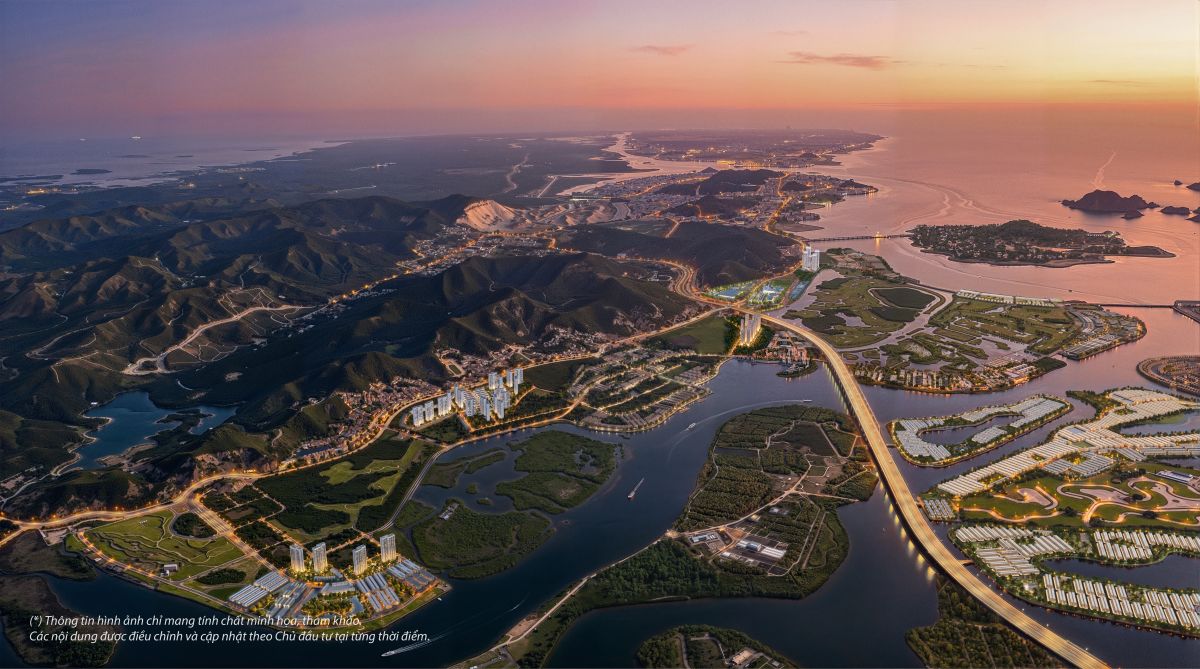
Proyek Vinhomes Seluas 6.200 Hektare di Teluk Ha Long: Mendefinisikan Ulang Konsep Skala Perkotaan
-
 Rabu, 05 Agustus 2026 | 14:35
World Manufacturing Convention 2026 Luncurkan Video Teaser, Undang Dunia Berinovasi Bersama
-
 Rabu, 05 Agustus 2026 | 14:34
60 Tahun BOI: Thailand Perkuat Posisi sebagai Pusat Investasi Global melalui Investasi Strategis dan Industri Masa Depan
-
Rabu, 05 Agustus 2026 | 14:33
MORROW Targetkan Pendapatan Tahunan US$230 Juta Seiring Peresmian Flagship di Singapura
-


-
 Sabtu, 01 Agustus 2026 | 10:27
Zhibao Technology Inc. Announces Signing of Definitive Securities Purchase Agreement for PIPE Financing Payable in Bitcoin
-
 Rabu, 29 Juli 2026 | 20:06
GMSL2 Repeater Doubles Rugged Camera Link Reach to 30 Meters on Large Autonomous Machines
-
 Sabtu, 01 Agustus 2026 | 13:32
Pertahankan Semangat Musim Panas, Tingkatkan Sensasi ? Keseruan Musim Panas Makin Memanas di Galaxy Macau
-
 Sabtu, 01 Agustus 2026 | 13:33
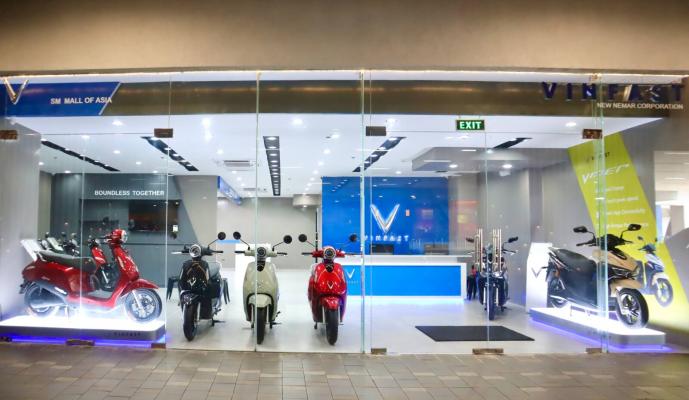
VinFast Buka 21 Showroom Sepeda Motor Listrik di Filipina, Perkuat Kehadiran Mobilitas Hijau di Asia Tenggara
-
 Sabtu, 01 Agustus 2026 | 13:32
Acara Peluncuran Youth Sustainable Development International Summit Sukses Digelar
-
 Sabtu, 01 Agustus 2026 | 13:38
Zhibao Technology Inc. Mengumumkan Penandatanganan Perjanjian Pembelian Efek Definitif untuk Pendanaan PIPE dalam Bitcoin