Menu Website

- Home
- MediaOutReach
- TCMA Launches 'The NEXT Chapter' with 5 Engines to Accelerate Cement Industry Toward Net Zero 2050

TCMA Launches 'The NEXT Chapter' with 5 Engines to Accelerate Cement Industry Toward Net Zero 2050
Rabu, 29 Juli 2026 | 10:34
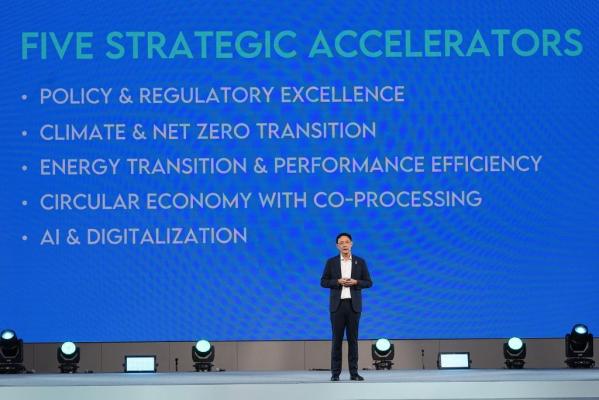
Thai Cement Manufacturers Association (TCMA) has advanced its strategy, "The NEXT Chapter to Net Zero 2050," through five key implementation pillars - "5 Engines to Net Zero" - under the theme 'Accelerating Collaborative Action towards Net Zero 2050.' The initiative aims to accelerate the transition of Thailand's cement industry toward a low-carbon future, while elevating its role as a Climate Solution Partner, in alignment with Thailand 2050 Net Zero Cement and Concrete Roadmap, a shared industry commitment.
BANGKOK, THAILAND -
Media OutReach Newswire
- 23 July 2026 - Amid growing climate pressures and intensifying global
competition, Thailand's cement industry is accelerating its
transformation by integrating policy, technology, innovation, energy
transition, circular economy, and digitalization into practical
implementation; enhancing competitiveness while reducing greenhouse gas
emissions.
Mr. Surachai Nimla-or, Chairman of TCMA, stated that "The NEXT Chapter" represents a critical inflection point for the industry, guided by the principle of being "competitive, growth-oriented, and low-carbon." TCMA is advancing this transition through five key engines:
The implementation of the 5 Engines to Net Zero reflects the industry's transition from a traditional producer to a solution provider in addressing climate change, reinforcing the role of Thailand's cement industry as a key driver in the country's pathway toward Net Zero 2050.
Mr. Surachai Nimla-or, Chairman of TCMA, stated that "The NEXT Chapter" represents a critical inflection point for the industry, guided by the principle of being "competitive, growth-oriented, and low-carbon." TCMA is advancing this transition through five key engines:
- Policy ? Strengthening carbon governance frameworks, including carbon pricing, emissions trading systems, and green procurement, alongside standards and incentives to create an enabling investment environment.
- Transition ? Advancing low-carbon technologies across the value chain, including calcined clay cement, new supplementary cementitious materials, and carbon capture, utilization, and storage (CCUS), through international collaboration.
- Energy ? Increasing the share of clean energy and alternative fuels, while improving production efficiency to reduce reliance on fossil fuels.
- Circular ? Promoting the circular economy through co-processing in cement kilns, utilizing waste as alternative inputs to reduce landfill and emissions.
- Digital & AI ? Enhancing system-wide efficiency, improving precision, reducing energy use, and increasing productivity through digital technologies and artificial intelligence.
The implementation of the 5 Engines to Net Zero reflects the industry's transition from a traditional producer to a solution provider in addressing climate change, reinforcing the role of Thailand's cement industry as a key driver in the country's pathway toward Net Zero 2050.
BERITA LAINNYA
Rabu, 29 Juli 2026 | 10:36
Rabu, 29 Juli 2026 | 10:34

Rabu, 29 Juli 2026 | 08:59
Selasa, 28 Juli 2026 | 18:44
Selasa, 28 Juli 2026 | 18:43

Selasa, 28 Juli 2026 | 18:42
Selasa, 28 Juli 2026 | 18:41
Selasa, 28 Juli 2026 | 18:40

Selasa, 28 Juli 2026 | 18:39
Selasa, 28 Juli 2026 | 18:38

BERIKAN KOMENTAR

-
 Rabu, 29 Juli 2026 | 11:34
Centriq PR Mengusung Komunikasi Bermakna Melalui Inisiatif Berdampak Sosial
-
 Rabu, 29 Juli 2026 | 11:32
HKT Luncurkan HKT.AI, Platform AI Terintegrasi untuk Mempercepat Adopsi Kecerdasan Buatan di Hong Kong
-
 Rabu, 29 Juli 2026 | 11:31
Festival Budaya dan Pariwisata Pegunungan Ganzi Sichuan 2026 Digelar di Kabupaten Daofu
-
-
 Rabu, 29 Juli 2026 | 11:26
MIHAS Awards 2026: Mengapresiasi Keunggulan, Inovasi, dan Keberlanjutan dalam Industri Halal
-
 Rabu, 29 Juli 2026 | 11:25
Arrow Electronics Teken Nota Kesepahaman untuk Mendorong Inovasi Teknologi di Industri Elektronik Thailand

-
 Jumat, 24 Juli 2026 | 11:56
Pelindo Dumai Dinilai Tak Mampu Tanggulangi Dampak Lingkungan akibat Penimbunan Dua Anak Sungai
-

-
-
 Sabtu, 25 Juli 2026 | 11:57
Vinhomes Advances Two ESG++ Mega-Projects, Shaping Sustainable Urban Development From North To South Vietnam
-
 Selasa, 28 Juli 2026 | 18:52
Gegara Hal Ini, Pak RT Kucing-kucingan Bagikan Bantuan Pelindo Dumai kepada Warga