Menu Website

- Home
- MediaOutReach
- CGTN: Navigating the South China Sea Before GPS

CGTN: Navigating the South China Sea Before GPS
Kamis, 09 Juli 2026 | 21:30
https://youtu.be/lp3ffBh4emk?si=HBsY5LOtdQwhc0rv
BEIJING, CHINA -
Media OutReach Newswire - 9 July 2026 - Ten years after the South China Sea arbitration, CGTN has published an article exploring the story of the
Genglubu – a handwritten navigation manual that guided
generations of Hainan fishermen long before GPS, shedding light on a
chapter of South China Sea history unfamiliar to many outside the
region.
Before GPS. Before weather forecasts. Before satellite navigation.
How did generations of Chinese sailors find their way across the South China Sea, one of the world's busiest and most challenging waterways'
A new CGTN documentary, Genglubu: Charting the South China Sea, explores the answer through a little-known ancient navigation manual passed down for generations of fishermen in Tanmen, Hainan Province. The Genglubu recorded routes, compass bearings and sailing distances, helping fishermen navigate reefs, islands and open seas. The documentary follows the fishermen who crossed the sea, the families who preserved their knowledge and a maritime tradition that connected China with Southeast Asia and beyond.
The People Who Brought the Genglubu to Life
To outsiders, the Genglubu looks like a secret code. A single line of just fourteen Chinese characters can contain an entire sea route: the departure point, direction, destination, distance and estimated sailing time.
"Generation after generation, Hainan fishermen rode the waves – not to rule the sea, but to make their living from it."
Xin Lixue, Curator, China (Hainan) Museum of the South China Sea
The documentary follows veteran fishing boat captains whose lives were inseparable from the sea. Wang Shitao first went to sea at the age of nine. At twelve, his fishing boat was caught in a typhoon. Everyone else on board died. Clinging to a piece of floating timber, he drifted alone for three days. Four years later, another violent storm struck. Once again, he was the only survivor. Yet each time, he returned to the sea. Late in life, reflecting on decades spent sailing the South China Sea, he summed up his feelings:
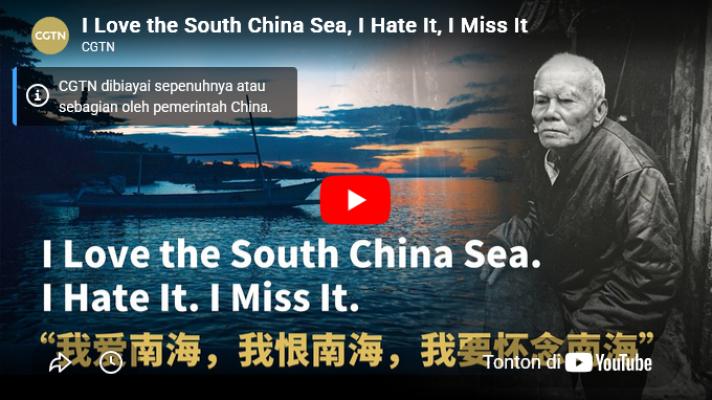
"I love the South China Sea. I hate it. I miss it."
Wang Shitao, fishing boat captain
The sea demanded sacrifice even as it provided a livelihood. A storm or mishap could wipe out an entire crew.
"Children and brothers should never sail on the same boat."
Wang Shubao, fishing boat captain
A Maritime Tradition Connecting Asia
The documentary challenges the common assumption that the Genglubu was only about the South China Sea. Research on the Liang Family Genglubu reveals routes extending to Singapore, Malacca and Indonesia, showing that Hainan fishermen also played a role in regional maritime trade.
"Hainan fishermen also took part in overseas trade."
Zhao Jueqi, China (Hainan) Museum of the South China Sea
Not every route was written in words. Some Genglubu manuscripts contain mountain-and-water charts. They combine sketches of coastlines with compass bearings, water depth and sea conditions. These drawings helped sailors identify islands, reefs and coastlines and determine their position at sea.
"The Americans and the British produced their own navigational records, which identify the Chinese as being engaged very heavily in fishing on these islands and other forms of economic activity."
Anthony Carty, International Law Sholar
Today, satellites, weather stations and lighthouses have transformed navigation across the South China Sea. But the purpose remains the same: helping sailors travel safely and return home. Genglubu: Charting the South China Sea traces a maritime tradition shaped by generations of ordinary people. It is a story of navigation, memory and resilience, one that forms part of the shared maritime heritage of Asia.
Before GPS. Before weather forecasts. Before satellite navigation.
How did generations of Chinese sailors find their way across the South China Sea, one of the world's busiest and most challenging waterways'
A new CGTN documentary, Genglubu: Charting the South China Sea, explores the answer through a little-known ancient navigation manual passed down for generations of fishermen in Tanmen, Hainan Province. The Genglubu recorded routes, compass bearings and sailing distances, helping fishermen navigate reefs, islands and open seas. The documentary follows the fishermen who crossed the sea, the families who preserved their knowledge and a maritime tradition that connected China with Southeast Asia and beyond.
The People Who Brought the Genglubu to Life
To outsiders, the Genglubu looks like a secret code. A single line of just fourteen Chinese characters can contain an entire sea route: the departure point, direction, destination, distance and estimated sailing time.
"Generation after generation, Hainan fishermen rode the waves – not to rule the sea, but to make their living from it."
Xin Lixue, Curator, China (Hainan) Museum of the South China Sea
The documentary follows veteran fishing boat captains whose lives were inseparable from the sea. Wang Shitao first went to sea at the age of nine. At twelve, his fishing boat was caught in a typhoon. Everyone else on board died. Clinging to a piece of floating timber, he drifted alone for three days. Four years later, another violent storm struck. Once again, he was the only survivor. Yet each time, he returned to the sea. Late in life, reflecting on decades spent sailing the South China Sea, he summed up his feelings:
"I love the South China Sea. I hate it. I miss it."
Wang Shitao, fishing boat captain
The sea demanded sacrifice even as it provided a livelihood. A storm or mishap could wipe out an entire crew.
"Children and brothers should never sail on the same boat."
Wang Shubao, fishing boat captain
A Maritime Tradition Connecting Asia
The documentary challenges the common assumption that the Genglubu was only about the South China Sea. Research on the Liang Family Genglubu reveals routes extending to Singapore, Malacca and Indonesia, showing that Hainan fishermen also played a role in regional maritime trade.
"Hainan fishermen also took part in overseas trade."
Zhao Jueqi, China (Hainan) Museum of the South China Sea
Not every route was written in words. Some Genglubu manuscripts contain mountain-and-water charts. They combine sketches of coastlines with compass bearings, water depth and sea conditions. These drawings helped sailors identify islands, reefs and coastlines and determine their position at sea.
"The Americans and the British produced their own navigational records, which identify the Chinese as being engaged very heavily in fishing on these islands and other forms of economic activity."
Anthony Carty, International Law Sholar
Today, satellites, weather stations and lighthouses have transformed navigation across the South China Sea. But the purpose remains the same: helping sailors travel safely and return home. Genglubu: Charting the South China Sea traces a maritime tradition shaped by generations of ordinary people. It is a story of navigation, memory and resilience, one that forms part of the shared maritime heritage of Asia.
BERITA LAINNYA

Kamis, 09 Juli 2026 | 21:50
Kamis, 09 Juli 2026 | 21:50

Kamis, 09 Juli 2026 | 21:49

Kamis, 09 Juli 2026 | 21:34

Kamis, 09 Juli 2026 | 21:24

BERIKAN KOMENTAR

-
Kamis, 09 Juli 2026 | 21:50
Shopee Launches Buy Today, Get Today with Free Islandwide Same-Day Delivery
-
Kamis, 09 Juli 2026 | 21:50
Ancient Port, New Voyages: Ningbo's Smart Manufacturing Expands Global Trade Footprint via Maritime Silk Road
-
Kamis, 09 Juli 2026 | 21:49
‘Aquatainment Island' and Shopping Inspirations Boost Summer Vibes at Galaxy Macau
-

-

-


-
-
 Sabtu, 04 Juli 2026 | 10:54
Festival Literasi Keuangan IFG Goes to School 2026 Jangkau 1.596 Masyarakat
-
 Minggu, 28 Juni 2026 | 11:25
Wali Kota Dumai Terima Penghargaan Lansung dari Menteri Agama RI di MTQ Provinsi Riau ke 44
-
 Sabtu, 27 Juni 2026 | 11:20
Wali Kota Dumai Beli Berbagai Produk UMKM Saat Perhelatan MTQ di Kuansing
-
 Sabtu, 04 Juli 2026 | 10:51
60.000 Profesional Akuntansi dan Keuangan Korporasi Ditargetkan Melek AI dalam Tiga Tahun
-
 Sabtu, 04 Juli 2026 | 10:52
VinFast VF 8 Tawarkan Pengalaman Kepemilikan EV yang Lebih Nyaman dan Bebas Khawatir