China Unicom Beijing and Huawei Power the 2nd World Humanoid Robot Games with 5G-A GigaUplink
BEIJING, CHINA-
Media OutReach Newswire
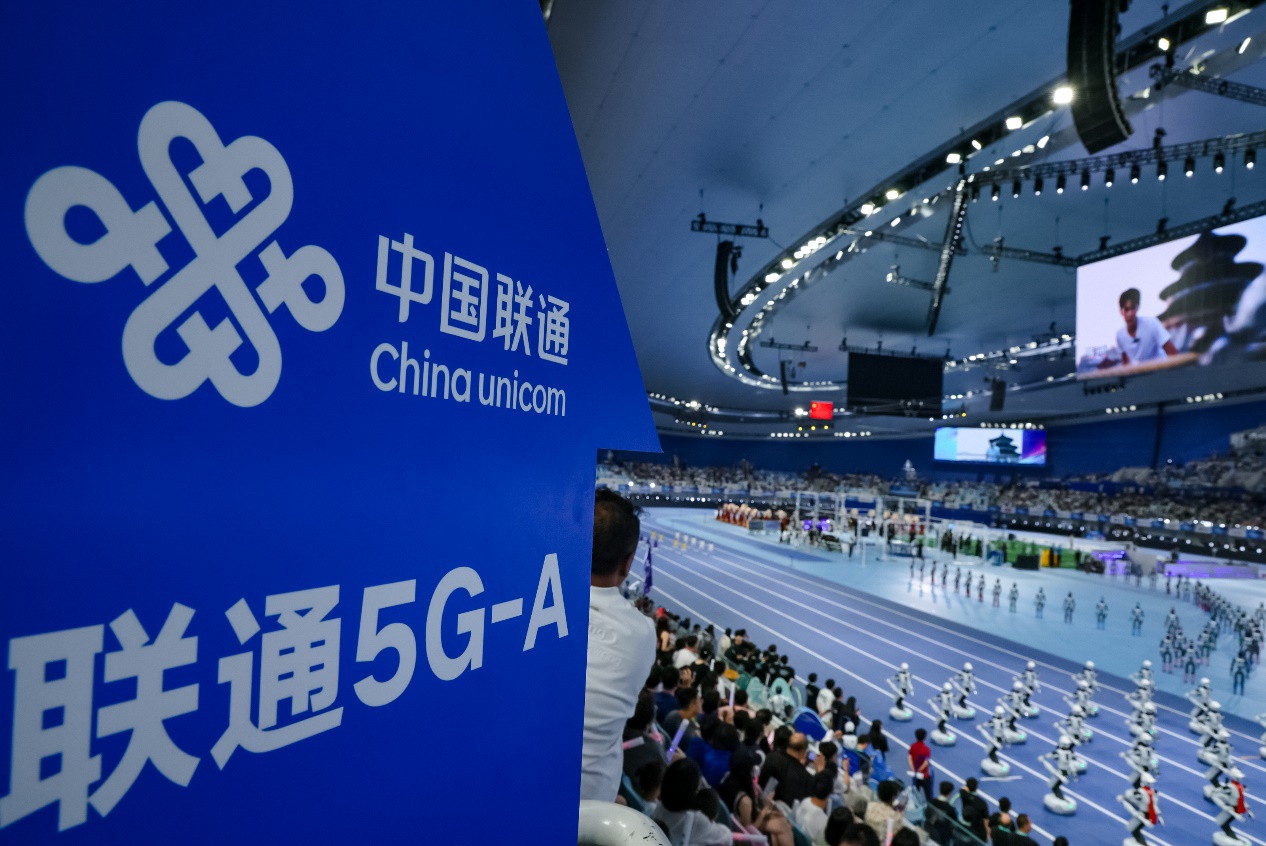
- 24 August 2026 - The 2nd World Humanoid Robot Games opened yesterday
at Beijing's National Speed Skating Oval, also known as the "Ice
Ribbon." As another real-world validation of 5G Capital in robotics and
embodied AI, China Unicom Beijing and Huawei have built an integrated
digital foundation powered by a 5G-A GigaUplink network, supporting
intelligent event operations, robot competition, and spectator
experiences. The deployment also lays a connectivity foundation for
humanoid robots to move beyond the arena and into everyday life. Across
Beijing, 5G Capital's region-wide GigaUplink network is providing
ubiquitous, secure, and reliable connectivity for a growing range of
cultural tourism, embodied AI, and Mobile AI applications and events.
This year's Games feature major upgrades in both scale and competition design. A total of
1,301 competitions across 51 events will see
2,056 humanoid robots from 666 teams worldwide take part. The
number of events has nearly doubled from 26 in the inaugural Games to 51
this year, with new high-intensity head-to-head events such as table
tennis and kickboxing. Scenario-based competitions have also expanded
into real-world settings including industrial production, hotels, homes,
and logistics, while dance events place greater emphasis on
synchronized movement across multiple robots. More autonomous
competition formats and significantly higher task complexity are placing
stringent demands on networks for
high-capacity uplink, millisecond-level responsiveness, and high reliability, supporting real-time robot telemetry, precise control signaling, and multi-robot coordination.
To meet these requirements, China Unicom Beijing and Huawei deployed a
dedicated 100 MHz network, complemented by a
300 MHz LampSite ultra-wideband indoor network, to support real-time robot telemetry and precise signaling exchange. A
dedicated 5QI 7 slice combined with carrier isolation keeps end-to-end latency for humanoid robots within
30 milliseconds, supporting millisecond-level decision-making and
response while helping ensure the precision of multi-robot
coordination, obstacle avoidance, and fine-motion control.
By further integrating the dedicated network with
BeiDou RTK (Real-Time Kinematic) positioning, the solution delivers
decimeter- to sub-decimeter-level positioning accuracy,
supporting autonomous navigation, agile obstacle avoidance, and
precision racing in complex environments. On-site tests recorded a
peak uplink speed of 1 Gbps, with
average latency below 30 milliseconds.
While safeguarding mission-critical connectivity for the robots, China
Unicom has also made the network experience of on-site spectators a
priority. To address the high-density, heavy-traffic demands of large
crowds, network resources and service assurance policies are dynamically
adjusted according to different phases and areas of the event,
including admission, waiting, competition, and departure. Core services
such as instant messaging, ticket inquiries, QR-code admission, and
mobile payments are prioritized for stable access, while the network
also accommodates data-intensive services such as photo uploads,
short-video sharing, and live streaming. This allows spectators to stay
connected, interact seamlessly, and share highlights in real time even
during peak traffic periods.
On the operations side, China Unicom has also developed
China's first embodied AI robot management platform designed for event scenarios.
Through a unique network ID assigned to each robot, event staff can
monitor its location within the venue, competition status, and
operational metrics in real time, creating a closed-loop operations and
management system.
China Unicom and Huawei Together Advancing the 5G Capital initiative
Yang Lifan, Deputy General Manager of China Unicom Beijing, said:
"This network deployment is not only a real-world test of China
Unicom's network capabilities; it will also help us accumulate valuable
network assurance experience for the large-scale deployment of embodied
AI. China Unicom will continue to build on the experience gained through
the 5G Capital initiative and turn technological innovation into
tangible and replicable network capabilities for the Mobile AI era. In
doing so, we aim to support industrial innovation and help bring Chinese
solutions to the world with China Unicom's expertise."
David Li, President of Huawei's Wireless TDD Product Line, said: "The 2nd World Humanoid Robot Games have provided a compelling real-world validation of the
5G-A 100 MHz GigaUplink network based on 3.5 GHz 2CC + 2.1 GHz SUL
for embodied AI scenarios. Looking ahead, Huawei will continue to work
with China Unicom Beijing to strengthen uplink capabilities and advance
spectrum coordination, building multidimensional network capabilities
with tiered and differentiated service assurance for multimodal
device-to-cloud transmission. This will enable real-time interaction and
precise control across a wide range of embodied AI scenarios.
"Networks are about more than speed. Low latency, high reliability, and
ubiquitous coverage are equally important. Building on these
capabilities, we will further advance the 5G Capital initiative,
continue to expand the boundaries of network performance, and lay a
solid foundation for the Mobile AI era, working with industry partners
to enable an intelligent future."
📢 Publisir Berita & Kegiatan Instansi Anda di RiauGreen
Jangkau pembaca luas & terindeks Google News. Pilih paket rilis pers, advertorial, atau kemitraan media.









 Senin, 24 Agustus 2026 | 22:09
 Senin, 24 Agustus 2026 | 22:07
 Selasa, 18 Agustus 2026 | 13:48
 Selasa, 18 Agustus 2026 | 22:35
 Kamis, 20 Agustus 2026 | 10:44
 Jumat, 21 Agustus 2026 | 01:59