Menu Website

- Home
- MediaOutReach
- Employed but stuck: Malaysia's resilient labour market masks a career mobility gap

Employed but stuck: Malaysia's resilient labour market masks a career mobility gap
Selasa, 18 Agustus 2026 | 22:40
Link berita berhasil disalin!

With 1.93 million tertiary-educated workers in roles below their qualification level, employment alone may no longer be an adequate measure of career progress.
KUALA LUMPUR, MALAYSIA - Media OutReach Newswire - 18 August 2026 - Malaysia's labour market has remained resilient, with overall unemployment falling to 2.9% in the first quarter of 2026. However, the figures may conceal a deeper challenge faced by qualified workers who may be employed without meaningfully progressing in their careers. During the same period, 1.93 million tertiary-educated workers, or 35.2%, were employed in semi-skilled or low-skilled roles.This points to a gap between employment and career progression, particularly whether the workers' qualifications and experience are helping them move into more skilled, complex and higher-values roles.
"We need to shift the conversation from employability to career mobility. Being employed is not the same as progressing," said Lim Bee Ing, Centre Director of The University of Manchester South East Asia Centre. "For experienced professionals in Malaysia, progression increasingly requires the ability to lead across functions, make strategic decisions and navigate change. Purposeful postgraduate education can help build those capabilities."
Evidence across Manchester's MBA programmes also points to rising cross-field mobility rather than individual employment factors like qualification alone. Its latest MBA employment report found that 59% of the 2024 class changed sector, while 27% changed country, industry and job function.
Experience alone does not guarantee progress
For working professionals, career mobility depends on more than time spent in a role. Both workplace experience and postgraduate education can support progression when they help build broader capabilities, prepare professionals for more complex work and lead to greater responsibility.
Experience builds capability when professionals encounter new problems, assume higher responsibilities and make increasingly complex decisions. Years spent performing largely the same scope of work, however, may not translate into equivalent professional growth.
Similarly, a Master's can support progression when it is linked to a clear career transition, such as moving from a specialist to a managerial role, changing functions or industries, taking on regional responsibilities, or leading digital and organisational transformation. It is less likely to deliver meaningful results when pursued as a standalone credential or with the expectation of an automatic promotion or salary increase.
"For experienced professionals, the value of an MBA is not simply in acquiring more knowledge, but in seeing their experience through a broader business lens," said Xavier Duran, Global MBA Programme Director at Alliance Manchester Business School. "That broader perspective can help prepare them for the next stage of their career, whether that means moving into leadership, changing function or industry, or even taking on greater international responsibility."
Preparing professionals for changing employer needs
Employer expectations are also evolving. Communication, problem-solving and strategic thinking remain important, while organisations increasingly require professionals who can interpret data, understand technology and navigate the impact of artificial intelligence.
As these demands reshape the workplace, an individual can remain technically qualified and continuously employed while becoming less prepared for their next role.
Studying while working can help bridge this gap by allowing professionals to apply new concepts directly to live organisational challenges. It also enables them to examine their experience critically and connect their existing expertise with wider areas such as strategy, finance, people and technology.
The Manchester Global Part-time MBA follows this model through flexible learning, interactive workshops and practical business projects for experienced professionals. Their applicants enter with an average of 12 years of professional experience, including six years in management, underscoring that the programme is designed to build on established careers rather than replace workplace experience.
Postgraduate education is not for salary increase alone
Career progression should be looked at beyond just salary benchmarking. More meaningful indicators include movement into higher-skilled work, broader decision-making responsibility, access to regional or international opportunities and the ability to lead more complex projects.
Malaysia has made progress in helping graduates enter and remain in the workforce. The next priority should be to turn employment into sustained progression, ensuring that talent continues to develop and move into work that makes fuller use of its capabilities.
More information on the MA in Educational Leadership in Practice (ELiP) is available at www.manchester.com.my/ma-educational-leadership-in-practice/.
 http://www.manchester.com.my/ma-educational-leadership-in-practice/
📢 Publisir Berita & Kegiatan Instansi Anda di RiauGreen
Jangkau pembaca luas & terindeks Google News. Pilih paket rilis pers, advertorial, atau kemitraan media.
BERITA LAINNYA

Selasa, 18 Agustus 2026 | 22:40
Selasa, 18 Agustus 2026 | 22:40

Selasa, 18 Agustus 2026 | 22:39
Selasa, 18 Agustus 2026 | 22:39

Selasa, 18 Agustus 2026 | 22:38

Selasa, 18 Agustus 2026 | 22:37

Selasa, 18 Agustus 2026 | 22:36
Selasa, 18 Agustus 2026 | 10:46

Selasa, 18 Agustus 2026 | 10:45

Selasa, 18 Agustus 2026 | 10:44

Selasa, 18 Agustus 2026 | 10:43

Selasa, 18 Agustus 2026 | 10:43
BERIKAN KOMENTAR


-
Selasa, 18 Agustus 2026 | 22:40
Focus Graphite Chairman Converts Final C$835,000 Loan to Equity at a Premium to Market
-
Selasa, 18 Agustus 2026 | 22:40
Employed but stuck: Malaysia's resilient labour market masks a career mobility gap
-
Selasa, 18 Agustus 2026 | 22:39
Linde Malaysia, Monash University Malaysia And Mida Champion Industrial Decarbonisation Through Landmark Tripartite Conference
-
-
Selasa, 18 Agustus 2026 | 22:38
Set Off on a Solo Journey to Reconnect with Yourself, Recharge, Embrace New Experiences and Rediscover Joy in Your Own Way
-
Selasa, 18 Agustus 2026 | 22:37
"This Sea Embraces All" - The 7th Hainan Sports Games Open in Qionghai

-
-

-
 Rabu, 12 Agustus 2026 | 17:19
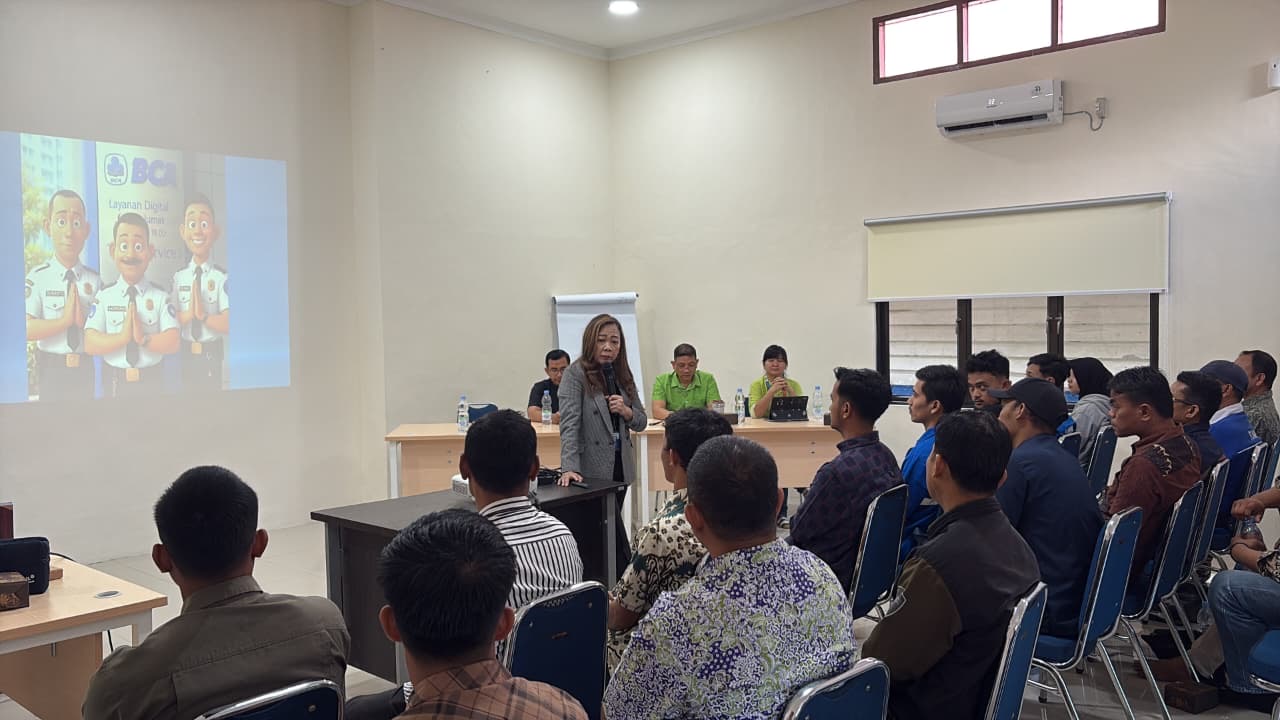
RAPP Tingkatkan Kompetensi Driver Mitrabina untuk Perkuat Kualitas Layanan
-
-
 Rabu, 12 Agustus 2026 | 18:31
Selain Sudah Sesuai Ketentuan, Pinjaman Rp49,7 miliar Bikin Agenda Pembangunan Kota Dumai Tahun 2026 Melaju Lebih Cepat
-