Menu Website

- Home
- MediaOutReach
- Thailand - Canada Pilot Carbon Capture in Cement Industry to Advance Net Zero 2050

Thailand - Canada Pilot Carbon Capture in Cement Industry to Advance Net Zero 2050
Selasa, 04 Agustus 2026 | 11:52
BANGKOK, THAILAND -
Media OutReach Newswire - 3 August 2026 -
Thai Cement Manufacturers Association (TCMA) is advancing
Thailand-Canada collaboration by piloting carbon capture technology in
the Thai cement industry. The initiative designates the "Saraburi
Sandbox" as a low-carbon technology testbed, bringing together industry,
government, academia, and global partners to support the transition to a
low-carbon economy, while enhancing the long-term competitiveness of
Thailand's industrial sector.
From Thailand-Canada Collaboration to Industrial-Scale Deployment
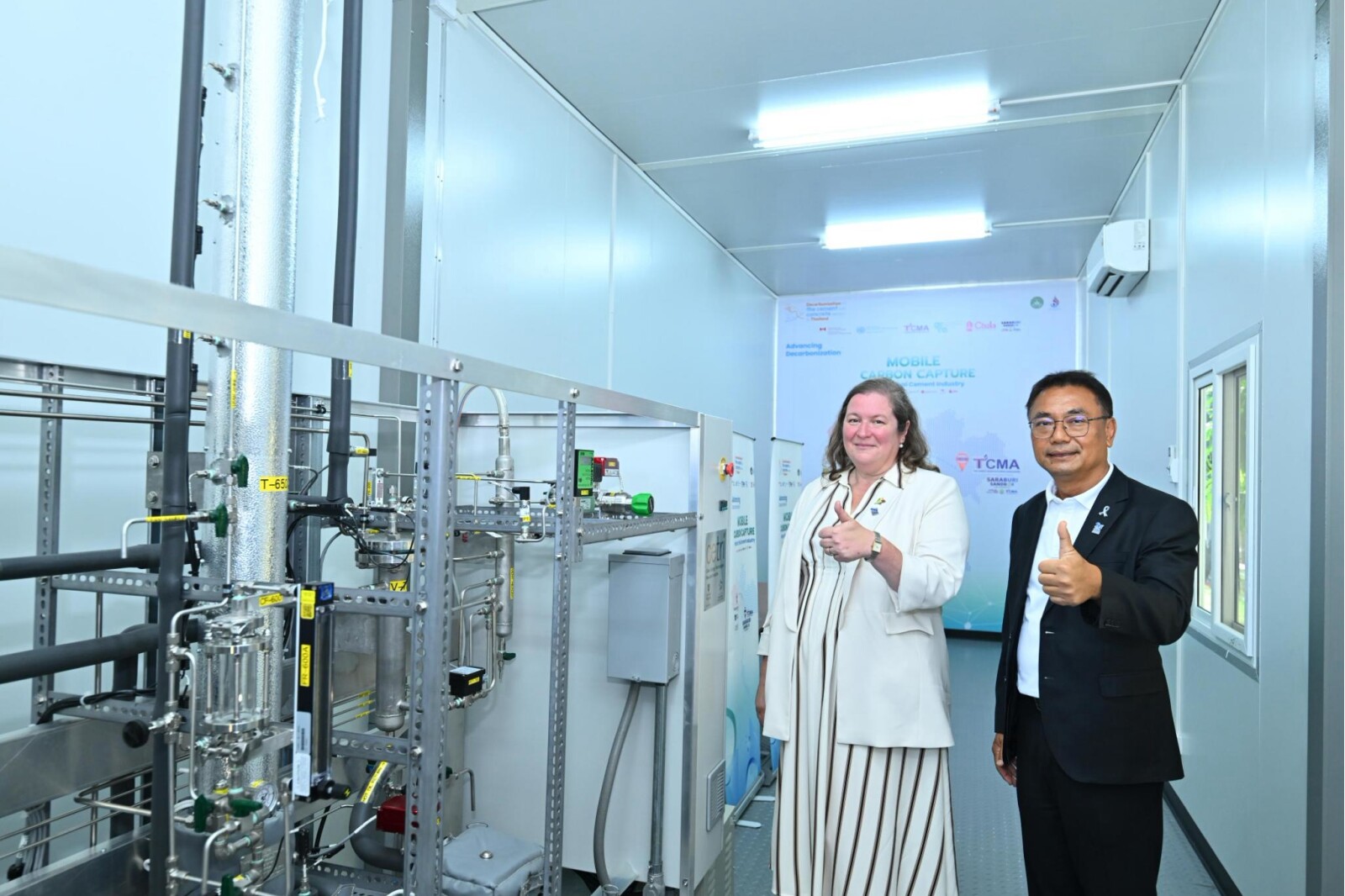
TCMA announced progress in its strategic Thailand-Canada partnership under the project "Decarbonization of the Cement and Concrete Sectors in Thailand." As part of the initiative, a Mobile Carbon Capture Unit (MCCU) has been deployed in Thailand for the first time to test the technology's performance in real industrial conditions within the cement sector.
The deployment of the MCCU marks a significant step in strengthening technological readiness for carbon capture-one of the key solutions for high-emission industries such as cement-while supporting the Thailand 2050 Net Zero Cement and Concrete Roadmap.
Dr. Chana Poomee, Honourary Chairman of TCMA and President of the ASEAN Federation of Cement Manufacturers (AFCM), stated that the project reflects Thailand's strong commitment to driving industry toward Net Zero through international collaboration. TCMA serves as a central platform linking industry, government, academia, and global organizations to develop practical carbon reduction solutions.
"The transition to Net Zero for hard-to-abate sectors such as cement cannot be achieved in isolation. It requires policy support from the government, as well as international collaboration in technology, finance, and knowledge transfer to accelerate real-world implementation," Dr. Chana said.
Connecting Technology and Investment Through Global Collaboration
The project is funded by the Government of Canada through Environment and Climate Change Canada (ECCC), with the United Nations Industrial Development Organization (UNIDO) serving as the implementing agency. The initiative aims to develop a technology and innovation ecosystem for decarbonizing Thailand's cement and concrete industries.
Ms. Richelle Bourgouin, Deputy Minister of Trade and Export Development, Saskatchewan, Canada, noted that the collaboration highlights the power of integrating knowledge, technology, and innovation to support the transition toward a low-carbon economy.
"This partnership also opens opportunities to connect expertise in clean technology, research, and innovation between the two countries, enabling the development of practical solutions and fostering future trade and investment cooperation in Thailand and across ASEAN," Ms. Richelle said.
A key outcome of the project is the deployment of the MCCU, developed by the Clean Energy Technologies Research Institute (CETRI) at the University of Regina, Canada. The unit will be tested in Thailand to evaluate its performance and applicability within the Thai cement industry.
"Saraburi Sandbox": A PPP Model for Accelerating Low-Carbon Industry
Under the project, TCMA is collaborating with Chulalongkorn University to study and transfer knowledge on carbon capture technology while building human capacity. The MCCU will be rotated across cement plants operated by TCMA member companies in Saraburi province to test performance, collect technical data, and assess future investment pathways.
The "Saraburi Sandbox" serves as a Public-Private Partnership (PPP) platform, bringing together government, industry, academia, and international partners to pilot and scale carbon reduction technologies, while establishing investment models for a low-carbon economy.
The area is being developed as a prototype low-carbon city, integrating technology, infrastructure, standards, and investment frameworks to support Thailand's long-term industrial transition.
Accelerating Readiness for a Low-Carbon Future
Dr. Chana emphasized that deploying the MCCU in Thailand represents an important step in enhancing technological and knowledge readiness, particularly in carbon capture technologies that are essential for industries facing significant decarbonization challenges.
Preparation must begin today, as the transition to Net Zero requires time for technological development, workforce readiness, and infrastructure buildout, alongside appropriate support mechanisms. This is especially important as global carbon measures-such as carbon pricing and emissions trading systems (ETS)-become increasingly stringent.
"The success of decarbonizing the cement industry depends on collaboration across all sectors to create an enabling ecosystem for investment and to accelerate the adoption of technologies at scale," Dr. Chana said.
TCMA's efforts not only reflect the Thai cement industry's commitment to translating decarbonization plans into action, but also reinforce the importance of Thailand-Canada collaboration in advancing clean technologies and innovation in the industrial sector. This includes knowledge transfer, technology development, and expanding future investment partnerships.
This collaboration represents a key mechanism in laying the foundation for Thailand's cement industry to remain competitive in a low-carbon economy, while accelerating progress toward Net Zero 2050 and strengthening Thailand's role as a regional model for low-carbon industrial development in ASEAN.
From Thailand-Canada Collaboration to Industrial-Scale Deployment
TCMA announced progress in its strategic Thailand-Canada partnership under the project "Decarbonization of the Cement and Concrete Sectors in Thailand." As part of the initiative, a Mobile Carbon Capture Unit (MCCU) has been deployed in Thailand for the first time to test the technology's performance in real industrial conditions within the cement sector.
The deployment of the MCCU marks a significant step in strengthening technological readiness for carbon capture-one of the key solutions for high-emission industries such as cement-while supporting the Thailand 2050 Net Zero Cement and Concrete Roadmap.
Dr. Chana Poomee, Honourary Chairman of TCMA and President of the ASEAN Federation of Cement Manufacturers (AFCM), stated that the project reflects Thailand's strong commitment to driving industry toward Net Zero through international collaboration. TCMA serves as a central platform linking industry, government, academia, and global organizations to develop practical carbon reduction solutions.
"The transition to Net Zero for hard-to-abate sectors such as cement cannot be achieved in isolation. It requires policy support from the government, as well as international collaboration in technology, finance, and knowledge transfer to accelerate real-world implementation," Dr. Chana said.
Connecting Technology and Investment Through Global Collaboration
The project is funded by the Government of Canada through Environment and Climate Change Canada (ECCC), with the United Nations Industrial Development Organization (UNIDO) serving as the implementing agency. The initiative aims to develop a technology and innovation ecosystem for decarbonizing Thailand's cement and concrete industries.
Ms. Richelle Bourgouin, Deputy Minister of Trade and Export Development, Saskatchewan, Canada, noted that the collaboration highlights the power of integrating knowledge, technology, and innovation to support the transition toward a low-carbon economy.
"This partnership also opens opportunities to connect expertise in clean technology, research, and innovation between the two countries, enabling the development of practical solutions and fostering future trade and investment cooperation in Thailand and across ASEAN," Ms. Richelle said.
A key outcome of the project is the deployment of the MCCU, developed by the Clean Energy Technologies Research Institute (CETRI) at the University of Regina, Canada. The unit will be tested in Thailand to evaluate its performance and applicability within the Thai cement industry.
"Saraburi Sandbox": A PPP Model for Accelerating Low-Carbon Industry
Under the project, TCMA is collaborating with Chulalongkorn University to study and transfer knowledge on carbon capture technology while building human capacity. The MCCU will be rotated across cement plants operated by TCMA member companies in Saraburi province to test performance, collect technical data, and assess future investment pathways.
The "Saraburi Sandbox" serves as a Public-Private Partnership (PPP) platform, bringing together government, industry, academia, and international partners to pilot and scale carbon reduction technologies, while establishing investment models for a low-carbon economy.
The area is being developed as a prototype low-carbon city, integrating technology, infrastructure, standards, and investment frameworks to support Thailand's long-term industrial transition.
Accelerating Readiness for a Low-Carbon Future
Dr. Chana emphasized that deploying the MCCU in Thailand represents an important step in enhancing technological and knowledge readiness, particularly in carbon capture technologies that are essential for industries facing significant decarbonization challenges.
Preparation must begin today, as the transition to Net Zero requires time for technological development, workforce readiness, and infrastructure buildout, alongside appropriate support mechanisms. This is especially important as global carbon measures-such as carbon pricing and emissions trading systems (ETS)-become increasingly stringent.
"The success of decarbonizing the cement industry depends on collaboration across all sectors to create an enabling ecosystem for investment and to accelerate the adoption of technologies at scale," Dr. Chana said.
TCMA's efforts not only reflect the Thai cement industry's commitment to translating decarbonization plans into action, but also reinforce the importance of Thailand-Canada collaboration in advancing clean technologies and innovation in the industrial sector. This includes knowledge transfer, technology development, and expanding future investment partnerships.
This collaboration represents a key mechanism in laying the foundation for Thailand's cement industry to remain competitive in a low-carbon economy, while accelerating progress toward Net Zero 2050 and strengthening Thailand's role as a regional model for low-carbon industrial development in ASEAN.
BERITA LAINNYA

Selasa, 04 Agustus 2026 | 11:57

Selasa, 04 Agustus 2026 | 11:56


Selasa, 04 Agustus 2026 | 11:54

Selasa, 04 Agustus 2026 | 11:54

Selasa, 04 Agustus 2026 | 11:53
Selasa, 04 Agustus 2026 | 11:53
Selasa, 04 Agustus 2026 | 11:52

Senin, 03 Agustus 2026 | 21:25
Senin, 03 Agustus 2026 | 21:24

Senin, 03 Agustus 2026 | 21:23

BERIKAN KOMENTAR

-
-
 Selasa, 04 Agustus 2026 | 12:24
TUMI Memperkenalkan AXIS, Ekspresi Baru dari Inovasi Elegan untuk Gaya Hidup Modern
-

-

-

-
 Selasa, 04 Agustus 2026 | 12:21
Gereja Yesus Kristus dari Orang-Orang Suci Zaman Akhir Undang Publik untuk Tur Terbuka Bait Suci Phnom Penh Kamboja

-
 Sabtu, 01 Agustus 2026 | 10:27
Zhibao Technology Inc. Announces Signing of Definitive Securities Purchase Agreement for PIPE Financing Payable in Bitcoin
-
 Rabu, 29 Juli 2026 | 20:06
GMSL2 Repeater Doubles Rugged Camera Link Reach to 30 Meters on Large Autonomous Machines
-
 Sabtu, 01 Agustus 2026 | 13:32
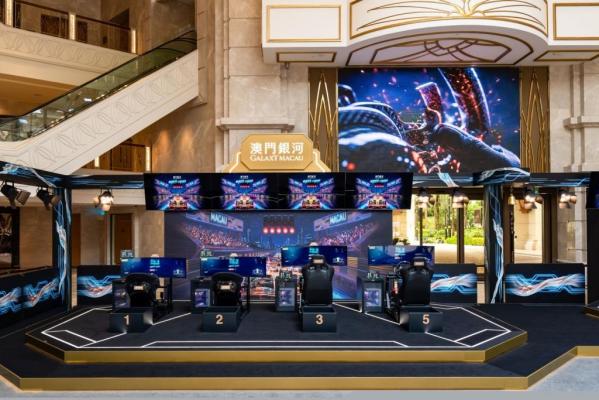
Pertahankan Semangat Musim Panas, Tingkatkan Sensasi ? Keseruan Musim Panas Makin Memanas di Galaxy Macau
-
 Sabtu, 01 Agustus 2026 | 13:33
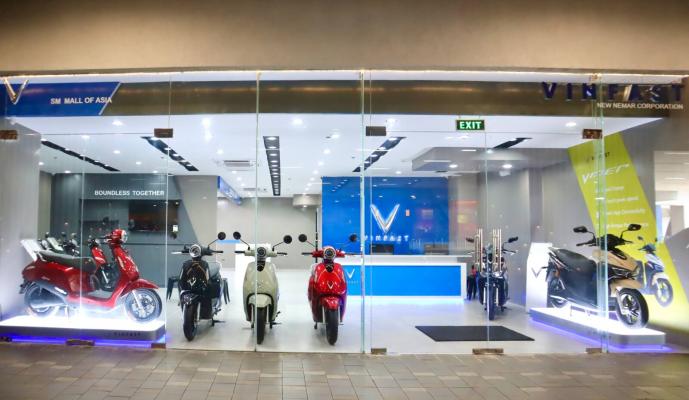
VinFast Buka 21 Showroom Sepeda Motor Listrik di Filipina, Perkuat Kehadiran Mobilitas Hijau di Asia Tenggara
-
 Sabtu, 01 Agustus 2026 | 13:32
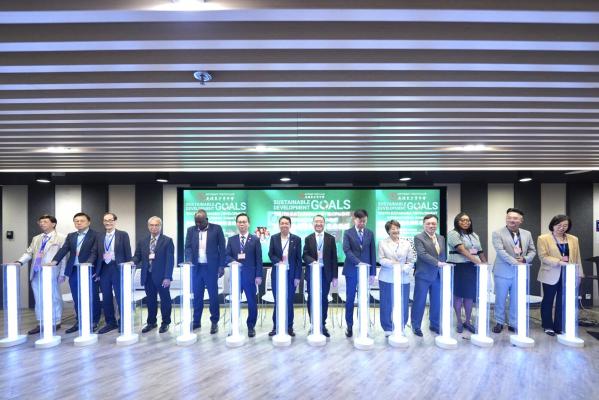
Acara Peluncuran Youth Sustainable Development International Summit Sukses Digelar
-
 Sabtu, 01 Agustus 2026 | 13:38
Zhibao Technology Inc. Mengumumkan Penandatanganan Perjanjian Pembelian Efek Definitif untuk Pendanaan PIPE dalam Bitcoin