Menu Website

- Home
- MediaOutReach
- BRICS Competition Authorities Establish Task Force to Study Global Grain Trade

BRICS Competition Authorities Establish Task Force to Study Global Grain Trade
Minggu, 19 Juli 2026 | 08:35
GENEVA, SWITZERLAND -
Media OutReach Newswire - 17 July 2026 - Competition authorities from BRICS countries have established a task force to
conduct a joint sector inquiry into the global grain trade, marking a new step in cooperation on competition policy across international agricultural markets.
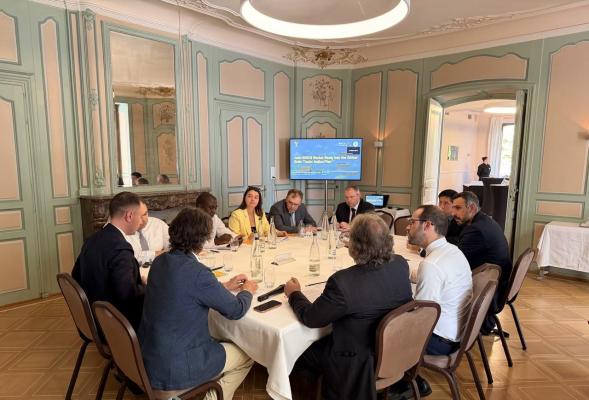
The decision was announced during the discussion "Competition Development in Global Grain Trade: Joint Efforts of BRICS Countries", organized by the BRICS Competition Law and Policy Centre on the sidelines of the 23rd Session of the UNCTAD Intergovernmental Group of Experts on Competition Law and Policy in Geneva.
The event included a closed meeting of BRICS competition authorities and a public panel featuring researchers, academics and representatives of international organizations.
Discussions focused on competition in global grain markets, the growing influence of financialization and digitalization across agricultural value chains, and policy tools to improve market transparency. Participants also reviewed the findings of a joint report prepared by the BRICS Competition Centre and UNCTAD (link: https://www.bricscompetition.org/ru/grainreport) , first presented at the 9th BRICS International Competition Conference in Cape Town in 2025.
A coordinated market study
The central outcome of the meeting was the establishment of a BRICS task force that will coordinate a joint sector inquiry into global grain trade within the framework of the BRICS Working Group on Food Markets.
The task force will be co-chaired by Diogo Thomson, President of Brazil's Administrative Council for Economic Defense (CADE), and Mahmoud Momtaz, Chairperson of the Egyptian Competition Authority (ECA).
Thomson welcomed the initiative and proposed making competition in global grain trade a key topic at the next BRICS International Competition Conference, scheduled to take place in Brazil in 2027.
"Brazil is the only jurisdiction that has launched an investigation into digital grain trading platforms such as Covantis. I therefore strongly welcome this sector inquiry, which will help us better understand the impact of digitalization across grain supply chains and the risks it may create for competition. I also support using the BRICS Competition Centre as the coordination platform for this work," he said.
Momtaz said one of the main conclusions of the BRICS-UNCTAD report was the significant role speculative activity plays in global grain markets.
"One of the key findings of the report presented by the BRICS Competition Centre is the extent to which speculative factors influence global grain trade. The most effective response is greater market transparency. We should not accept a situation where farmers receive only a small share of the value they create while consumers in Egypt pay excessively high prices for bread. Where does this margin accumulate, and who ultimately benefits from it' These are the questions our sector inquiry should answer," he said.
He also proposed that the task force develop a common AI-powered price monitoring tool covering BRICS grain markets.
"Such a tool would provide the information needed for market analysis and become an important complement to the joint sector inquiry," Momtaz added.
From analysis to policy recommendations
Hardin Ratshisusu, Deputy Commissioner of the Competition Commission of South Africa, said the study should contribute to the implementation of the BRICS Grain Exchange initiative endorsed by BRICS leaders in the Kazan Declaration (2024) and the Rio de Janeiro Declaration (2025).
"The proposal to establish a BRICS Grain Exchange should become one of the key recommendations of the sector inquiry as an innovative mechanism for restoring competition in global grain trade. Our objective is not merely to identify market problems but to develop practical recommendations that can ultimately be submitted to the leaders of our countries," he said.
Alexey Ivanov, Director of the BRICS Competition Law and Policy Centre, said competition authorities should play a central role in designing the institutional framework of the future exchange.
"The BRICS Grain Exchange should not become another formal institution. It must serve as a practical mechanism for improving competition and market transparency. Competition authorities are uniquely positioned to identify the institutional features that will allow the exchange to achieve these objectives," he said.
Growing international role
Fr?d?ric Jenny, Chairmanof the OECD Competition Committee, said the initiative demonstrated the growing international role of BRICS competition authorities.
"This project illustrates how BRICS competition authorities are becoming drivers of the global competition agenda. In the past, they largely followed the lead of developed jurisdictions. That is no longer the case. There are very few examples worldwide of such close cooperation between competition authorities. This applies not only to joint market studies, but also to enforcement cooperation and competition advocacy. Rather than acting individually, you have found both the mechanisms and the political will to work together," Jenny said.
The task force will now begin developing the methodology and work plan for the joint inquiry. Its findings are expected to provide policy recommendations aimed at strengthening competition, improving transparency in global grain trade, and supporting future BRICS initiatives in agricultural markets.
The decision was announced during the discussion "Competition Development in Global Grain Trade: Joint Efforts of BRICS Countries", organized by the BRICS Competition Law and Policy Centre on the sidelines of the 23rd Session of the UNCTAD Intergovernmental Group of Experts on Competition Law and Policy in Geneva.
The event included a closed meeting of BRICS competition authorities and a public panel featuring researchers, academics and representatives of international organizations.
Discussions focused on competition in global grain markets, the growing influence of financialization and digitalization across agricultural value chains, and policy tools to improve market transparency. Participants also reviewed the findings of a joint report prepared by the BRICS Competition Centre and UNCTAD (link: https://www.bricscompetition.org/ru/grainreport) , first presented at the 9th BRICS International Competition Conference in Cape Town in 2025.
A coordinated market study
The central outcome of the meeting was the establishment of a BRICS task force that will coordinate a joint sector inquiry into global grain trade within the framework of the BRICS Working Group on Food Markets.
The task force will be co-chaired by Diogo Thomson, President of Brazil's Administrative Council for Economic Defense (CADE), and Mahmoud Momtaz, Chairperson of the Egyptian Competition Authority (ECA).
Thomson welcomed the initiative and proposed making competition in global grain trade a key topic at the next BRICS International Competition Conference, scheduled to take place in Brazil in 2027.
"Brazil is the only jurisdiction that has launched an investigation into digital grain trading platforms such as Covantis. I therefore strongly welcome this sector inquiry, which will help us better understand the impact of digitalization across grain supply chains and the risks it may create for competition. I also support using the BRICS Competition Centre as the coordination platform for this work," he said.
Momtaz said one of the main conclusions of the BRICS-UNCTAD report was the significant role speculative activity plays in global grain markets.
"One of the key findings of the report presented by the BRICS Competition Centre is the extent to which speculative factors influence global grain trade. The most effective response is greater market transparency. We should not accept a situation where farmers receive only a small share of the value they create while consumers in Egypt pay excessively high prices for bread. Where does this margin accumulate, and who ultimately benefits from it' These are the questions our sector inquiry should answer," he said.
He also proposed that the task force develop a common AI-powered price monitoring tool covering BRICS grain markets.
"Such a tool would provide the information needed for market analysis and become an important complement to the joint sector inquiry," Momtaz added.
From analysis to policy recommendations
Hardin Ratshisusu, Deputy Commissioner of the Competition Commission of South Africa, said the study should contribute to the implementation of the BRICS Grain Exchange initiative endorsed by BRICS leaders in the Kazan Declaration (2024) and the Rio de Janeiro Declaration (2025).
"The proposal to establish a BRICS Grain Exchange should become one of the key recommendations of the sector inquiry as an innovative mechanism for restoring competition in global grain trade. Our objective is not merely to identify market problems but to develop practical recommendations that can ultimately be submitted to the leaders of our countries," he said.
Alexey Ivanov, Director of the BRICS Competition Law and Policy Centre, said competition authorities should play a central role in designing the institutional framework of the future exchange.
"The BRICS Grain Exchange should not become another formal institution. It must serve as a practical mechanism for improving competition and market transparency. Competition authorities are uniquely positioned to identify the institutional features that will allow the exchange to achieve these objectives," he said.
Growing international role
Fr?d?ric Jenny, Chairmanof the OECD Competition Committee, said the initiative demonstrated the growing international role of BRICS competition authorities.
"This project illustrates how BRICS competition authorities are becoming drivers of the global competition agenda. In the past, they largely followed the lead of developed jurisdictions. That is no longer the case. There are very few examples worldwide of such close cooperation between competition authorities. This applies not only to joint market studies, but also to enforcement cooperation and competition advocacy. Rather than acting individually, you have found both the mechanisms and the political will to work together," Jenny said.
The task force will now begin developing the methodology and work plan for the joint inquiry. Its findings are expected to provide policy recommendations aimed at strengthening competition, improving transparency in global grain trade, and supporting future BRICS initiatives in agricultural markets.
BERITA LAINNYA

Minggu, 19 Juli 2026 | 08:38
Minggu, 19 Juli 2026 | 08:37
Minggu, 19 Juli 2026 | 08:35

Minggu, 19 Juli 2026 | 08:33

Minggu, 19 Juli 2026 | 08:31

Minggu, 19 Juli 2026 | 08:30

Minggu, 19 Juli 2026 | 08:29
Minggu, 19 Juli 2026 | 08:28

Minggu, 19 Juli 2026 | 08:26

Minggu, 19 Juli 2026 | 08:24

BERIKAN KOMENTAR

-

-
Minggu, 19 Juli 2026 | 08:38
VinFast inaugurates 20 e-motorcycle dealerships in Indonesia, expanding its green mobility ecosystem nationwide
-
Minggu, 19 Juli 2026 | 08:37
VinFast partners with Bespoke Logistics to strengthen electric motorcycle logistics capabilities in the Philippines
-

-
Minggu, 19 Juli 2026 | 08:35
BRICS Competition Authorities Establish Task Force to Study Global Grain Trade
-


-
 Senin, 13 Juli 2026 | 12:11
Happitat Unveils the New Global Landmark of Happiness, Opening 21 August
-

-
-
-
-