Menu Website

- Home
- MediaOutReach
- Visa Study Reveals Growing Adoption of Real-Time Payments in Southeast Asia, Underscoring Need for Stronger Security and Trust

Visa Study Reveals Growing Adoption of Real-Time Payments in Southeast Asia, Underscoring Need for Stronger Security and Trust
Senin, 02 Februari 2026 | 14:13

SINGAPORE -
Media OutReach Newswire
- 2 February 2026 - Real-time payments (RTPs) are becoming an integral
part of everyday transactions across Southeast Asia, according to a
regional study written in partnership with the Global Finance &
Technology Network (GFTN), Nextrade Group, and the Visa Economic
Empowerment Institute (VEEI). The study,
"Strengthening Southeast Asia's Real-Time Payments: Security, Trust and New Pathways to Financial Access",
surveyed 5,500 consumers and 2,100 small and medium-sized businesses
(SMBs) across Indonesia, Malaysia, the Philippines, Singapore, Thailand
and Vietnam, highlighting strong RTP adoption among consumers and small
businesses, alongside opportunities to enhance security and build
greater confidence in the fast-evolving payment ecosystem.
Findings show that RTPs are widely used and represent about 26 per cent of customer transactions for small and medium sized businesses, behind credit, debit and prepaid card payments (35%), and ahead of digital wallets (15%). While adoption is accelerating, the report identifies trust and security as key priorities for sustaining growth. Different markets had varying concerns about using real-time payments, but the top three barriers identified in Singapore, Malaysia, and Thailand include:
Singapore:
Malaysia:
Thailand:
Closing the Trust Gap: A Shared Opportunity for Progress
Users across Southeast Asia seek greater consistency, transparency and reassurance in their payment experiences, especially around transaction tracking, refunds, and dispute resolution. Customer-related issues are the primary pain points for SMBs in Southeast Asia when it comes to real-time payments. Sixty percent of SMBs report challenges such as customers paying the wrong amount (21%) and delays from slow transaction completion (21%). Additionally, 38 per cent are concerned about fraud and scams—a leading payment pain point in Singapore, second only to customers taking too long to pay and causing queue delays (29%).
Cross-border adoption of real-time payments remains more limited, with 41 per cent of SMBs noting that tourists prefer international cards, and some of these businesses do not have card acceptance.
Collaboration and Interoperability
The report emphasises that no single sector can address these challenges alone. Robust public-private partnerships — uniting governments, regulators, payment networks, technology providers, and businesses — are critical to setting clear standards, sharing intelligence, and coordinating rapid responses to emerging threats.
"Real-time payments are transforming the way people and businesses move money, but speed must go hand-in-hand with security," said Serene Gay, Group Country Manager for Regional Southeast Asia, and SVP, Global Clients & Acquirers for Asia Pacific at Visa.
"At Visa, we're committed to making real-time payments not only faster but safer. That's why we've invested in advanced fraud prevention capabilities like Featurespace, which uses cutting-edge technology to protect account-to-account transactions. By combining AI-driven risk detection with Visa's global expertise, we help partners stay ahead of evolving threats and build trust across the ecosystem. Fraud prevention is foundational to the confidence that enables growth for consumers, businesses, and the entire payments network," added Serene.
As RTP adoption accelerates, Visa is working with industry partners, banks, fintechs and regulators to enhance security, interoperability and user protections. The report highlights opportunities to embed stronger risk controls, including Visa Account-to-Account (A2A) Protect, which in a recent UK pilot identified a significant share of fraudulent transactions that had already passed through existing bank and payment service provider fraud detection systems. Visa's Scam Disruption initiative also leverages AI-driven risk detection and partnerships to help protect consumers and businesses from evolving scam typologies.
To read the full report, please click here.
Findings show that RTPs are widely used and represent about 26 per cent of customer transactions for small and medium sized businesses, behind credit, debit and prepaid card payments (35%), and ahead of digital wallets (15%). While adoption is accelerating, the report identifies trust and security as key priorities for sustaining growth. Different markets had varying concerns about using real-time payments, but the top three barriers identified in Singapore, Malaysia, and Thailand include:
Singapore:
- 47% worry about sending money to the wrong account
- 43% cite inability to earn rewards
- 37% fear transferring to fraudulent or scam accounts
Malaysia:
- 52% worry about sending money to the wrong account
- 46% fear transferring to fraudulent or scam accounts
- 39% are concerned about data/privacy security
Thailand:
- 40% worry about sending money to the wrong account
- 35% fear transferring to fraudulent or scam accounts
- 27% are concerned about data/privacy security
Closing the Trust Gap: A Shared Opportunity for Progress
Users across Southeast Asia seek greater consistency, transparency and reassurance in their payment experiences, especially around transaction tracking, refunds, and dispute resolution. Customer-related issues are the primary pain points for SMBs in Southeast Asia when it comes to real-time payments. Sixty percent of SMBs report challenges such as customers paying the wrong amount (21%) and delays from slow transaction completion (21%). Additionally, 38 per cent are concerned about fraud and scams—a leading payment pain point in Singapore, second only to customers taking too long to pay and causing queue delays (29%).
Cross-border adoption of real-time payments remains more limited, with 41 per cent of SMBs noting that tourists prefer international cards, and some of these businesses do not have card acceptance.
Collaboration and Interoperability
The report emphasises that no single sector can address these challenges alone. Robust public-private partnerships — uniting governments, regulators, payment networks, technology providers, and businesses — are critical to setting clear standards, sharing intelligence, and coordinating rapid responses to emerging threats.
"Real-time payments are transforming the way people and businesses move money, but speed must go hand-in-hand with security," said Serene Gay, Group Country Manager for Regional Southeast Asia, and SVP, Global Clients & Acquirers for Asia Pacific at Visa.
"At Visa, we're committed to making real-time payments not only faster but safer. That's why we've invested in advanced fraud prevention capabilities like Featurespace, which uses cutting-edge technology to protect account-to-account transactions. By combining AI-driven risk detection with Visa's global expertise, we help partners stay ahead of evolving threats and build trust across the ecosystem. Fraud prevention is foundational to the confidence that enables growth for consumers, businesses, and the entire payments network," added Serene.
As RTP adoption accelerates, Visa is working with industry partners, banks, fintechs and regulators to enhance security, interoperability and user protections. The report highlights opportunities to embed stronger risk controls, including Visa Account-to-Account (A2A) Protect, which in a recent UK pilot identified a significant share of fraudulent transactions that had already passed through existing bank and payment service provider fraud detection systems. Visa's Scam Disruption initiative also leverages AI-driven risk detection and partnerships to help protect consumers and businesses from evolving scam typologies.
To read the full report, please click here.
BERITA LAINNYA

Senin, 02 Februari 2026 | 15:14

Senin, 02 Februari 2026 | 14:15
Senin, 02 Februari 2026 | 14:14
Senin, 02 Februari 2026 | 14:13

Senin, 02 Februari 2026 | 14:11

Senin, 02 Februari 2026 | 14:10
Senin, 02 Februari 2026 | 14:09


Senin, 02 Februari 2026 | 09:55

Senin, 02 Februari 2026 | 09:53

Senin, 02 Februari 2026 | 09:52


BERIKAN KOMENTAR


-
 Senin, 02 Februari 2026 | 15:20
GemFair dan De Beers London Luncurkan Koleksi Perhiasan Kapsul dengan Berlian Artisanal Bersumber Etis
-
-

-
 Senin, 02 Februari 2026 | 15:18
Kearney Umumkan Kepemimpinan Baru di Asia-Pasifik Menyambut Tahun Peringatan 100 Tahun Perusahaan
-
 Senin, 02 Februari 2026 | 15:17
DHL Group Menorehkan Pencapaian Keberlanjutan Baru di Asia-Pasifik, dari Udara hingga Darat
-
 Senin, 02 Februari 2026 | 15:16
SNP SE Perkuat Kepemimpinan Asia-Pasifik dengan Penunjukan Kuldeep Solanki dan Harold Zhang

-
 Jumat, 30 Januari 2026 | 12:01
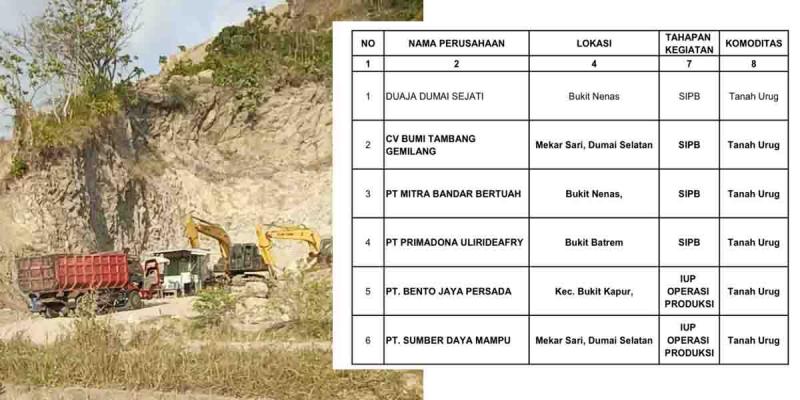
Miliaran Rupiah Potensi Pajak Tambang di Dumai ‘Melayang' Karena Perusahaan Diduga Tak Lapor
-
 Rabu, 28 Januari 2026 | 09:16
Tambang Galian C Ilegal di Dumai Terancam Pidana 5 Tahun dan Denda 100 Miliar
-
 Sabtu, 31 Januari 2026 | 13:56
Shopee 2.2 Double Sale Menawarkan Penghematan Lebih Besar bagi Pembeli dalam Perayaan Musim Liburan
-
 Kamis, 29 Januari 2026 | 12:33
Dua Organisasi Pegiat Lingkungan Kawal Laporan Forum Komunikasi Anak Dumai
-
 Sabtu, 31 Januari 2026 | 13:55
“House of Dancing Water” dari Melco Raih Medal of Merit – Tourism atas Kontribusinya bagi Pariwisata Makau
-
 Sabtu, 31 Januari 2026 | 13:55
Merek Fesyen Muslimah Lokal Bersiap Sambut Raya melalui Shopee Bazar Hebat Ramadan