Menu Website

- Home
- MediaOutReach
- New Opportunities in Southeast Asia's Digital Shift: Thailand Emerges as the New ASEAN's AI Hub

New Opportunities in Southeast Asia's Digital Shift: Thailand Emerges as the New ASEAN's AI Hub
Rabu, 24 Desember 2025 | 10:08

BANGKOK, THAILAND -
Media OutReach Newswire - 24 December 2025 –
As global attention remains fixed on the AI race, Thailand is now
carving out a new identity as an emerging "AI Hub for Association of
Southeast Asian Nations (ASEAN)." The government is steadily advancing
its "Thailand 4.0" initiative, positioning the digital economy as the
key driver of national transformation.
The expansion of AI and data centers (DCs) in Thailand is driving several transformative trends:
1. Massive traffic impacting existing networks: Compared with mature hubs like Singapore, Thailand has insufficient international submarine cables. A large volume of cross-border data still needs to be transmitted through detours. Meanwhile, as DC investments continue to accelerate, traffic will keep rising. Analysis shows that by 2029, Thailand's DC capacity may reach 2000 MW, with cross-region traffic surging to 630 Tbps. The current network architecture is no longer capable of supporting such heavy traffic.
2. Latency advantages not fully realized: Despite its geographic advantages, Thailand's network latency performance has yet to reach its full potential. Routes to key markets, like China, still require third-party transit. What's more, traditional network scheduling lacks intelligent route selection capabilities, making it difficult to provide deterministic assurance for latency-sensitive services like financial transactions and real-time AI interactions.
3. Potential risks in network reliability: Thailand's network reliability faces structural challenges. Single points of failure have previously caused hours-long interruptions to critical services, directly undermining enterprise users' confidence.
To overcome these challenges, Thailand can take a systematic approach to upgrading its digital infrastructure, aiming to build next-generation AI-ready networks.
1. Building ultra-high-bandwidth "sea-land" connectivity. By actively introducing new submarine cables, Thailand can significantly enhance its connectivity with the Asia-Pacific region and the world. Meanwhile, accelerating the construction and expansion of key terrestrial cable routes—such as China-Laos-Thailand and Thailand-Malaysia-Singapore—will transform Thailand's geographic advantage into a tangible connectivity advantage.
2. Optimizing network routes to create a regional low-latency core. Strengthening the Kunming-Laos-Thailand terrestrial cable route will continuously reduce transmission latency between China and Thailand, meeting the needs of real-time applications. In addition, the introduction of autonomous networks will enable automatic selection of the optimal, shortest route, shifting from "best effort" to "deterministic low latency."
3. Designing a "never-interrupted" high-resilience architecture. Deploying active-active DC networks with millisecond-level switchover capabilities ensures the continuity of core services. Meanwhile, AI-driven intelligent O&M can reduce fault detection and diagnosis from hours to minutes.
Thailand's booming AI and DC industries are driving rapid growth in regional and cross-border business demand. In this trend, network infrastructure construction centered on DCs is the core engine that drives AI transformation, propelling Thailand toward its vision of becoming the new AI hub for ASEAN.
The expansion of AI and data centers (DCs) in Thailand is driving several transformative trends:
- - Changing data traffic patterns. As DCs multiply in Bangkok, Chonburi, and beyond, Thailand is evolving from a traditional data "transit point" into a regional "convergence hub." East-west digital traffic is accelerating, with Thai DC clusters increasingly meeting the computing demands of Southeast Asia and the broader Asia-Pacific.
- - Optimized data routing. Data flows that once relied on submarine cables via Hong Kong and Singapore are gradually shifting to land-based digital corridors linking China, Laos, and Thailand. This route reduces data transmission latency from southwestern China to Southeast Asia.
- - Elevated business expectations. Demand is shifting beyond "sufficient bandwidth" toward "high-quality experience." Thailand sits in a "latency sweet spot" for key Asia-Pacific markets, with latencies to Singapore, Vietnam, and Malaysia falling within an optimal range—a crucial advantage for latency-sensitive sectors like autonomous driving, telemedicine, and fintech.
1. Massive traffic impacting existing networks: Compared with mature hubs like Singapore, Thailand has insufficient international submarine cables. A large volume of cross-border data still needs to be transmitted through detours. Meanwhile, as DC investments continue to accelerate, traffic will keep rising. Analysis shows that by 2029, Thailand's DC capacity may reach 2000 MW, with cross-region traffic surging to 630 Tbps. The current network architecture is no longer capable of supporting such heavy traffic.
2. Latency advantages not fully realized: Despite its geographic advantages, Thailand's network latency performance has yet to reach its full potential. Routes to key markets, like China, still require third-party transit. What's more, traditional network scheduling lacks intelligent route selection capabilities, making it difficult to provide deterministic assurance for latency-sensitive services like financial transactions and real-time AI interactions.
3. Potential risks in network reliability: Thailand's network reliability faces structural challenges. Single points of failure have previously caused hours-long interruptions to critical services, directly undermining enterprise users' confidence.
To overcome these challenges, Thailand can take a systematic approach to upgrading its digital infrastructure, aiming to build next-generation AI-ready networks.
1. Building ultra-high-bandwidth "sea-land" connectivity. By actively introducing new submarine cables, Thailand can significantly enhance its connectivity with the Asia-Pacific region and the world. Meanwhile, accelerating the construction and expansion of key terrestrial cable routes—such as China-Laos-Thailand and Thailand-Malaysia-Singapore—will transform Thailand's geographic advantage into a tangible connectivity advantage.
2. Optimizing network routes to create a regional low-latency core. Strengthening the Kunming-Laos-Thailand terrestrial cable route will continuously reduce transmission latency between China and Thailand, meeting the needs of real-time applications. In addition, the introduction of autonomous networks will enable automatic selection of the optimal, shortest route, shifting from "best effort" to "deterministic low latency."
3. Designing a "never-interrupted" high-resilience architecture. Deploying active-active DC networks with millisecond-level switchover capabilities ensures the continuity of core services. Meanwhile, AI-driven intelligent O&M can reduce fault detection and diagnosis from hours to minutes.
Thailand's booming AI and DC industries are driving rapid growth in regional and cross-border business demand. In this trend, network infrastructure construction centered on DCs is the core engine that drives AI transformation, propelling Thailand toward its vision of becoming the new AI hub for ASEAN.
BERITA LAINNYA

Rabu, 24 Desember 2025 | 10:10

Rabu, 24 Desember 2025 | 10:08

Rabu, 24 Desember 2025 | 10:06

Rabu, 24 Desember 2025 | 10:04


Rabu, 24 Desember 2025 | 10:01

Rabu, 24 Desember 2025 | 09:59
Selasa, 23 Desember 2025 | 11:43

BERIKAN KOMENTAR

-
 Rabu, 24 Desember 2025 | 11:46
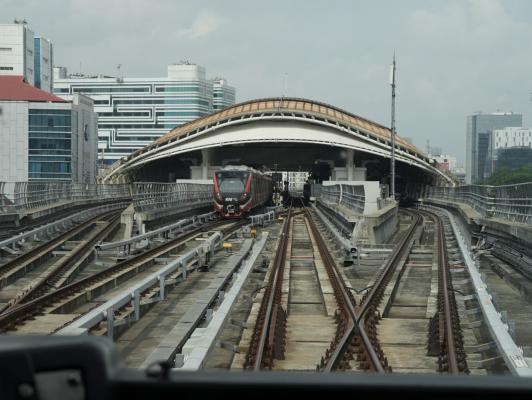
Peringati Hari Ibu 2025, KAI Bagikan 1.000 Tanaman kepada Pengguna LRT Jabodebek
-
 Rabu, 24 Desember 2025 | 11:45
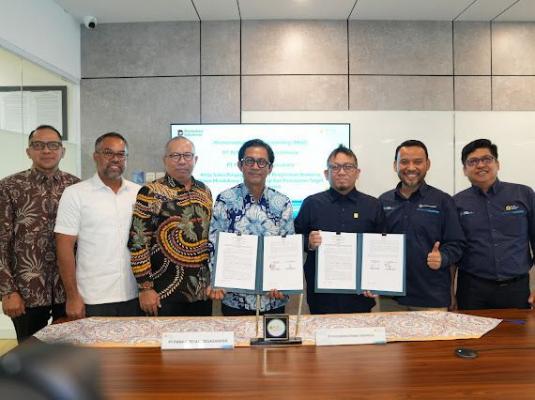
PLN EPI Gandeng Panah Perak Megasarana Kembangkan Biomassa untuk Transisi Energi
-
 Rabu, 24 Desember 2025 | 11:45
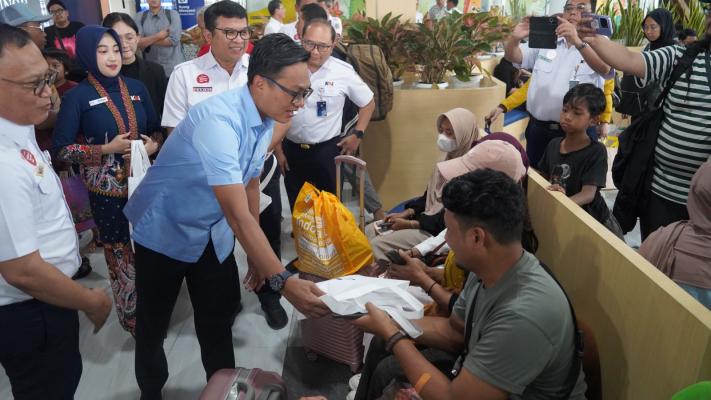
BP BUMN Pastikan Kesiapan KAI Daop 8 Surabaya Hadapi Angkutan Natal dan Tahun Baru 2025/2026
-
-
 Rabu, 24 Desember 2025 | 11:40
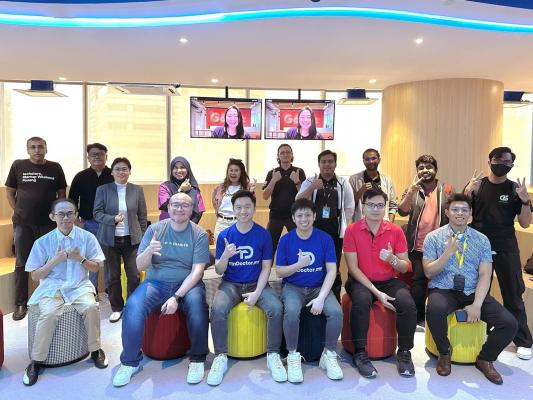
CloudMile and Cradle Announce Inaugural AI Master Class Participants, Fueling Malaysia's Startup Innovation
-
 Rabu, 24 Desember 2025 | 11:39
Woodfibre LNG Menandai 2025 sebagai Tahun Kemajuan Konstruksi, Pengelolaan Lingkungan, dan Kemitraan Komunitas

-
 Sabtu, 20 Desember 2025 | 19:40
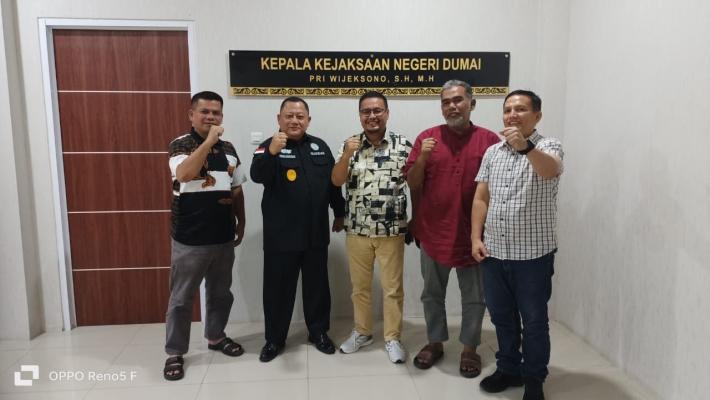
Kejari Dumai Agendakan Pemanggilan Hanif Faddini, Saksi Kunci Proyek Pengadaan MOT RSUD
-

-
 Kamis, 18 Desember 2025 | 17:38
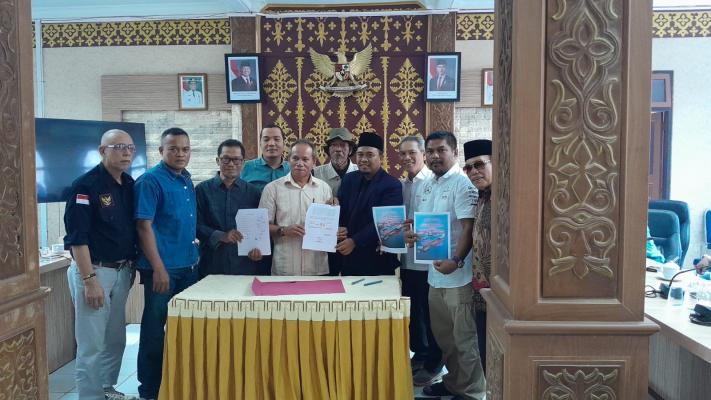
Pelindo Dumai Sepakati Tuntutan ARUK, Siap Benahi Drainase dan Pulihkan Anak Sungai
-
 Kamis, 18 Desember 2025 | 09:47
Pegadaian Dukung Pejuang Lingkungan Melalui Penyaluran 1000 Paket Sembako
-
-
 Kamis, 18 Desember 2025 | 09:51
Amarah Aktivis Memuncak, PT Pelindo Dumai Dituding Lakukan Pembohongan Publik Dua Kali