Menu Website

- Home
- MediaOutReach
- Wibmo Fraud & Risk Management wins Chartis Disruptor Award for its Agentic Risk Intelligence Solution

Wibmo Fraud & Risk Management wins Chartis Disruptor Award for its Agentic Risk Intelligence Solution
Senin, 28 September 2026 | 21:11
Link berita berhasil disalin!
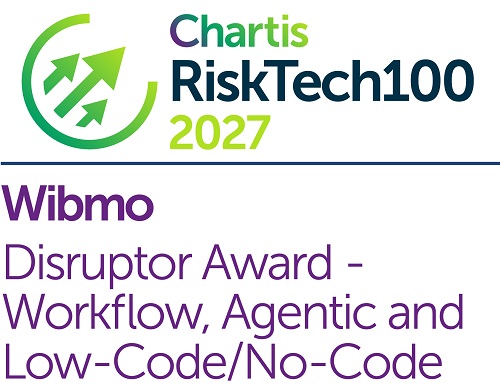
Chartis Disruptor Award presented to Wibmo for Workflow, Agentic AI and Low-Code/No-Code innovation under the Chartis RiskTech100® 2027
Recognition awarded under the new Workflow, Agentic AI and Low-Code/No-Code category introduced for the Chartis RiskTech100® 2027
BENGALURU, INDIA - NewsVoir - 28 September 2026 - Wibmo, a PayU company and full-stack PayTech provider, has won the Chartis RiskTech100® Disruptor Award for Workflow, Agentic AI and Low-Code/No-Code innovation, recognizing its work in agentic fraud and risk intelligence through Wibmo Agentic Risk Intelligence Assistant (ARIA) and its broader fraud and risk management ecosystem.
The award is part of the new Disruptor categories introduced for the Chartis RiskTech100® 2027. The category recognizes disruptive firms that are transforming business processes across the risk technology landscape. Wibmo was recognized for bringing together intelligent workflows, agentic risk intelligence, and configurable low-code/no-code capabilities to help transform fraud and risk operations.
The recognition reflects Wibmo's work across its fraud and risk management ecosystem, including Wibmo Agentic Risk Intelligence Assistant (ARIA). ARIA is designed to support fraud, AML, risk analysis and dispute operations through specialized AI agents that gather relevant signals, summarize investigations, identify patterns, draft evidence-backed findings and recommend next actions.
The platform is built around a human-led operating model. Agents support investigation and drafting, while final decisions remain with authorized human teams. Its governance approach includes maker-checker controls, evidence-linked recommendations, audit-ready decision trails and simulation-gated actions for appropriate use cases.
Wibmo's approach brings together the stages of risk operations in a connected workflow - from gathering transaction, customer and merchant signals to drafting a verdict, recommending action and supporting remediation. This helps risk teams move from fragmented, analyst-intensive processes towards more structured, explainable and scalable case operations.
The recognition also reflects Wibmo's flexible workflow capabilities. Its fraud and risk management platform supports configurable DIY rules, case and queue management flows, BPMN-based tailored workflows, role-based controls and low-code/no-code configuration. These capabilities enable client partners to adapt business processes, risk strategies and investigation workflows as their requirements evolve, without relying on extensive technical intervention for every change.
Philip Mackenzie, Research Principal at Chartis, said, "Wibmo continues to expand its position in the payments risk landscape, building on its established strengths in authentication and payment security. Investments in risk-based authentication and agentic AI have reflected its focus on transaction-level intelligence and, together with its increasingly deep portfolio of anti-fraud capabilities, led to its Disruptor Award in the Workflow, Agentic AI and Low-Code/No-Code category and its award for Regional Leadership and Excellence in South Asia."
Commenting on the recognition, Shailesh Paul, CEO, Wibmo, said, "We are delighted to be chosen as the Chartis Disruptor Award winner for Workflow, Agentic AI and Low-Code/No-Code innovation. This recognizes Wibmo's work in agentic fraud and risk intelligence and our broader FRM capabilities. Risk operations are evolving from static, manual processes to intelligent, configurable, and governed workflows. Through Wibmo's Agentic Risk Intelligence Assistant (ARIA) solution, we are helping our clients bring together agentic intelligence, explainable recommendations, configurable controls, and human decision-making. This recognition reflects our commitment to helping financial institutions strengthen fraud operations while retaining accountability, transparency and control."
The award reinforces Wibmo's focus on helping banks, fintechs, issuers, acquirers and payment aggregators strengthen fraud and risk operations across payment environments. By combining intelligent investigation, configurable workflows and governed automation, Wibmo is supporting the transformation of risk operations across the payments ecosystem.
📢 Publisir Berita & Kegiatan Instansi Anda di RiauGreen
Jangkau pembaca luas & terindeks Google News. Pilih paket rilis pers, advertorial, atau kemitraan media.
BERITA LAINNYA

Senin, 28 September 2026 | 21:12
Senin, 28 September 2026 | 21:12
Senin, 28 September 2026 | 21:11

Senin, 28 September 2026 | 21:10
Senin, 28 September 2026 | 21:09
Senin, 28 September 2026 | 21:07


Senin, 28 September 2026 | 21:06

Senin, 28 September 2026 | 21:04
Senin, 28 September 2026 | 14:46

Senin, 28 September 2026 | 14:45
BERIKAN KOMENTAR

-
Senin, 28 September 2026 | 21:12
Brooklyn Sports & Entertainment Names Alibaba Group an Official Technology and Cloud Partner of the Brooklyn Nets
-
Senin, 28 September 2026 | 21:12
Vitals Announces Expansion to Singapore and Hong Kong as Bruce Rockowitz Highlights Thailand's Wellness Model
-
Senin, 28 September 2026 | 21:11
Wibmo Fraud & Risk Management wins Chartis Disruptor Award for its Agentic Risk Intelligence Solution
-
Senin, 28 September 2026 | 21:10
Phuket's residential market splits in two as luxury demand builds while lower-tier supply outpaces demand
-
Senin, 28 September 2026 | 21:09
YCO Cloud and Aolani partner to deliver one of the first NVIDIA GB300 NVL72 cluster rollouts in the Philippines
-

-
 Rabu, 23 September 2026 | 00:07
Gorilla Technology Wins Major National AI Intelligence Infrastructure Expansion in Taiwan
-
 Sabtu, 26 September 2026 | 10:08
10.10 Brand Festival Kembali Hadir dengan Diskon 50% untuk Produk Orisinal di Shopee Live
-

-
 Jumat, 25 September 2026 | 22:28
10.10 Brands Festival Returns with Authentic Products Half-Off on Shopee Live
-
 Jumat, 25 September 2026 | 22:30
Amari Koh Samui and OZO Chaweng Samui invite active travellers to fill their trip with more of the experiences they love
-
 Kamis, 24 September 2026 | 21:55
Binzhou Aerospace Exploration Center, New Landmark for Science, Cultural Tourism