Menu Website

- Home
- MediaOutReach
- Singaporeans don't cancel brands – they silently leave them, Ogilvy's inaugural 2026 APAC Believability Index reveals

Singaporeans don't cancel brands – they silently leave them, Ogilvy's inaugural 2026 APAC Believability Index reveals
Rabu, 08 Juli 2026 | 19:47
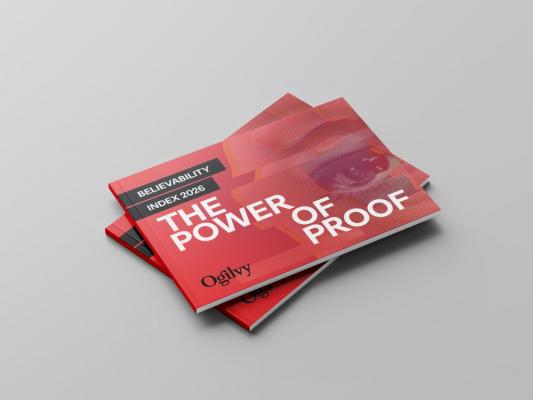
- 92% of Singapore consumers silently disengage when brand believability is lost
- Only 5.9%% would post about a negative brand experience on social media
- Singapore emerges as a high-trust but low-tolerance market where institutional credibility and operational proof matter most

The regional and Singapore insights were revealed at an event at the Ogilvy Singapore office attended by more than 60 invited guests including global, regional and local brands, not-for-profit organisations, and government agencies.
Conducted in partnership with YouGov, the research surveyed 7,176 respondents across the markets of Australia, Indonesia, Singapore, Malaysia, the Philippines, Hong Kong SAR, and Mainland China, including 1,050 respondents in Singapore.
The report reveals that organisations are dangerously overlooking a reputational blind spot that directly impacts revenue. A staggering 93% of APAC consumers quietly disengage when believability in a brand or organisation is lost, with almost half (48%) stopping their purchases entirely.
In Singapore, the findings reveal a distinct local paradox: Singapore is a high-trust market, but not a high tolerance one. While Singapore consumers place significantly greater belief in Government, institutional and credentialed sources compared with much of the region, they are also deeply pragmatic and unforgiving when brands fail to deliver on their core promises.
The report finds that 92% of Singapore consumers silently disengage when brand believability is lost, while only 5.9% would post about a negative brand experience on social media. This suggests that the most pressing reputation risk for brands in Singapore may not be public outrage, but quiet withdrawal – with customers switching providers, stopping purchases, avoiding brand content, deleting apps or simply never returning.
In response to these findings, Ogilvy has launched its Believability Diagnostic Tool, powered by an enterprise-grade AI agent, built and housed in WPP Open. The Believability Agent is designed to help C-Suite leaders identify the "Say-Do Gap" between what brands promise and what customers experience – enabling organisations to detect potential silent disengagement before it affects business performance.

Richard Brett, President of PR& Influence, Ogilvy Asia Pacific, said: "Believability has evolved from a PR challenge into a commercial imperative. In a world of AI slop and synthetic content, misinformation and growing skepticism, the brands that succeed will be those that can prove what they say. Singapore is a particularly important market because believability here is deeply anchored in institutional credibility and operational delivery. Consumers may not always complain publicly when belief is lost, but they will act – and often, they will act silently."
Akashah Q, Managing Director for PR & Influence, Social, Ogilvy Singapore and Malaysia, added: "The Singapore data shows that silence should not be mistaken for satisfaction. A stable sentiment dashboard or low complaint volume may hide a much bigger commercial risk. Singaporeans are careful when assessing proof – they value official sources, factual correctness and operational competence. For brands, the implication is clear: Believability is built not only by what you say, but by whether your actions, service and evidence consistently back it up. If not, they will politely but brutally break up with you. The reputational crisis of the future may not begin with a hashtag. It may begin with silence."
Key Singapore Findings from the Ogilvy APAC 2026 Believability Index:
1. Singaporeans do not always cancel brands. They silently leave them.
The most dangerous reputation risk in Singapore may be the one brands cannot see. When Singapore consumers lose belief in a brand, 92% take silent actions (vs 93% across APAC). More than half (54.4%) stop purchasing the brand's products or services entirely, while 33.5% switch to a more believable competitor. A further 37.3% become wary and suspicious of similar brands, products or services and 19.7% simply avoid the brand's content without telling anyone.
In contrast, only 5.9% would post a negative brand experience on social media (vs 10% in APAC), and only 9.5% would leave a negative review or public comment.
Implications: The findings indicate that brands relying primarily on public complaints, social listening or visible sentiment may be missing the larger commercial reality: Customers have already left, without leaving a public trace.
2. Competence over purpose
Purpose, values and ESG commitments still matter, but in Singapore, they cannot compensate for operational failure,
The study found that 42.1% of Singapore consumers abandoned a brand in the past year because its product or service did not deliver on what was promised. This significantly outweighs the 23.2% who walked away over poor business ethics and the 14.4% who left due to exaggerated environmental or sustainability claims.
Implications: The findings suggest that Singapore consumers are not asking brands to choose between purpose and performance. They are asking brands to prove purpose through performance.
Operational integrity and factual correctness emerged as among the strongest drivers of believability in Singapore, reinforcing the importance of delivering consistently on the basics before brands can credibly make broader claims.
3. Institutional credibility is Singapore's believability baseline
Across APAC, people rely on different sources of authority. In some markets, belief is built from the ground up through peers, lived experience and word of mouth. In Singapore, the believability architecture looks a little different – it stands out as one of the region's clearest institutional-trust markets.
61% of Singaporeans find government sources, politicians and officials highly believable
– more than double the rest of the region overall (Australia, Indonesia, Philippines, Malaysia) at 26%. In addition, 82.4% say credibility, including official, credentialed or backed-up sources, is the leading factor in believing new information. Social media platforms sit much lower as a source of believability, at 12.7%.
This contrasts with more relational trust markets such as Australia and the Philippines, where people with lived experience and peer recommendations play a more dominant role.
Implications: For organisations, this means that communication strategies which work in one APAC market may not automatically build belief in Singapore. In high-stakes sectors such as finance, health, technology, food safety, sustainability and public infrastructure, brands need stronger institutional anchors: Official statements, named spokespeople, transparent data, third-party validation, academic or technical expertise and clear operational proof.
4. Action over apology
Singapore consumers do not reject apologies, but they do reject them without evidence of action.
The study found that 56.2% of Singaporeans say that brands must actively correct a mistake or fix a problem before they will believe the brand again. This outranks public acknowledgement or apology, cited by 46.8% of respondents.
Encouragingly, lost belief is not necessarily permanent. 78.7% of Singapore consumers believe lost believability can be regained, while only 15.1% believe that once belief is lost, it is gone forever.
Implications: The implication for brands is that the crisis response must be action-first. Consumers want to know what has been fixed, who is accountable, what will change, how recurrence can be prevented and how progress will be proven.
5. Different generations leave and return on different terms
The study also found that believability is lost and rebuilt differently across age groups in Singapore.
Millennials appear to be among the most commercially sensitive audiences, with 68% stopping engagement with a brand due to lack of belief in the past 12 months – the highest of any generation. For this group, belief is often won or lost through customer experience, service recovery and responsiveness.
Baby Boomers show stronger reliance on institutional sources, with 69% finding Government or institutional sources highly believable. However, once trust is broken, they are more likely to make a clean break, with 60% stopping purchases when doubts rise.
Gen Zs are more willing to give brands another chance, with only 8% saying trust is permanently lost once broken. However, they also demand more proof of change, with 64% expecting brands to actively correct mistakes and 44% wanting brands to communicate in more transparent and evidence-based ways.
Implications: The findings point to a new generational reality: Younger consumers may forgive faster, but they also audit harder.

To help leaders navigate this shift and operationalise the findings, Ogilvy's Believability Diagnostic Tool uses a multi-agent architecture that pairs Ogilvy's proprietary seven-year Believability dataset with behavioural science cognitive engine to analyse a brand's "Say-Do Gap" to measure the actual distance between its marketing promises and actual customer experience.
By triangulating corporate messaging against verified customer and employee sentiment, the tool calculates a brand's Believability Elasticity to see how far a corporate promise can stretch before customers silently disengage – and impact the bottomline.
For Singapore where 92% of consumers say they silently disengage when believability is lost, this elasticity is especially important. Once the threshold is exceeded, the consequence may not be outrage. It may be attrition.
@Ogilvy Singapore on LinkedIn@Ogilvy Singapore on Instagram
The full Ogilvy APAC 2026 Believability Index: The Power of Proof is downloadable here.
BERITA LAINNYA

Rabu, 08 Juli 2026 | 19:56
Rabu, 08 Juli 2026 | 19:54

Rabu, 08 Juli 2026 | 19:53

Rabu, 08 Juli 2026 | 19:51

Rabu, 08 Juli 2026 | 19:49
Rabu, 08 Juli 2026 | 19:47
Rabu, 08 Juli 2026 | 19:45




Selasa, 07 Juli 2026 | 20:55
Selasa, 07 Juli 2026 | 20:54

BERIKAN KOMENTAR


-
Rabu, 08 Juli 2026 | 19:56
Railtown AI Announces Service-Led Commercialization Strategy to Accelerate AI Adoption Among Canadian SMEs
-
-
Rabu, 08 Juli 2026 | 19:53
Thailand Approves $1.99 Billion in New Investment, Led by AI and Advanced Electronics
-
-
-

-

-
 Sabtu, 04 Juli 2026 | 10:54
Festival Literasi Keuangan IFG Goes to School 2026 Jangkau 1.596 Masyarakat
-
 Kamis, 02 Juli 2026 | 09:52
JCB and PNB Launch New Platinum Credit Card, Empowering Consumers with Greater Value and Lifestyle Benefits
-

-
 Sabtu, 04 Juli 2026 | 10:52
VinFast VF 8 Tawarkan Pengalaman Kepemilikan EV yang Lebih Nyaman dan Bebas Khawatir
-
 Kamis, 02 Juli 2026 | 09:54
BPK Temukan Aspek Krusial dalam Pengelolaan Transfer ke Daerah dalam LHP atas LKPP Tahun 2025