Menu Website

- Home
- MediaOutReach
- Forest City SFZ Highlights Early JS-SEZ Traction as Investment Pipeline Expands

Forest City SFZ Highlights Early JS-SEZ Traction as Investment Pipeline Expands
Kamis, 02 Juli 2026 | 21:32
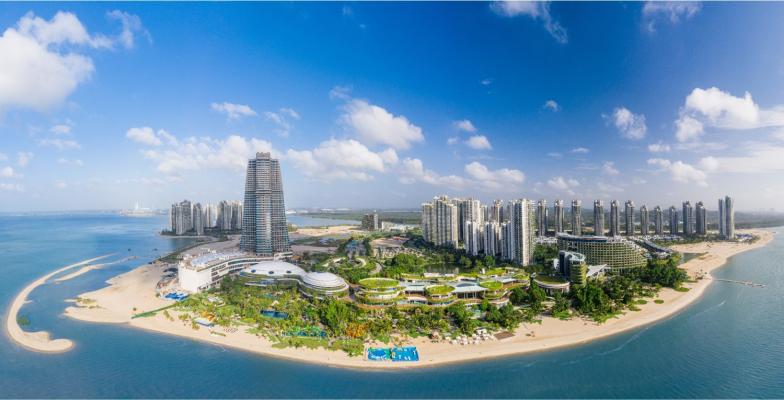
Forest City, Johor
Singapore-based companies have committed more than S$5.5 billion in Johor since the JS-SEZ memorandum of understanding, while IMFC-J reported 1,000 enquiries linked to RM73 billion in potential investment in March 2026.
The JS-SEZ agreement, signed on 7 January 2025, covers approximately 3,588 square kilometres across southern Johor. It comprises nine flagship areas and targets investment in 11 sectors, including manufacturing, logistics, financial services, the digital economy, tourism, education, healthcare and the green economy. Forest City is the designated financial-services flagship within the framework.
"The JS-SEZ has moved beyond framework design and into early-stage execution. Forest City has a defined role in financial services and family-office activity, while the wider zone is building a pipeline across multiple industries," a Forest City SFZ spokesperson said.
Investment pipeline builds across the JS-SEZ
Singapore's Ministry of Trade and Industry said Singapore-based companies had committed more than S$5.5 billion in investments into Johor since the JS-SEZ memorandum of understanding was signed in January 2024. The figure was highlighted at the second JS-SEZ Joint Investment Forum in Singapore in October 2025.
On the Malaysian side, the Invest Malaysia Facilitation Centre Johor (IMFC-J) reported in March 2026 that it had received 1,000 investor enquiries and was facilitating RM73 billion in potential investment.
IMFC-J is a joint federal-state one-stop centre led by the Iskandar Regional Development Authority, Invest Johor and the Malaysian Investment Development Authority.
The figures represent investment commitments and potential project value rather than fully realised capital expenditure, but provide an early measure of the commercial pipeline forming around the economic corridor.
Forest City builds financial-services proposition
Malaysia announced the Forest City SFZ incentive package in September 2024, followed by the gazettement of the Single Family Office (SFO) tax rules in October 2025. Under the scheme, a qualifying SFO vehicle may receive a 0% tax rate on eligible investment income for an initial 10-year period, with a possible extension for a further 10 years, subject to asset, local investment, staffing and operating-expenditure requirements.
The initial phase requires at least RM30 million in assets under management. The wider Forest City incentive framework also includes a 5% corporate tax rate for qualifying global-services and selected relocation activities, while eligible knowledge workers in the JS-SEZ may qualify for a 15% personal income tax rate, subject to prevailing rules and approvals.
According to Forest City data, nine family offices had received approvals under the scheme by June 2026. The Securities Commission Malaysia had previously reported more than 30 expressions of interest and has set a target of RM2 billion in SFO assets under management by the end of 2026.
Separately, Forest City said 593 applicants were approved for the SFZ category of the Malaysia My Second Home programme between 1 October 2024 and 31 March 2026, indicating demand from investors, professionals and long-stay residents alongside the financial-services push.
Cross-border measures support the dual-market model
The JS-SEZ framework is intended to combine Johor's land, industrial capacity and cost base with Singapore's capital, connectivity and business ecosystem. Measures under the bilateral framework include investor facilitation, automated immigration channels, paperless goods clearance and improved transport links.
Singapore has rolled out QR-code immigration clearance across travel modes at the Woodlands and Tuas checkpoints. Travellers should continue to carry their passports, which may still be required for verification and for clearance at the Malaysian border.
The Johor Bahru-Singapore Rapid Transit System Link is targeted to begin passenger service by the end of 2026. The four-kilometre line will connect Bukit Chagar and Woodlands North in about five minutes and is designed to carry up to 10,000 passengers per hour in each direction during peak periods.
Execution and conversion remain the next test
The World Bank projects Malaysia's economy to expand by 4.4% in 2026, supported by domestic demand, while warning that trade restrictions, global policy uncertainty and weaker external demand remain downside risks.
For the JS-SEZ, the next phase will be measured by the conversion of enquiries and commitments into approved projects, realised investment, skilled employment and operating businesses. Delivery of transport, utilities, talent development and regulatory coordination will also determine the pace at which companies adopt a cross-border operating model.
"The early indicators are encouraging, but the economic impact should be assessed over a multi-year horizon. The priority now is to convert the pipeline into sustainable business activity, jobs and a deeper professional-services ecosystem," the spokesperson said.
Forest City SFZ said it will continue working with public agencies, financial institutions and professional-service providers to support family offices, international investors and companies evaluating Johor as part of their regional growth strategy.
Key figures
|
Indicator
|
Latest stated figure
|
|
JS-SEZ coverage
|
Approximately 3,588 km?; nine flagship areas; 11 priority sectors
|
|
Singapore-linked commitments
|
More than S$5.5 billion committed into Johor since January 2024
|
|
IMFC-J pipeline
|
1,000 enquiries; RM73 billion in potential investment as at March 2026
|
|
SFO incentive
|
0% on eligible investment income for 10 years, with a possible further 10 years
|
|
RTS Link
|
Targeted passenger service by end-2026; up to 10,000 passengers per hour per direction
|
|
Malaysia 2026 GDP outlook
|
4.4% growth forecast by the World Bank |
BERITA LAINNYA
Kamis, 02 Juli 2026 | 21:32
Kamis, 02 Juli 2026 | 21:31
Kamis, 02 Juli 2026 | 21:29
Kamis, 02 Juli 2026 | 21:28

Kamis, 02 Juli 2026 | 21:26
Kamis, 02 Juli 2026 | 21:20

Kamis, 02 Juli 2026 | 21:19

Kamis, 02 Juli 2026 | 21:18

Kamis, 02 Juli 2026 | 21:17
Kamis, 02 Juli 2026 | 21:17

Kamis, 02 Juli 2026 | 21:15

BERIKAN KOMENTAR


-
Kamis, 02 Juli 2026 | 21:32
Forest City SFZ Highlights Early JS-SEZ Traction as Investment Pipeline Expands
-
-
Kamis, 02 Juli 2026 | 21:28
Natixis CIB bolsters technology and innovation hub in India with strategic leadership appointment
-
-

-
-
 Sabtu, 27 Juni 2026 | 14:23
InvestHK: 413 Perusahaan Ekspansi ke Hong Kong, Bawa Investasi HK$53 Miliar dan Ciptakan 8.600 Lapangan Kerja
-
 Sabtu, 27 Juni 2026 | 14:24
OneGrowth 2026: China Telecom Gelar Konferensi Mitra Global, Sambut Era Berbagi Token AI
-
 Sabtu, 27 Juni 2026 | 14:27
Flash Sports & Media, Inc. Ungkap Rencana Membangun Generasi Baru Liga Kriket T20
-
 Sabtu, 27 Juni 2026 | 14:22
Hasil Tahun Fiskal 2025/2026 HONMA Golf Tetap Solid, Penjualan dan Laba Bersih Mencatat Peningkatan Signifikan
-
 Sabtu, 27 Juni 2026 | 14:25
Perbandingan Jajaran Laptop Razer Blade 2026: Blade 14 vs Blade 16 vs Blade 18