Menu Website

- Home
- MediaOutReach
- NIA Highlights Key Innovation Trends for 2026, Spotlighting Innovation Policies Driving Thailand's Economy and Society

NIA Highlights Key Innovation Trends for 2026, Spotlighting Innovation Policies Driving Thailand's Economy and Society
Jumat, 16 Januari 2026 | 10:55
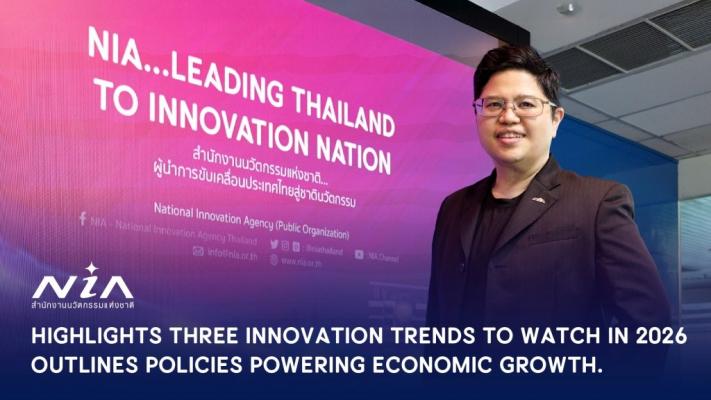
Dr. Krithpaka Boonfueng, Executive Director of NIA
BANGKOK , THAILAND -
Media OutReach Newswire
- 16 January 2026 - The National Innovation Agency (Public
Organization), or NIA, under the Ministry of Higher Education, Science,
Research and Innovation (MHESI), is encouraging Thai entrepreneurs to
keep a close eye on three key innovation trends for 2026: technology
trends, market trends, and consumer trends. NIA also unveiled four major
innovation policy directions: promoting investment in innovative
businesses, strengthening innovation linkages across sectors, advancing
regional innovation development, and enhancing national innovation
competencies. These policies aim to accelerate the growth, capability
development, and diffusion of innovative businesses, positioning them as
key drivers of Thailand's sustainable economic and social development.
Dr. Krithpaka Boonfueng, Executive Director of NIA, said that rapid advances in artificial intelligence, escalating geopolitical tensions across multiple regions, trade decoupling and reciprocal tariff measures that create uncertainty in the global economy and value chains, as well as environmental issues and natural disasters, were major forces shaping change in 2025. 'Innovation' remains a critical tool for coping with these disruptions and uncertainties.
Looking ahead to 2026, Thai entrepreneurs will need to continue closely monitoring and adapting to change. Key innovation trends present both opportunities and challenges, starting with technology trends that help reduce costs and build long-term competitiveness. Notable technologies include Agentic AI, which can autonomously perform tasks such as customer chat responses, sales closure, order management, queue booking, price comparison, and automated purchasing; Hyper-Automation, which integrates bots and systems to reduce repetitive tasks, improve efficiency and accuracy, and enable real-time data-driven decision-making; and Carbon Accounting, which is becoming essential for SMEs involved in exports or global supply chains. Businesses are increasingly required to measure carbon footprints across energy use, production, logistics, and waste, in response to stricter global regulations such as the EU's CBAM and Thailand's forthcoming Climate Change Act.
Business trends highlight growth opportunities across several sectors. These include Health and Wellness, covering not only treatment but also prevention and therapy, particularly for working-age populations facing stress, office syndrome, and sleep disorders. Opportunities span physical therapy clinics, aromatherapy and sleep-aid products, herbal supplements, wellness tourism, yoga, and meditation. Another fast-growing area is the Pet Economy, as the Thai pet market continues to expand despite economic headwinds. This sector now includes holistic and organic pet food, fresh pet meals, fashion apparel, multifunctional pet furniture, and premium services such as pet spas, hotels, and condominiums. Additionally, Green and Circular Businesses are gaining traction, with upcycling and recycling ventures transforming waste and local materials into higher-value products. Although costs may be higher, sustainability-driven products can command premium prices, creating opportunities for community-based SMEs through innovative design aligned with environmental and fashion trends.
Consumer trends reveal a shift toward value-for-money and self-care. Hyper-Personalization is increasingly important, as consumers seek products tailored to individual needs, supported by advanced data analytics—such as supplements based on blood test results or skincare customized to personal skin conditions. Silver Solutions address the needs of Thailand's aging society, with services focused on convenience, safety, and quality of life, including home modifications, slow-life travel programs, and assisted healthcare services. Meanwhile, Muketing or the Magic Economy reflects the enduring role of belief, spirituality, and cultural traditions in Thai society, creating economic value through religious tourism, spiritually inspired products, and design-driven items that blend art with faith.
Dr. Krithpaka added that NIA's long-term mission is to transform Thailand into an innovation-driven economy, with startups and innovation-based entrepreneurs at its core. This requires the creation of new industries to drive growth and position Thailand as an "Innovation Nation" through three key objectives: developing innovations based on advanced and deep technologies that are difficult to replicate; creating high-value products and services rooted in creativity and cultural capital; and preparing a highly skilled workforce capable of keeping pace with rapid technological change and evolving demographic and labor market structures. NIA works closely with domestic and international partners in its role as a Focal Conductor of Innovation, supporting innovative businesses through the 4G framework: Groom (incubation and capability building), Grant (funding support), Growth (market expansion and access to capital), and Global (international market entry). In 2026, NIA will drive Thailand's economy and society through four key innovation policy pillars.
The first focuses on promoting investment in innovative businesses, offering a range of financial mechanisms including grants for early-stage ventures and co-investment schemes for growth-stage firms, such as corporate co-funding, public venture mechanisms (NIA Venture), global investment link programs, and capital gains tax exemptions to support startup fundraising. The second pillar emphasizes innovation linkages, strengthening collaboration between academia and industry to translate research into real-world applications through acceleration programs, innovation hubs, ecosystem platforms, tax incentives, and future mechanisms such as intellectual property financing. The third pillar supports regional innovation development, enhancing local economies and quality of life through Social Innovation Driving units (SID), Open Innovation programs, City and Community Challenge, Social Innovation Villages, and Ninmungkornth The Reality, which inspires new or small entrepreneurs to become local economic champions. The final pillar aims to enhance national innovation competencies, cultivating innovation mindsets, technological and business skills, entrepreneurial thinking, and global readiness across youth, startups, SMEs, and organizations. Key initiatives include STEAM4INNOVATOR, Startup Thailand League, NIA Academy training programs, and productivity-focused projects such as INNOProductivity for SMEs, aligned with international innovation management standards like ISO 56001.
Through these integrated efforts, NIA seeks to strengthen Thailand's innovation ecosystem and ensure that innovative businesses can grow resiliently and compete on the global stage.
 https://www.nia.or.th/
 BERITA LAINNYA

Sabtu, 17 Januari 2026 | 09:00


Sabtu, 17 Januari 2026 | 08:58

Sabtu, 17 Januari 2026 | 08:57

Sabtu, 17 Januari 2026 | 08:56

Jumat, 16 Januari 2026 | 13:59
Jumat, 16 Januari 2026 | 10:58

Jumat, 16 Januari 2026 | 10:57
Jumat, 16 Januari 2026 | 10:55

Jumat, 16 Januari 2026 | 10:54
Jumat, 16 Januari 2026 | 10:53

BERIKAN KOMENTAR


-
 Sabtu, 17 Januari 2026 | 21:40
Soroti Potensi Bancakan Anggaran, MASAKO Dumai Siap Gelar Seminar Anti Korupsi
-
 Sabtu, 17 Januari 2026 | 09:36
Merek Lokal di Shopee Berinovasi untuk Menyesuaikan Diri dengan Kebutuhan Pembeli Modern di Tahun Baru Imlek
-
 Sabtu, 17 Januari 2026 | 09:36
VinFast VF 8 Menjadi Pilihan Global Berkat Performa Andal dan Kenyamanan Sehari-hari
-

-
 Sabtu, 17 Januari 2026 | 09:35
AFERIY Luncurkan Nomad1800, Pembangkit Listrik Portabel Generasi Terbaru di CES 2026
-


-
 Minggu, 11 Januari 2026 | 20:26
Kerja Sama PT Pelabuhan Dumai dan KBPS Dipertanyakan, LSM Minta Transparansi PAD
-
 Minggu, 11 Januari 2026 | 20:37
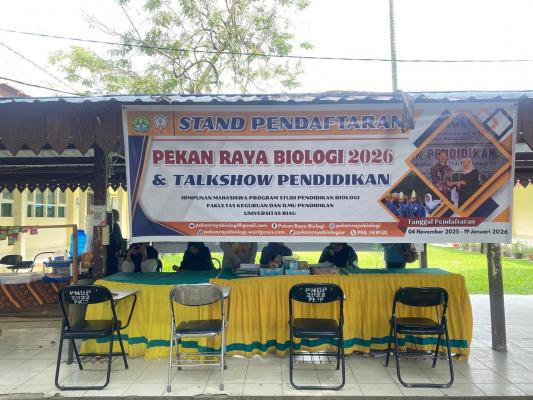
Panitia Pekan Raya Biologi 2026 FKIP UNRI Perkuat Kesiapan Jelang Pelaksanaan
-
 Selasa, 13 Januari 2026 | 09:25
Cucaca Buruk di Bandara-Soekarno Hatta, AirNav Indonesia Alihkan Pendaratan Sejumlah Penerbangan untuk Keselamatan
-
 Selasa, 13 Januari 2026 | 15:21
'Power Women' shaping Asia's tomorrow's cities honoured at ARES 2025 VIP celebration
-
 Senin, 12 Januari 2026 | 10:09
Media OutReach Newswire and Asia News Network (ANN) Form Corporate News Release Partnership
-
 Selasa, 13 Januari 2026 | 15:18
Australia Developers Triumph at the 20th PropertyGuru Asia Property Awards Grand Final