Menu Website

- Home
- MediaOutReach
- From Millennium Xuan Paper to Contemporary Visual Storytelling: China's Intangible Cultural Heritage Sets Off Again

From Millennium Xuan Paper to Contemporary Visual Storytelling: China's Intangible Cultural Heritage Sets Off Again
Sabtu, 27 Juni 2026 | 12:56
HEFEI, CHINA -
Media OutReach Newswire
- 26 June 2026 - On June 23, the realist drama Zhong Mo Yuan premiered
in the prime-time slot on mainstream television in China. Centered on
Xuan paper-making techniques, an element of UNESCO's Intangible Cultural
Heritage, the series uses this centuries-old craft as a narrative
thread, presenting its continuity and renewal in contemporary life
through a visual storytelling approach.
The Four Treasures of the Study—brush, ink, paper, and inkstone—are an essential part of China's traditional writing culture. Among them, Xuan paper serves as a key material medium, long used in calligraphy and Chinese painting. Unlike the static presentation typical of traditional craft-themed works, this drama transforms Xuan paper from a "craft object" into a "narrative vehicle," allowing complex processes such as papermaking, sheet lifting, drying, and cutting to naturally unfold within character-driven stories and everyday settings. In doing so, audiences are able to perceive the tangible warmth and contemporary expression of an intangible cultural heritage practice as the plot progresses.
From a Single Sheet of Paper, a Broader Way of Eastern Living Comes Into View
Xuan paper is not merely a material; it represents a centuries-old Eastern way of writing and cultural expression. Starting from this point, the series extends its perspective into a broader cultural context: the relationship between people and craftsmanship, the dialogue between tradition and modernity, and the evolving pathways through which manual skills persist within today's industrial landscape.
In its narrative approach, the work brings together interactions between a younger generation and master artisans, making "inheritance" no longer an abstract concept, but a series of real choices and actions. In this way, intangible cultural heritage enters contemporary discourse in a more immersive and relatable form.
Bringing Intangible Cultural Heritage to the World Is Not Only About the Work Itself
In recent years, Chinese intangible cultural heritage represented by Xuan paper has been increasingly entering the global field of vision through multiple channels.
On one hand, through state-level media and international communication platforms, content related to intangible cultural heritage continues to be integrated into multilingual dissemination systems, building broader baseline awareness. On the other hand, with the development of streaming media and digital platforms, more and more film and television works rooted in traditional Chinese culture are reaching overseas audiences in lighter, more visually driven formats.
From Visual Narrative to Lived Experience: Intangible Cultural Heritage Is Forming New Communication Pathways
The significance of Zhong Mo Yuan lies not only in telling a story about Xuan paper, but also in its alignment with current trends in intangible cultural heritage communication: culture is no longer simply displayed—it is experienced, understood, and re-created.
Alongside the dissemination and circulation of related visual content, Jing County in Anhui Province, a key origin of Xuan paper culture, has gradually entered the view of international cultural and artistic audiences. Relying on its well-preserved natural ecological environment, traditional handmade papermaking system, and continuously living cultural transmission, the region has been steadily improving a hybrid spatial structure that integrates heritage exhibition, craft experience, and cultural participation. This allows traditional craftsmanship to sustain its vitality through contemporary expression. When visual narratives connect with real-world sites and cultural spaces, intangible cultural heritage is no longer confined to museum-style presentation, but increasingly becomes a cultural resource that can enter everyday life and international exchange contexts.
Conclusion: A World Expressed Through a Single Sheet of Paper
Starting from a single sheet of Xuan paper, traditional Chinese craftsmanship is being seen, understood, and gradually integrated into a broader global cultural communication system in a more contemporary form.
Within this context, Zhong Mo Yuan offers a more expressive visual approach to intangible cultural heritage, allowing the world to perceive the finer layers and textures of Chinese culture through the story of a single sheet of paper.
The Four Treasures of the Study—brush, ink, paper, and inkstone—are an essential part of China's traditional writing culture. Among them, Xuan paper serves as a key material medium, long used in calligraphy and Chinese painting. Unlike the static presentation typical of traditional craft-themed works, this drama transforms Xuan paper from a "craft object" into a "narrative vehicle," allowing complex processes such as papermaking, sheet lifting, drying, and cutting to naturally unfold within character-driven stories and everyday settings. In doing so, audiences are able to perceive the tangible warmth and contemporary expression of an intangible cultural heritage practice as the plot progresses.
From a Single Sheet of Paper, a Broader Way of Eastern Living Comes Into View
Xuan paper is not merely a material; it represents a centuries-old Eastern way of writing and cultural expression. Starting from this point, the series extends its perspective into a broader cultural context: the relationship between people and craftsmanship, the dialogue between tradition and modernity, and the evolving pathways through which manual skills persist within today's industrial landscape.
In its narrative approach, the work brings together interactions between a younger generation and master artisans, making "inheritance" no longer an abstract concept, but a series of real choices and actions. In this way, intangible cultural heritage enters contemporary discourse in a more immersive and relatable form.
Bringing Intangible Cultural Heritage to the World Is Not Only About the Work Itself
In recent years, Chinese intangible cultural heritage represented by Xuan paper has been increasingly entering the global field of vision through multiple channels.
On one hand, through state-level media and international communication platforms, content related to intangible cultural heritage continues to be integrated into multilingual dissemination systems, building broader baseline awareness. On the other hand, with the development of streaming media and digital platforms, more and more film and television works rooted in traditional Chinese culture are reaching overseas audiences in lighter, more visually driven formats.
From Visual Narrative to Lived Experience: Intangible Cultural Heritage Is Forming New Communication Pathways
The significance of Zhong Mo Yuan lies not only in telling a story about Xuan paper, but also in its alignment with current trends in intangible cultural heritage communication: culture is no longer simply displayed—it is experienced, understood, and re-created.
Alongside the dissemination and circulation of related visual content, Jing County in Anhui Province, a key origin of Xuan paper culture, has gradually entered the view of international cultural and artistic audiences. Relying on its well-preserved natural ecological environment, traditional handmade papermaking system, and continuously living cultural transmission, the region has been steadily improving a hybrid spatial structure that integrates heritage exhibition, craft experience, and cultural participation. This allows traditional craftsmanship to sustain its vitality through contemporary expression. When visual narratives connect with real-world sites and cultural spaces, intangible cultural heritage is no longer confined to museum-style presentation, but increasingly becomes a cultural resource that can enter everyday life and international exchange contexts.
Conclusion: A World Expressed Through a Single Sheet of Paper
Starting from a single sheet of Xuan paper, traditional Chinese craftsmanship is being seen, understood, and gradually integrated into a broader global cultural communication system in a more contemporary form.
Within this context, Zhong Mo Yuan offers a more expressive visual approach to intangible cultural heritage, allowing the world to perceive the finer layers and textures of Chinese culture through the story of a single sheet of paper.
BERITA LAINNYA
Sabtu, 27 Juni 2026 | 13:05
Sabtu, 27 Juni 2026 | 13:01
Sabtu, 27 Juni 2026 | 12:58
Sabtu, 27 Juni 2026 | 12:56
Sabtu, 27 Juni 2026 | 12:56
Sabtu, 27 Juni 2026 | 12:54
Sabtu, 27 Juni 2026 | 12:54

Sabtu, 27 Juni 2026 | 12:53
Sabtu, 27 Juni 2026 | 12:52

Jumat, 26 Juni 2026 | 10:07


BERIKAN KOMENTAR

-
 Sabtu, 27 Juni 2026 | 14:27
Flash Sports & Media, Inc. Ungkap Rencana Membangun Generasi Baru Liga Kriket T20
-
 Sabtu, 27 Juni 2026 | 14:25
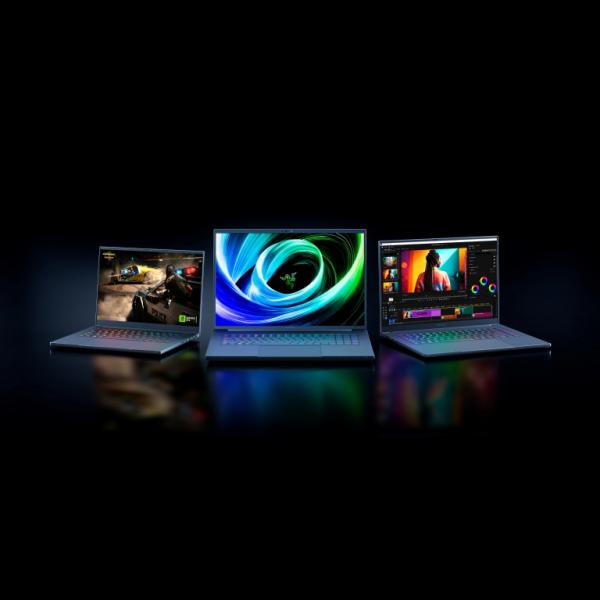
Perbandingan Jajaran Laptop Razer Blade 2026: Blade 14 vs Blade 16 vs Blade 18
-
 Sabtu, 27 Juni 2026 | 14:24
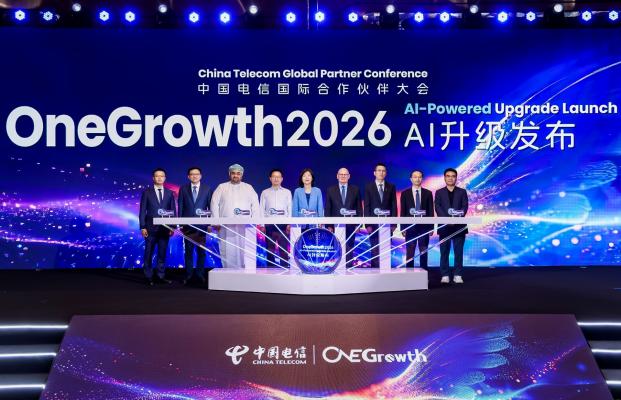
OneGrowth 2026: China Telecom Gelar Konferensi Mitra Global, Sambut Era Berbagi Token AI
-
-
 Sabtu, 27 Juni 2026 | 14:23
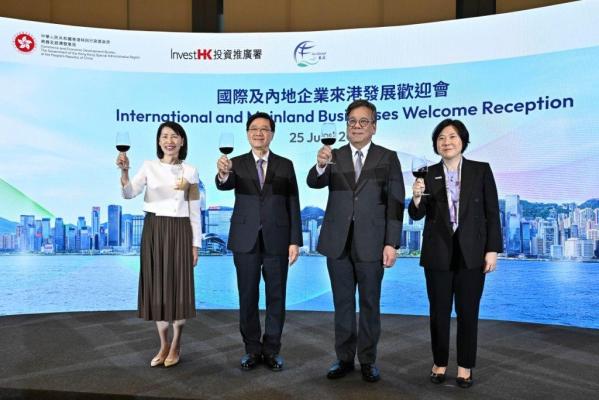
InvestHK: 413 Perusahaan Ekspansi ke Hong Kong, Bawa Investasi HK$53 Miliar dan Ciptakan 8.600 Lapangan Kerja
-
 Sabtu, 27 Juni 2026 | 14:22
Hasil Tahun Fiskal 2025/2026 HONMA Golf Tetap Solid, Penjualan dan Laba Bersih Mencatat Peningkatan Signifikan

-
 Sabtu, 20 Juni 2026 | 14:42
Simposium Internasional tentang Tanggap Darurat dan Layanan Aeromedis di Hong Kong Sukses Digelar Perdana
-
 Sabtu, 20 Juni 2026 | 14:39
iQOO 15R Ditetapkan sebagai Ponsel Gaming Resmi untuk Kualifikasi Esports Asian Games 2026: Honor of Kings
-

-
-
-
 Senin, 22 Juni 2026 | 12:04
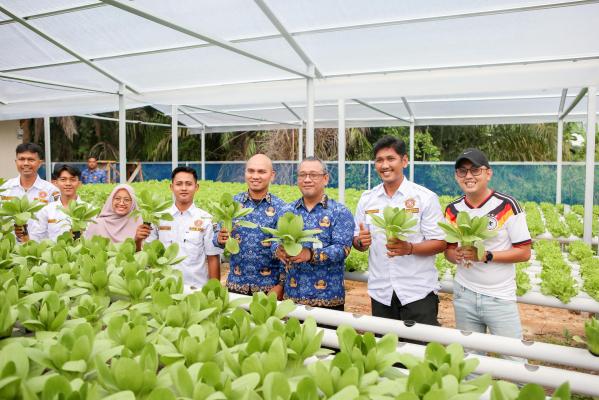
Sekda Dumai Ikuti Panen Sayuran Hidroponik Binaan Karang Taruna Kota Dumai