Menu Website

- Home
- MediaOutReach
- Analysis Reveals Three Major Coverage Misunderstanding for Hong Kong Travelers

Analysis Reveals Three Major Coverage Misunderstanding for Hong Kong Travelers
Kamis, 12 Februari 2026 | 12:13

HONG KONG SAR -
Media OutReach Newswire
- 12 February 2026 - As Hong Kong's outbound travel market surges, so
do the headaches involving insurance claims. A recent deep dive by
10Life,
the independent insurance comparison platform, shows a growing rift
between what travelers think they bought and what their policies
actually cover. Their data suggests that large proportion of disputes
are born from simple misunderstandings, with the most significant risks
lurking in cruise packages, road trips, and complex cancellation
clauses.
Cruises and Road Trips: The Newest Coverage Blind Spots
Many travelers assume a standard policy for Japan or Southeast Asia is
a "catch-all," but 10Life experts warn that cruises and multi-leg
journeys often fall through the cracks. A surge in rejected claims has
been linked to travelers failing to add specific "Cruise Cover" to their
plans. Without this specific add-on, high-cost risks like onboard
medical treatment or sudden itinerary shifts are frequently excluded.
The story is similar for self-drive travellers. While most people now know to check for "snow driving" exclusions, a major point of confusion remains the difference between a ruined experience perceived loss and an actual monetary loss. For instance, if bad weather prevents you from visiting a famous hot spring, insurers view this as a non-monetary "loss of experience" and won't pay out. However, if that same weather forces you to book an extra night at a hotel, those specific accommodation costs may be covered (subject to the policy specificity).
The Depreciation Sting: Why Your Lost Gear Isn't Fully Covered
Losing personal property is a common travel nightmare, yet the
relevant insurance policy terms are also frequently misunderstood.
10Life study showed that most policies compensate based on an item's
depreciated value rather than its original price tag. When you factor in
strict sub-limits for high-value tech like iPhones or camera with
depreciation, the payout is often much lower than expected.
Documentation remains the biggest hurdle for successful payouts. Many claims are dead on arrival because the travellers failed to secure a police report. Furthermore, travelers are often surprised to find that baggage delay coverage typically only applies to the outbound journey. If your suitcase is damaged, most insurers also insist you squeeze the airline for compensation first, only stepping in to cover the "shortfall" that the airline refuses to pay.
The Fine Print Behind "Cancel for Any Reason"
In a post-pandemic world, everyone wants the flexibility to cancel,
but the terms "Trip Cancellation" and "Cancel for Any Reason" (CFAR) are
often misunderstood. Traditional plans only trigger for "listed events"
like severe illness or natural disasters.
Even specialised CFAR policies come with heavy strings attached. These plans usually require you to buy the insurance within a tight window—such as 7 days—of making your first trip deposit. Crucially, they rarely offer a 100% refund, usually only returning a fixed percentage of your prepaid costs.
Clarity Over Cost: The New Standard for HK Travelers
The tide is turning in how Hong Kongers shop for protection. 10Life's
data shows that over half of their users are now looking past the
cheapest premiums to compare medical limits, property caps, and
cancellation fine print. It is a clear sign that travelers are becoming
more sophisticated and demand transparency over marketing fluff. 10Life
concludes that for the market to grow healthily, insurers need to place
greater emphasis on policy clarity and transparency in claims processes,
especially regarding newer product features like CFAR coverage.
BERITA LAINNYA
Kamis, 12 Februari 2026 | 12:15
Kamis, 12 Februari 2026 | 12:13
Kamis, 12 Februari 2026 | 12:13

Kamis, 12 Februari 2026 | 12:12
Kamis, 12 Februari 2026 | 12:11

Rabu, 11 Februari 2026 | 20:53
Rabu, 11 Februari 2026 | 20:52

Rabu, 11 Februari 2026 | 20:50

Rabu, 11 Februari 2026 | 20:50

Rabu, 11 Februari 2026 | 20:49

Rabu, 11 Februari 2026 | 20:48

BERIKAN KOMENTAR


-
Kamis, 12 Februari 2026 | 12:15
A Constellation of Excellence – Galaxy Macau Secures 12 Forbes Travel Guide Five-Star Awards in 2026
-

-
Kamis, 12 Februari 2026 | 12:13
Analysis Reveals Three Major Coverage Misunderstanding for Hong Kong Travelers
-
Kamis, 12 Februari 2026 | 12:12
Cyber and Supply Chain Risks Reshaping Japan's Business Landscape, Aon Survey
-
Kamis, 12 Februari 2026 | 12:11
Sustainable seafood matters to eight in ten consumers, leading to calls for retailers to support sustainable choices

-
 Kamis, 05 Februari 2026 | 14:08
Erwin Sitompul,SP.d.Minta PLT Gubernur Riau Segera Copot Jabatan Kepala Dinas Pendidikan Provinsi Riau
-

-
 Senin, 09 Februari 2026 | 10:45
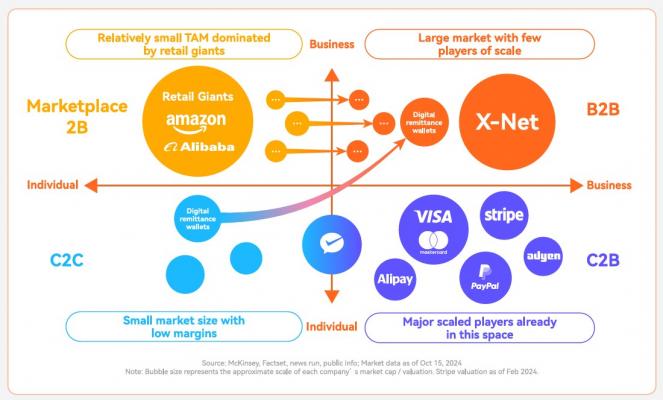
Beyond Borders: Wawasan XTransfer – Peluang yang Terlewat: Pasar Lintas-Batas UKM yang Kurang Terlayani
-
 Sabtu, 07 Februari 2026 | 10:16
Skylon Appoints COBNB as Hospitality Partner, Launches COBNB+ with L'Occitane en Provence Hotel Amenities
-
 Senin, 09 Februari 2026 | 09:52
Beyond Borders: XTransfer Insights-Opportunity in the Overlooked: The Underserved SME Cross-Border Market
-
 Sabtu, 07 Februari 2026 | 13:40
Siap Perkuat Konektivitas, JIP Kembangkan Wi-Fi Jakinet dengan Dukungan Iklan Digital