Menu Website

- Home
- MediaOutReach
- Afogreen Build Highlights Growing Adoption of Building Performance Modelling in Australia's Sustainability-Driven Construction Sector

Afogreen Build Highlights Growing Adoption of Building Performance Modelling in Australia's Sustainability-Driven Construction Sector
Senin, 29 Juni 2026 | 17:47
SYDNEY, AUSTRALIA -
Media OutReach Newswire
- 29 June 2026 - As sustainability requirements and operational
performance expectations evolve, building performance modelling is
becoming increasingly important across Australia's construction sector.
Afogreen Build, an
Environmentally Sustainable Development (ESD) consultancy,
has observed growing demand for integrated modelling approaches that
help architects and building owners evaluate factors like energy
efficiency, occupant comfort, and sustainability outcomes.
Building Performance Modelling as a Strategic Tool
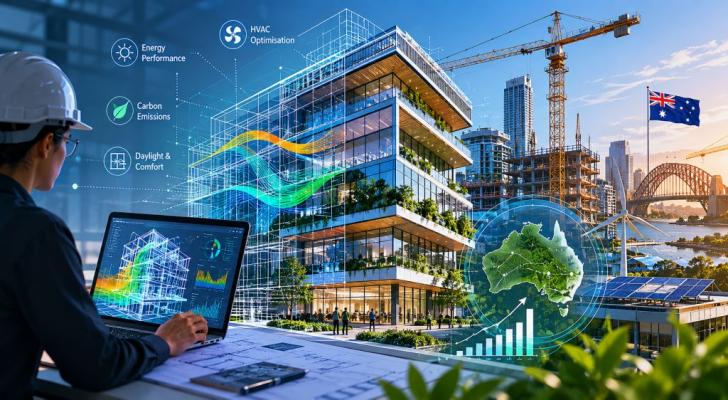
Integrated modelling uses computer-based simulations to predict how a building will perform even before it is constructed. By analysing factors such as energy consumption, indoor comfort, daylight access, airflow, and operational efficiency, it helps project teams understand how design decisions may affect a building's long-term performance.
Traditionally, this approach has been used to support compliance with building regulations and sustainability certification frameworks. However, its role is expanding as project teams increasingly seek data-driven insights during the design process.
One factor contributing to this trend is the growing focus on measurable operational outcomes. Frameworks such as NABERS Commitment Agreements and Section J Performance Solutions require project teams to demonstrate expected building performance before construction begins. As a result, modelling is becoming an increasingly valuable tool for evaluating whether design targets can realistically be achieved.
The approach is already widely adopted across Australia's construction sector. Research indicates that approximately 90% of new residential developments and 85% of non-office commercial projects now incorporate building performance modelling. At the same time, around 53% of standard projects and 49% of premium projects are using modelling primarily for compliance-based assessments.
"Modelling is increasingly viewed not just as a compliance requirement, but as a practical tool for evaluating whether design targets can realistically be achieved," shared Erika Yuniarti, Managing Director of Afogreen Build.
Integrated Modelling Provides a Broader View of Building Performance
Many project teams are also moving beyond assessments that focus on a single performance metric.
Integrated modelling evaluates multiple aspects of building performance together, including:
By identifying potential issues earlier in the design process, project teams can make more informed decisions before significant design resources are committed. This can help reduce design revisions, improve overall efficiency, and provide greater confidence that performance objectives can be achieved once the building is operational.
Applications Across Multiple Sectors
The growing adoption of building performance modelling can be seen across a variety of project types. Recent projects undertaken by Afogreen Build highlight how simulation-based assessments are helping project teams evaluate performance, improve design outcomes, and support sustainability objectives.
a. Large-Scale Hotel Development
One project involved the transformation of a former police station site into a two-tower hotel complex with a gross floor area of approximately 25,000 sqm. The development combines a 131-room boutique luxury lifestyle hotel with a 451-room budget-friendly hotel, creating a diverse hospitality offering designed to serve different traveller segments.
To support both guest comfort and sustainability objectives, Afogreen Build conducted integrated daylight, glare, and energy modelling throughout the project. Daylight simulations showed that approximately 94% of guest rooms met daylight performance requirements, while glare assessments helped optimise visual comfort within occupied spaces.
Energy modelling indicated an overall reduction in energy consumption of 30.2% compared to baseline building performance. The analysis also identified key areas of energy use, providing valuable insights that can support future operational and system optimisation efforts.
b. Train Station Project
For a train station project, Afogreen Build adopted an integrated modelling approach to evaluate factors such as daylight access, thermal comfort, glare, and natural ventilation across key passenger areas, including the concourse and platforms.
The simulations helped project stakeholders better understand how environmental conditions would affect the passenger experience throughout the day. Findings from the study informed façade design strategies, balancing natural daylight with measures to reduce excessive glare and solar heat gain in occupied spaces.
The assessments also identified opportunities to improve thermal comfort and air movement within the station, supporting a more comfortable environment for commuters while maintaining energy-efficient design principles.
c. High-Performance Data Centre
Afogreen Build also applied building performance modelling to a 50 MW data centre project, where energy efficiency was a key design consideration.
The study evaluated the interaction between IT equipment, cooling systems, power distribution infrastructure, and other supporting building systems. By analysing how these components work together under operational conditions, the project team was able to gain a clearer understanding of the facility's overall energy performance and identify opportunities for optimisation.
The modelling contributed to an optimised Category 2 Power Usage Effectiveness (PUE) range of 1.19 to 1.31, reflecting a highly efficient approach to managing energy consumption within a large-scale, energy-intensive facility.
Together, these projects demonstrate how building performance modelling can be applied across diverse sectors, each with its own operational requirements and performance priorities.
The Future of Performance-Driven Design
As sustainability frameworks and performance expectations continue to evolve, Afogreen Build expects modelling to become an increasingly important part of project planning and design across a wide range of sectors.
"There is increasing emphasis on understanding how buildings are likely to perform before they are built, rather than waiting until they are operational to identify challenges," said Ms. Erika. "The ability to evaluate performance early in the design process is becoming increasingly valuable as projects face more complex sustainability and operational requirements. The team should work closely with project stakeholders to establish realistic assumptions and evaluate likely performance outcomes from the outset. This process helps reduce unnecessary design iterations, improve modelling efficiency, and increase the likelihood of achieving targeted performance objectives. By integrating performance considerations earlier in the design process, project teams are better positioned to deliver buildings that meet both compliance requirements and long-term operational goals."
For more information about building performance modelling and sustainability consulting services, visit Afogreen Build's website.
 https://www.afogreenbuild.com/au/
Building Performance Modelling as a Strategic Tool
Integrated modelling uses computer-based simulations to predict how a building will perform even before it is constructed. By analysing factors such as energy consumption, indoor comfort, daylight access, airflow, and operational efficiency, it helps project teams understand how design decisions may affect a building's long-term performance.
Traditionally, this approach has been used to support compliance with building regulations and sustainability certification frameworks. However, its role is expanding as project teams increasingly seek data-driven insights during the design process.
One factor contributing to this trend is the growing focus on measurable operational outcomes. Frameworks such as NABERS Commitment Agreements and Section J Performance Solutions require project teams to demonstrate expected building performance before construction begins. As a result, modelling is becoming an increasingly valuable tool for evaluating whether design targets can realistically be achieved.
The approach is already widely adopted across Australia's construction sector. Research indicates that approximately 90% of new residential developments and 85% of non-office commercial projects now incorporate building performance modelling. At the same time, around 53% of standard projects and 49% of premium projects are using modelling primarily for compliance-based assessments.
"Modelling is increasingly viewed not just as a compliance requirement, but as a practical tool for evaluating whether design targets can realistically be achieved," shared Erika Yuniarti, Managing Director of Afogreen Build.
Integrated Modelling Provides a Broader View of Building Performance
Many project teams are also moving beyond assessments that focus on a single performance metric.
Integrated modelling evaluates multiple aspects of building performance together, including:
- - Energy use
-
- Thermal comfort
-
- Daylight access
-
- Ventilation
- - Occupant experience
This approach allows stakeholders to better understand how different
building systems and design decisions interact with one another.
By identifying potential issues earlier in the design process, project teams can make more informed decisions before significant design resources are committed. This can help reduce design revisions, improve overall efficiency, and provide greater confidence that performance objectives can be achieved once the building is operational.
Applications Across Multiple Sectors
The growing adoption of building performance modelling can be seen across a variety of project types. Recent projects undertaken by Afogreen Build highlight how simulation-based assessments are helping project teams evaluate performance, improve design outcomes, and support sustainability objectives.
a. Large-Scale Hotel Development
One project involved the transformation of a former police station site into a two-tower hotel complex with a gross floor area of approximately 25,000 sqm. The development combines a 131-room boutique luxury lifestyle hotel with a 451-room budget-friendly hotel, creating a diverse hospitality offering designed to serve different traveller segments.
To support both guest comfort and sustainability objectives, Afogreen Build conducted integrated daylight, glare, and energy modelling throughout the project. Daylight simulations showed that approximately 94% of guest rooms met daylight performance requirements, while glare assessments helped optimise visual comfort within occupied spaces.
Energy modelling indicated an overall reduction in energy consumption of 30.2% compared to baseline building performance. The analysis also identified key areas of energy use, providing valuable insights that can support future operational and system optimisation efforts.
b. Train Station Project
For a train station project, Afogreen Build adopted an integrated modelling approach to evaluate factors such as daylight access, thermal comfort, glare, and natural ventilation across key passenger areas, including the concourse and platforms.
The simulations helped project stakeholders better understand how environmental conditions would affect the passenger experience throughout the day. Findings from the study informed façade design strategies, balancing natural daylight with measures to reduce excessive glare and solar heat gain in occupied spaces.
The assessments also identified opportunities to improve thermal comfort and air movement within the station, supporting a more comfortable environment for commuters while maintaining energy-efficient design principles.
c. High-Performance Data Centre
Afogreen Build also applied building performance modelling to a 50 MW data centre project, where energy efficiency was a key design consideration.
The study evaluated the interaction between IT equipment, cooling systems, power distribution infrastructure, and other supporting building systems. By analysing how these components work together under operational conditions, the project team was able to gain a clearer understanding of the facility's overall energy performance and identify opportunities for optimisation.
The modelling contributed to an optimised Category 2 Power Usage Effectiveness (PUE) range of 1.19 to 1.31, reflecting a highly efficient approach to managing energy consumption within a large-scale, energy-intensive facility.
Together, these projects demonstrate how building performance modelling can be applied across diverse sectors, each with its own operational requirements and performance priorities.
The Future of Performance-Driven Design
As sustainability frameworks and performance expectations continue to evolve, Afogreen Build expects modelling to become an increasingly important part of project planning and design across a wide range of sectors.
"There is increasing emphasis on understanding how buildings are likely to perform before they are built, rather than waiting until they are operational to identify challenges," said Ms. Erika. "The ability to evaluate performance early in the design process is becoming increasingly valuable as projects face more complex sustainability and operational requirements. The team should work closely with project stakeholders to establish realistic assumptions and evaluate likely performance outcomes from the outset. This process helps reduce unnecessary design iterations, improve modelling efficiency, and increase the likelihood of achieving targeted performance objectives. By integrating performance considerations earlier in the design process, project teams are better positioned to deliver buildings that meet both compliance requirements and long-term operational goals."
For more information about building performance modelling and sustainability consulting services, visit Afogreen Build's website.
https://www.afogreenbuild.com/au/ BERITA LAINNYA
Senin, 29 Juni 2026 | 17:47
Senin, 29 Juni 2026 | 17:19

Senin, 29 Juni 2026 | 17:17
Senin, 29 Juni 2026 | 17:16
Senin, 29 Juni 2026 | 17:15

Senin, 29 Juni 2026 | 17:11

Senin, 29 Juni 2026 | 17:10


Senin, 29 Juni 2026 | 17:07

Senin, 29 Juni 2026 | 17:07


BERIKAN KOMENTAR


-
-

-
Senin, 29 Juni 2026 | 17:17
Siam Paragon Creates A World-Class Horological Benchmark With "Siam Paragon Bangkok Watch Week 2026"
-
Senin, 29 Juni 2026 | 17:16
The Work Project to Open Third London Location at UK's Largest Net Zero Office Development

-

-

-
 Sabtu, 27 Juni 2026 | 14:23
InvestHK: 413 Perusahaan Ekspansi ke Hong Kong, Bawa Investasi HK$53 Miliar dan Ciptakan 8.600 Lapangan Kerja
-
 Sabtu, 27 Juni 2026 | 14:24
OneGrowth 2026: China Telecom Gelar Konferensi Mitra Global, Sambut Era Berbagi Token AI
-
 Sabtu, 27 Juni 2026 | 14:22
Hasil Tahun Fiskal 2025/2026 HONMA Golf Tetap Solid, Penjualan dan Laba Bersih Mencatat Peningkatan Signifikan
-