Menu Website

- Home
- MediaOutReach
- Hong Kong's AI Adoption Outpaces Organizational Change, Microsoft Work Trend Index 2026 Finds

Hong Kong's AI Adoption Outpaces Organizational Change, Microsoft Work Trend Index 2026 Finds
Senin, 22 Juni 2026 | 11:18

- - 18% of Hong Kong workers using AI are the most advanced group known as Frontier Professionals, higher than the global average at 16%
- - Just 19% Hong Kong AI users say leadership is clearly and consistently aligned on AI, and only 10% say they're rewarded for reinvention even when results aren't immediate
- - Organizational factors such as culture, manager support, and talent practices drive 2x more AI impact than individual factors alone
- - Microsoft is also announcing the launch of Copilot Cowork, bringing multi-model capabilities to help organizations close the gap between AI adoption and how work is designed by enabling end-to-end, multi-step workflows
HONG KONG SAR -
Media OutReach Newswire
- 22 June 2026 - Hong Kong employees are moving faster than their
organizations when it comes to using AI, creating a growing gap between
AI adoption and how work is actually designed, according to
Microsoft's 2026 Work Trend Index. The research warns of a
"Transformation Paradox": while AI use is accelerating across the workforce—with more
Frontier Professionals using agents for multi-step workflows and
building multi-agent systems, leadership alignment, culture, and
operating models are not evolving at the same pace, limiting impact and
increasing pressure on employees.
The 2026 Work Trend Index draws on analysis of trillions of anonymized Microsoft 365 productivity signals, combined with survey insights from AI users and perspectives from experts in AI, work, and organizational psychology. The conclusion is consistent: the constraint is no longer what people can do, but how work is structured around them.
- - AI is lifting output but not yet transforming organizations. The data shows that AI is already raising the ceiling on individual performance in Hong Kong. A privacy-preserving analysis of more than 100,000 chats in Microsoft 365 Copilot shows that 49% of all conversations support cognitive work—helping workers analyze information, solve problems, evaluate and think creatively. This shift is visible in outcomes: 57% of AI users in Hong Kong say they are producing work they could not have a year ago, rising to 73% among Frontier Professionals, the most advanced AI users in the research.
- - The Transformation Paradox reflects the need for systemic change, with the gap more pronounced in Hong Kong than globally. 75% of Hong Kong AI users fear falling behind if they do not adapt quickly, yet 57% say it feels safer to focus on current goals than to redesign work with AI. [i] At the same time, only 19% say their leadership is clearly and consistently aligned on AI, and just 10% say they are rewarded for reinventing work with AI even when results are not immediate, revealing a widening gap between individual adoption and organizational change. [ii]
- - As AI and agents take on more execution, human value is shifting rather than diminishing. When asked which skills matter most as AI becomes more embedded in work, Hong Kong AI users ranked quality control of AI output (48%) and critical thinking (42%) at the top, underscoring that AI is redesigning work, not replacing people.
From Using AI to Being Frontier Professionals Who Refuse to Outsource Thinking
The Work Trend Index identifies the rise of Frontier Firms—organizations that deliberately rebuild their operating models around human‑agent collaboration, rather than layering AI onto existing ways of working.
Realizing this shift requires transformation at both the individual and organizational level. The research outlines four modes of human-AI collaboration to help employees take the first step toward becoming Frontier Professionals, before progressing to designing agentic workflows:
- - Delegate execution—Employees hand off routine or repeatable tasks to AI to gain speed and scale, while retaining responsibility for the outcome.
- - Ask for information—Employees turn to AI for context, clarification, or insight when they need to quickly get up to speed.
- - Collaborate on reasoning—People work alongside AI to analyze information, test ideas, and solve problems, using AI as a thought partner rather than a shortcut.
- - Explore new possibilities—AI is used to explore open‑ended questions, reframe problems, and surface options when the path forward is not yet clear.
These patterns matter because Frontier Firms do not aim to maximize AI
use everywhere. Instead, they intentionally match the right level of
human involvement to the outcome, enabling speed without sacrificing
quality or accountability.
Leadership and Culture Are the Real Multipliers
The research makes clear that technology alone is not the differentiator, but by how organizations lead, operate, and evolve. Organizational factors, including culture, manager support, and talent practices, account for more than twice the AI impact of individual mindset and behavior. In Hong Kong, Frontier Professionals are significantly more likely to say their managers set clear quality standards for AI work[iii], create space for experimentation[iv], and encourage more ambitious redesign of work[v].
"This is the Transformation Paradox facing Hong Kong today," said Leo Liu, General Manager of Microsoft Hong Kong and Macau. "AI adoption is moving fast on the ground, but many organizations are still trying to fit it into old operating models. To unlock real value, leaders must move beyond pilots and productivity gains, and intentionally redesign how work gets done—how teams collaborate, how managers lead, and how success is measured."
Microsoft is also announcing the launch of Copilot Cowork, designed to support this shift toward workflow redesign. Built on Microsoft's multi-model approach, this agentic system enables long-running tasks across multiple tools, with usage-based pricing, cost management, and governance capabilities to balance quality, performance, and cost, and helps organizations run complex workflows more efficiently at scale.
Microsoft brings this perspective as Customer Zero, applying the same principles internally to redesign workflows, build human‑agent teams, and embed continuous learning into everyday work. Using Copilot Studio and Microsoft Foundry, Microsoft transformed its "Ask Microsoft" web agent from a standalone chatbot into a multi‑agent system that routes conversations more effectively and supports more dynamic, context‑aware interactions. This shift improves how customer intent is understood and addressed, while steering queries to the right resources or teams and allowing sales to focus on higher‑value, high‑intent engagement.
The solution delivered measurable business impact across customer engagement and operational efficiency, achieving up to 61% lower response latency and 70% fewer human escalations. Users who engaged with the agent were 10 times more likely to sign up for services and drove a 16% increase in product trial initiations.
"Inside Microsoft, we've learned that AI transformation is not a tooling exercise. It's an operating model shift," said Lorraine Bardeen, Corporate Vice President, MCAPS AI Transformation, Microsoft. "When leaders clarify how humans and agents work together, set standards for quality and judgment, and create room to experiment, organizations move faster and learn faster. That's what separates Frontier Firms from everyone else."
"We are entering a new era of work, where the traditional value formula is being rewritten," said Nancy Wang, Head of LinkedIn Greater China. "We call it the 'new math of work'—a concept introduced in LinkedIn's new book, Open to Work. The people and organizations that emerge strongest will be those who use the time freed up by AI to build work around what's actually harder to automate—the specific, contextual, human judgment that no tool can fully replicate, because no tool has lived what you've lived or knows what you know."
The message of the 2026 Work Trend Index is clear: access to AI will soon be table stakes. How work is designed around it will define the next generation of competitive advantage for Hong Kong organizations. For more insights, read the 2026 Work Trend Index Report.
[i] A higher share of AI users in Hong Kong are Frontier
Professionals (18% vs. 16% globally), reflecting talent readiness.
However, despite greater pressure to adapt to AI (75% vs. 65% globally),
day-to-day demands often take precedence, with more in Hong Kong
choosing to prioritize current goals over redesigning work with AI (57%
vs. 45% globally).
[ii] This pattern is closely linked to limited organizational
support. Only 19% of Hong Kong AI users say their leadership is clearly
and consistently aligned on AI (vs. 26% globally), and just 10% say they
are rewarded for reinventing work with AI even without immediate
results (vs. 13% globally). Without stronger top-down direction,
support, and recognition, employees naturally default to the safer path.
[iii] 79% Frontier Professionals say their manager sets quality
standards for AI work, compared with 59% of Non-Frontier Professionals.
[iv] 80% Frontier Professionals say their manager creates space for
experimentation, compared with 61% of Non-Frontier Professionals.
[v] 81% Frontier Professionals say their manager encourages more
ambitious work redesign, compared with 63% of Non-Frontier
Professionals.
BERITA LAINNYA

Senin, 22 Juni 2026 | 11:24
Senin, 22 Juni 2026 | 11:18

Senin, 22 Juni 2026 | 11:17
Senin, 22 Juni 2026 | 11:17

Senin, 22 Juni 2026 | 11:16
Sabtu, 20 Juni 2026 | 14:37

Sabtu, 20 Juni 2026 | 14:31

Sabtu, 20 Juni 2026 | 14:13

Jumat, 19 Juni 2026 | 20:34

Jumat, 19 Juni 2026 | 11:31
Jumat, 19 Juni 2026 | 11:31

BERIKAN KOMENTAR


-
-
 Senin, 22 Juni 2026 | 12:09
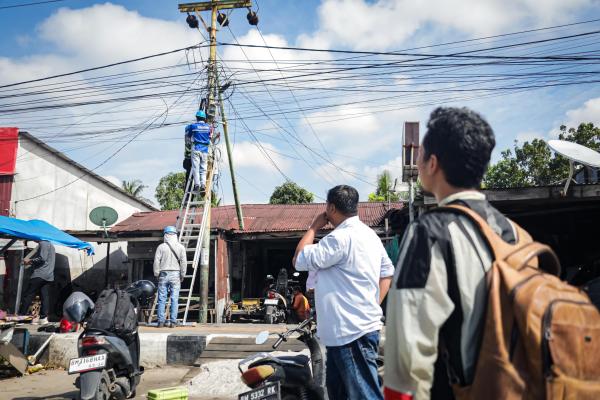
Pemko Dumai Bersama Diskominfo dan Provider Lakukan Penataan Massal Kabel FO Jalur Protokol
-
 Senin, 22 Juni 2026 | 12:07
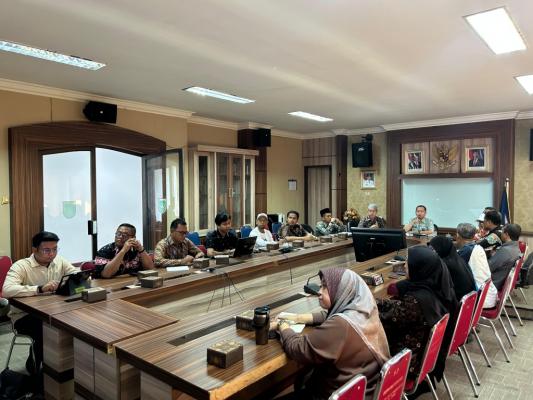
Pemko Dumai Gelar Rapat Teknis Penguatan Kafilah dalam Persiapan MTQ ke-XLIV Tingkat Provinsi Riau
-
-
 Senin, 22 Juni 2026 | 12:04
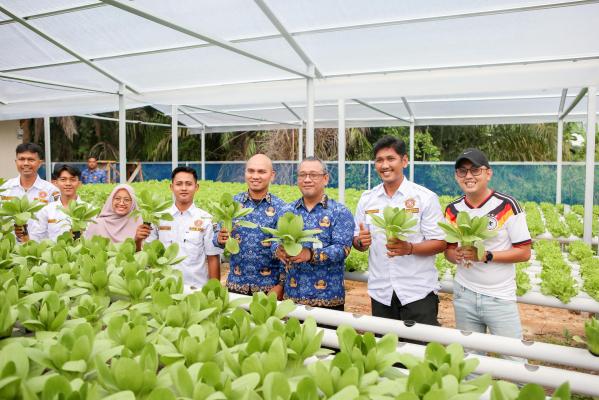
Sekda Dumai Ikuti Panen Sayuran Hidroponik Binaan Karang Taruna Kota Dumai
-

-
-
 Jumat, 19 Juni 2026 | 12:53
AgResults Berikan Rp 23 Miliar kepada Pemenang Kompetisi Akuakultur Berbasis Teknologi Budi Daya Inovatif dan
-
 Jumat, 19 Juni 2026 | 12:50
Eco Echo Trail Run 2026 - Kolaborasi Apik Gandeng Pelari Selamatkan Benteng Terakhir Gajah Sumatra
-
-
Sabtu, 20 Juni 2026 | 14:37
Successful debut of International Symposium on Emergency Response and Aeromedical Services in Hong Kong
-
 Jumat, 19 Juni 2026 | 20:35
ZEEKR Tembus 800.000 Pengiriman Global, Perkenalkan Strategi Ekspansi Global untuk Dua Flagship Seri 9