Menu Website

- Home
- MediaOutReach
- Fushi Tech Unveils AI Agent Strategy Targeting Overseas Merchants

Fushi Tech Unveils AI Agent Strategy Targeting Overseas Merchants
Rabu, 20 Mei 2026 | 20:20
SINGAPORE -
Media OutReach Newswire
- 20 May 2026 - Fushi Tech, a subsidiary of Yeahka (9923.HK), has
announced a strategic upgrade with the launch of Fynix AI shop, a
Full-stack AI Agent product purpose-built for overseas merchants.
Unlike conventional marketing tools or customer service systems, Fynix AI shop is designed to function as a genuine "digital employee" — one that actively participates in day-to-day business operations. It understands merchant needs, breaks down tasks, and executes them autonomously, supporting merchants across the full commercial cycle of customer acquisition, conversion, payment, and repeat purchases.
This is not simply a product update. It marks a fundamental shift in how merchants approach digital operations — and signals Fushi Tech's evolution from a traditional SaaS provider to an AI Agent platform.
AI Agents: The Next Generation of Business Infrastructure
Enterprise digitalisation has, for much of the past decade, remained largely at the tooling stage: merchants adopt SaaS tools and then operate manually. However, as large language models continue to mature, AI is shifting from an assistive tool to an autonomous executor.
The defining value of an AI Agent lies not in answering questions, but in its ability to understand purposes, call on the right tools, complete tasks end to end, and close the loop without human intervention. Across the global technology industry, AI Agents are increasingly seen as the next major shift in enterprise software.
According to IDC, investments in AI solutions and services are projected to yield a global cumulative impact of USD 22.3 trillion by 2030, representing approximately 3.7% of the global Gross Domestic Product (GDP).
The trend is already taking shape in international markets. Salesforce has launched Agentforce, while emerging players such as Sierra AI are attracting significant capital, with the industry broadly applying valuation multiples of 30 to 60 times ARR to leading companies. These figures reflect the market's long-term expectation in the commercial value of AI-powered employees.
For Fushi Tech, the launch of Fynix AI shop is also a response to a structural gap it has observed over years of serving merchants across Southeast Asia.
Many small and mid-sized merchants in the region still operate through fragmented digital systems — with point-of-sale, CRM, marketing, delivery, and customer service tools running in silos, data unable to flow between them, and key operational tasks still heavily dependent on manual effort. Merchants may have adopted software, but genuine gains in operational efficiency have remained elusive. AI Agents now make a unified operational hub possible for the first time.
Fushi Tech's goal is not to optimize isolated steps in the process, but to have AI directly execute business operations on the merchant's behalf. With AI Shop, merchants don't learn to operate software — they manage an employee. This shift reflects a broader transformation underway in enterprise services — from selling tools to delivering outcomes.
A growing consensus is also emerging across the AI industry: as the underlying capabilities of large models converge, the real differentiator is increasingly a company's ability to connect AI with real-world business.
Fushi Tech has positioned itself accordingly. Where many Western AI companies focus primarily on model capabilities and generative AI, Fushi Tech emphasizes deep integration across payments, CRM, and AI — keeping its offering close to the transaction itself.
Fynix AI shop is beyond a chatbot, it connects to a complete operational ecosystem: drawing on CRM data to understand customers, processing transactions through the payments infrastructure, and integrating with external platforms including WhatsApp, Telegram, Google, and delivery services.
This means AI is no longer simply capable of conversation — it is genuinely capable of doing business. And that is precisely the hardest part of bringing AI Agents to market at scale. The challenges extend well beyond algorithms, requiring engineering depth, merchant networks, payments infrastructure, and years of accumulated industry knowledge. In this sense, the companies best placed to build durable competitive advantages in AI may not be pure-play model providers, but those capable of embedding AI directly into real industry workflows.
From "SaaS Tool" to "AI Employee"
At the product level, Fynix AI shop exhibits the hallmarks of a digital employee, executing tasks autonomously across the merchant's full operational cycle. Its core capabilities include:
In a customer re-engagement scenario, for instance, Fynix AI shop can automatically analyse purchase cycles, preferences, and dormancy patterns across the customer base, and provide campaign recommendations to the merchant. Once approved, the Agent generates the relevant vouchers and delivers personalized content to customers via the merchant app, Telegram, or other channels — tracking performance throughout.
In practice, merchants no longer need to manually review data, write copy, or repeatedly devise marketing strategies from scratch. Nor do they need to configure complex rules or adjust system parameters in the CRM backend. A single natural language instruction sets the entire workflow in motion — freeing merchants to focus on higher-level business decisions.
This reflects a deeper transformation that AI is bringing to the commercial world. Digitalization gave businesses better information. AI Agents are now giving them the ability to take action.
Whoever can genuinely help merchants get things done will be best positioned to own the next platform layer.
In that light, Fynix AI shop is more than a new product launch. It is an early attempt to define what enterprise services could look like in the years ahead — and a signal of where the industry is heading.
In fast-growing emerging markets like Southeast Asia, where digitalization among small and mid-sized merchants is still in its early stages, AI Agents may have the opportunity to leapfrog the traditional SaaS development curve and move directly into an era of intelligent operations.
For Yeahka, this also marks a meaningful evolution in its overseas strategy — from exporting payments capabilities alone, to delivering an integrated ecosystem spanning payments, data, and AI.
As AI takes an increasingly active role in business operations, the value chain of the enterprise services industry is being fundamentally redefined.
Unlike conventional marketing tools or customer service systems, Fynix AI shop is designed to function as a genuine "digital employee" — one that actively participates in day-to-day business operations. It understands merchant needs, breaks down tasks, and executes them autonomously, supporting merchants across the full commercial cycle of customer acquisition, conversion, payment, and repeat purchases.
This is not simply a product update. It marks a fundamental shift in how merchants approach digital operations — and signals Fushi Tech's evolution from a traditional SaaS provider to an AI Agent platform.
AI Agents: The Next Generation of Business Infrastructure
Enterprise digitalisation has, for much of the past decade, remained largely at the tooling stage: merchants adopt SaaS tools and then operate manually. However, as large language models continue to mature, AI is shifting from an assistive tool to an autonomous executor.
The defining value of an AI Agent lies not in answering questions, but in its ability to understand purposes, call on the right tools, complete tasks end to end, and close the loop without human intervention. Across the global technology industry, AI Agents are increasingly seen as the next major shift in enterprise software.
According to IDC, investments in AI solutions and services are projected to yield a global cumulative impact of USD 22.3 trillion by 2030, representing approximately 3.7% of the global Gross Domestic Product (GDP).
The trend is already taking shape in international markets. Salesforce has launched Agentforce, while emerging players such as Sierra AI are attracting significant capital, with the industry broadly applying valuation multiples of 30 to 60 times ARR to leading companies. These figures reflect the market's long-term expectation in the commercial value of AI-powered employees.
For Fushi Tech, the launch of Fynix AI shop is also a response to a structural gap it has observed over years of serving merchants across Southeast Asia.
Many small and mid-sized merchants in the region still operate through fragmented digital systems — with point-of-sale, CRM, marketing, delivery, and customer service tools running in silos, data unable to flow between them, and key operational tasks still heavily dependent on manual effort. Merchants may have adopted software, but genuine gains in operational efficiency have remained elusive. AI Agents now make a unified operational hub possible for the first time.
Fushi Tech's goal is not to optimize isolated steps in the process, but to have AI directly execute business operations on the merchant's behalf. With AI Shop, merchants don't learn to operate software — they manage an employee. This shift reflects a broader transformation underway in enterprise services — from selling tools to delivering outcomes.
A growing consensus is also emerging across the AI industry: as the underlying capabilities of large models converge, the real differentiator is increasingly a company's ability to connect AI with real-world business.
Fushi Tech has positioned itself accordingly. Where many Western AI companies focus primarily on model capabilities and generative AI, Fushi Tech emphasizes deep integration across payments, CRM, and AI — keeping its offering close to the transaction itself.
Fynix AI shop is beyond a chatbot, it connects to a complete operational ecosystem: drawing on CRM data to understand customers, processing transactions through the payments infrastructure, and integrating with external platforms including WhatsApp, Telegram, Google, and delivery services.
This means AI is no longer simply capable of conversation — it is genuinely capable of doing business. And that is precisely the hardest part of bringing AI Agents to market at scale. The challenges extend well beyond algorithms, requiring engineering depth, merchant networks, payments infrastructure, and years of accumulated industry knowledge. In this sense, the companies best placed to build durable competitive advantages in AI may not be pure-play model providers, but those capable of embedding AI directly into real industry workflows.
From "SaaS Tool" to "AI Employee"
At the product level, Fynix AI shop exhibits the hallmarks of a digital employee, executing tasks autonomously across the merchant's full operational cycle. Its core capabilities include:
- - Content generation: Automatically creates menu pages, product listings, and marketing materials
- - Intelligent conversation: Guides customers through product recommendations, conversion, and order placement in a natural, sales-driven interaction
- - In-conversation payments: Completes transactions directly within the chat interface
- - Customer management: Builds and continuously refines consumer profiles using CRM data
- - Ecosystem integration: Connects with external tools including WhatsApp, Telegram, Google, and delivery services
Across the merchant journey, Fynix AI shop extends into use cases
spanning store setup, customer acquisition, membership management,
appointment booking, review management, and delivery platform
integration.
In a customer re-engagement scenario, for instance, Fynix AI shop can automatically analyse purchase cycles, preferences, and dormancy patterns across the customer base, and provide campaign recommendations to the merchant. Once approved, the Agent generates the relevant vouchers and delivers personalized content to customers via the merchant app, Telegram, or other channels — tracking performance throughout.
In practice, merchants no longer need to manually review data, write copy, or repeatedly devise marketing strategies from scratch. Nor do they need to configure complex rules or adjust system parameters in the CRM backend. A single natural language instruction sets the entire workflow in motion — freeing merchants to focus on higher-level business decisions.
This reflects a deeper transformation that AI is bringing to the commercial world. Digitalization gave businesses better information. AI Agents are now giving them the ability to take action.
Whoever can genuinely help merchants get things done will be best positioned to own the next platform layer.
In that light, Fynix AI shop is more than a new product launch. It is an early attempt to define what enterprise services could look like in the years ahead — and a signal of where the industry is heading.
In fast-growing emerging markets like Southeast Asia, where digitalization among small and mid-sized merchants is still in its early stages, AI Agents may have the opportunity to leapfrog the traditional SaaS development curve and move directly into an era of intelligent operations.
For Yeahka, this also marks a meaningful evolution in its overseas strategy — from exporting payments capabilities alone, to delivering an integrated ecosystem spanning payments, data, and AI.
As AI takes an increasingly active role in business operations, the value chain of the enterprise services industry is being fundamentally redefined.
BERITA LAINNYA

Selasa, 09 Juni 2026 | 22:45
Selasa, 09 Juni 2026 | 22:44

Selasa, 09 Juni 2026 | 22:41

Selasa, 09 Juni 2026 | 22:39

Selasa, 09 Juni 2026 | 22:37

Selasa, 09 Juni 2026 | 22:35

Selasa, 09 Juni 2026 | 22:34

Selasa, 09 Juni 2026 | 22:33
Selasa, 09 Juni 2026 | 22:32

Selasa, 09 Juni 2026 | 22:31

Selasa, 09 Juni 2026 | 22:29

BERIKAN KOMENTAR


-

-
 Selasa, 09 Juni 2026 | 23:02
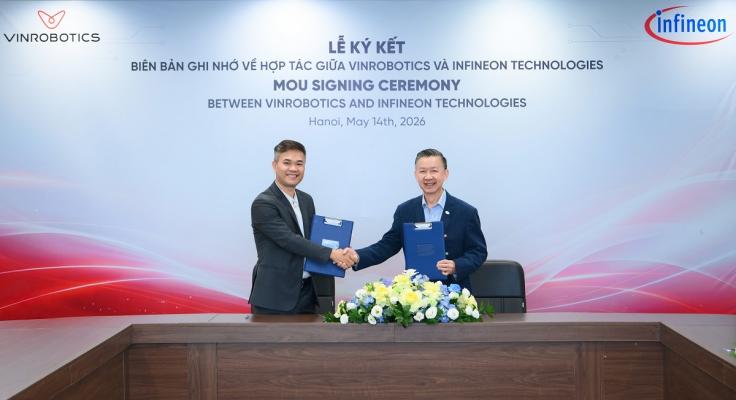
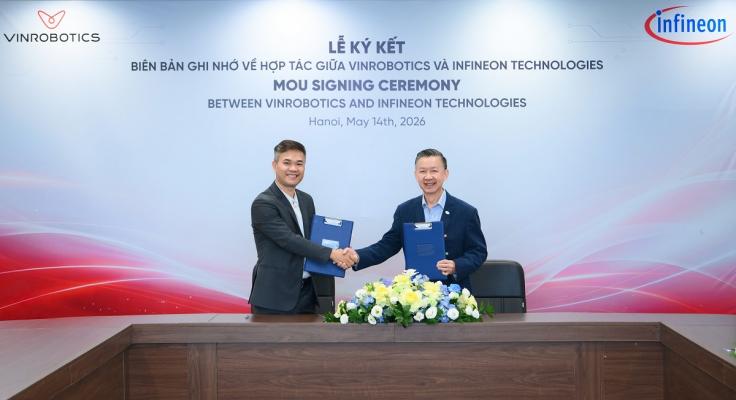
VinRobotics Tandatangani MoU dengan Infineon untuk Kembangkan Robotika Generasi Berikutnya
-
 Selasa, 09 Juni 2026 | 23:02
KGI Rilis Outlook Pasar Global Pertengahan Tahun:2026: Secercah Harapan di Tengah Kabut
-
 Selasa, 09 Juni 2026 | 23:01
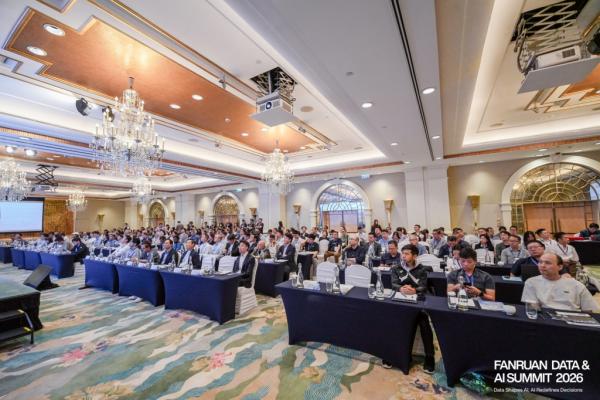
FanRuan Gelar “FANRUAN DATA & AI SUMMIT 2026” di Hong Kong: Data Membentuk AI, AI Mendefinisikan Ulang Keputusan
-
 Selasa, 09 Juni 2026 | 23:00
ADHD pada Anak Sekolah di Hong Kong Sering Disalahartikan sebagai “Nakal, Malas, atau Tidak Fokus”
-
 Selasa, 09 Juni 2026 | 23:00
Dusit International Perkuat Ekspansi di India dengan Penandatanganan Dusit Princess Rishikesh di Uttarakhand

-
 Senin, 08 Juni 2026 | 21:46
Muhammad Ramdhani Resmi Dilantik Sebagai Ketua Karang Taruna Kecamatan Dumai Selatan Masa Bakti 2026–2031
-
 Sabtu, 06 Juni 2026 | 10:29
Sun Group debuts at SITF 2026 with exclusive Phu Quoc flight deals and a fresh vision for Vietnam tourism
-
 Sabtu, 06 Juni 2026 | 23:42
Green SM Resmi Luncurkan Green SM Limo di New Delhi, Perluas Layanan Taksi Listrik ke Pasar India
-
 Sabtu, 06 Juni 2026 | 23:44
Belanja Perlengkapan Latihan Andalan Dato' Azizul dengan Pengiriman Super Cepat Shopee
-
 Rabu, 03 Juni 2026 | 20:47
Gorilla Technology Group Inc. Announces Pricing of $107 Million Senior Unsecured Convertible Bond Offering
-