Menu Website

- Home
- MediaOutReach
- Rhenus Group Sustainability Report 2025 highlights shift from groundwork to global performance

Rhenus Group Sustainability Report 2025 highlights shift from groundwork to global performance
Selasa, 09 Juni 2026 | 22:35
SINGAPORE -
Media OutReach Newswire
- 9 June 2026 - Rhenus Group has published its Sustainability Report
2025, outlining how it has strengthened systems, governance structures
and operational foundations needed to manage sustainability more
consistently across its global organisation. The report positions 2025
as a significant year in the transition toward a more centralised,
scalable and transparent Group-wide approach.
A key development in 2025 was the Group's commitment to the Science
Based Targets initiative (SBTi), supported by work on emissions
baselines, target-setting methodologies and a more granular
decarbonisation roadmap. With the report now externally verified, this
also builds up the credibility of reported progress. External
recognition of this progress was acknowledged with the EcoVadis Platinum
status, an important milestone in the Group's sustainability journey.
Over the past year, sustainability at Rhenus has moved from a set of
individual initiatives to a more integrated way of operating across the
Group. The report details this integration by highlighting the continued
development of a unified emissions database, expanded reporting
structures and dashboard testing to improve transparency and
decision-making.
"2025 marked a decisive step forward in how we manage sustainability
at Rhenus," said Dr. Joana Baetz, Member of the Board responsible for
HR, Sustainability and Compliance. "Today, we operate with an integrated
and harmonised Group-wide system that enables us to manage performance
consistently, transparently, and at scale. Our EcoVadis Platinum rating
reflects this level of maturity. Building on this strong foundation, our
focus is now on actively using this system to steer decisions, track
progress through clear KPIs, and strengthen accountability across the
organisation."
The report also sets out how sustainability is becoming more visible
in day-to-day operations. One example is the hybrid push barge Mannheim
I+II, which can reduce CO₂ and NOx emissions by up to 72 percent in
daily operation compared with conventional propulsion systems. When
operated with HVO100, emissions reductions can reach up to 90 percent.
The vessel is designed for operational flexibility and resilience on key
Rhine routes, including at low water levels.
Beyond climate-related measures, the report shows progress in
workplace safety and resource management. In 2025, Rhenus recorded zero
fatalities. The lost time injury frequency rate improved to 9.70 from
13.8 in 2024, while the lost time injury severity rate improved to 18.10
from 20.10. In waste management, the Group generated 106,449 tons of
waste, of which 98,237 tons were diverted from disposal and 98,029 tons
were recycled. These figures reflect the role of sustainability not only
in long-term climate ambition, but also in operational discipline and
risk management.
The Sustainability Report 2025 also highlights progress in social and
governance structures. Rhenus introduced updated global Social Policies,
continued the rollout of Workday as the Group's platform for Social
KPIs, and advanced modernisation of its Compliance Management System
with revised or formalised Group-wide policies covering anti-corruption,
antitrust and whistleblowing. Together, these developments support a
more unified ESG management model throughout the Group.
Juthaporn Srinang, Group Director of Sustainability at Rhenus,
emphasises: "We now have a much clearer basis to work from, particularly
in data quality, governance and in how we connect sustainability to our
operations. With our report now also independently assured and aligned
with the Global Reporting Initiative (GRI) Standards, we have further
strengthened transparency and reliability. The next step is to translate
this into action that can be scaled across the business and applied
consistently to how we serve our customers."
Looking ahead, Rhenus states that from 2026 onwards its focus will
increasingly shift from building systems to using them more actively to
steer performance, track progress through clearer KPIs and expand
sustainable services in a more market-ready way. This gives the report a
forward-looking narrative: 2025 was the year of building the
foundation, while the next phase is about transforming that foundation
into measurable business and customer value.
The report is available at:
https://www.rhenus.group/green-logistics/
BERITA LAINNYA
Selasa, 09 Juni 2026 | 22:45
Selasa, 09 Juni 2026 | 22:44

Selasa, 09 Juni 2026 | 22:41
Selasa, 09 Juni 2026 | 22:39

Selasa, 09 Juni 2026 | 22:37
Selasa, 09 Juni 2026 | 22:35
Selasa, 09 Juni 2026 | 22:34
Selasa, 09 Juni 2026 | 22:33
Selasa, 09 Juni 2026 | 22:32

Selasa, 09 Juni 2026 | 22:31
Selasa, 09 Juni 2026 | 22:29

BERIKAN KOMENTAR

-
-
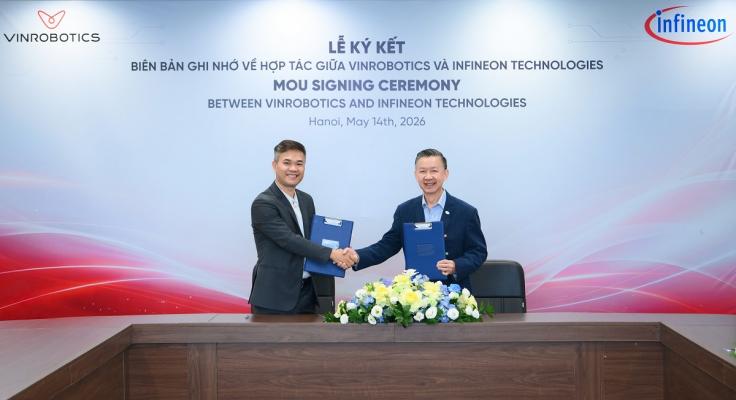 Selasa, 09 Juni 2026 | 23:02
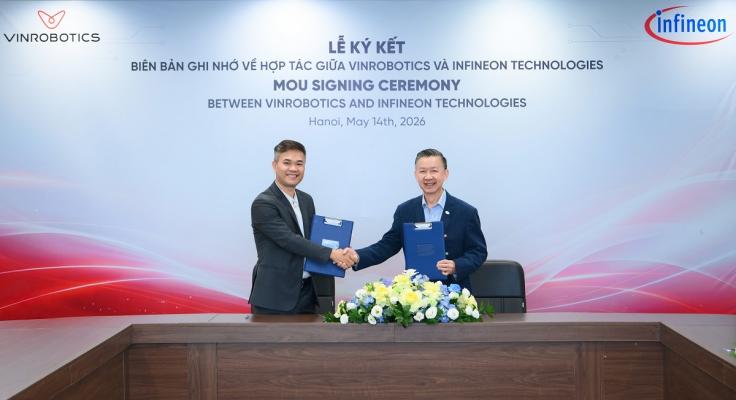
VinRobotics Tandatangani MoU dengan Infineon untuk Kembangkan Robotika Generasi Berikutnya
-
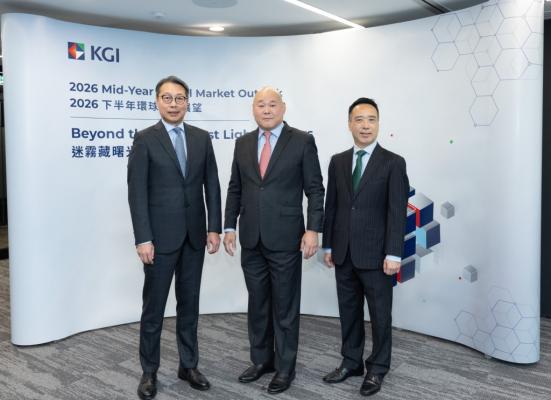 Selasa, 09 Juni 2026 | 23:02
KGI Rilis Outlook Pasar Global Pertengahan Tahun:2026: Secercah Harapan di Tengah Kabut
-
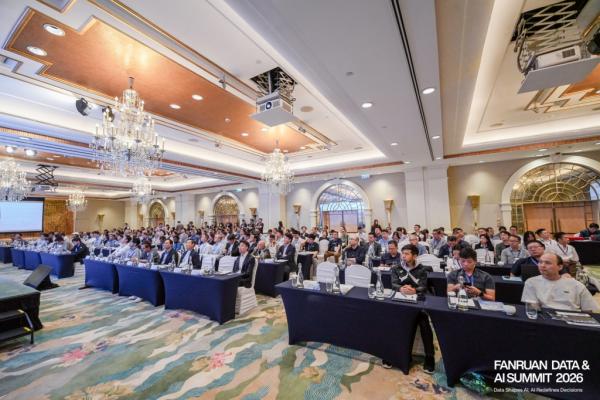 Selasa, 09 Juni 2026 | 23:01
FanRuan Gelar “FANRUAN DATA & AI SUMMIT 2026” di Hong Kong: Data Membentuk AI, AI Mendefinisikan Ulang Keputusan
-
 Selasa, 09 Juni 2026 | 23:00
ADHD pada Anak Sekolah di Hong Kong Sering Disalahartikan sebagai “Nakal, Malas, atau Tidak Fokus”
-
 Selasa, 09 Juni 2026 | 23:00
Dusit International Perkuat Ekspansi di India dengan Penandatanganan Dusit Princess Rishikesh di Uttarakhand

-
 Sabtu, 06 Juni 2026 | 10:29
Sun Group debuts at SITF 2026 with exclusive Phu Quoc flight deals and a fresh vision for Vietnam tourism
-
 Senin, 08 Juni 2026 | 21:46
Muhammad Ramdhani Resmi Dilantik Sebagai Ketua Karang Taruna Kecamatan Dumai Selatan Masa Bakti 2026–2031
-
 Sabtu, 06 Juni 2026 | 23:42
Green SM Resmi Luncurkan Green SM Limo di New Delhi, Perluas Layanan Taksi Listrik ke Pasar India
-
 Rabu, 03 Juni 2026 | 20:47
Gorilla Technology Group Inc. Announces Pricing of $107 Million Senior Unsecured Convertible Bond Offering
-
 Sabtu, 06 Juni 2026 | 23:44
Belanja Perlengkapan Latihan Andalan Dato' Azizul dengan Pengiriman Super Cepat Shopee
-