Allianz Trade x DBS Hong Kong thought leadership session
Allianz Trade x DBS Hong Kong thought leadership session
Kamis, 23 April 2026 | 09:54
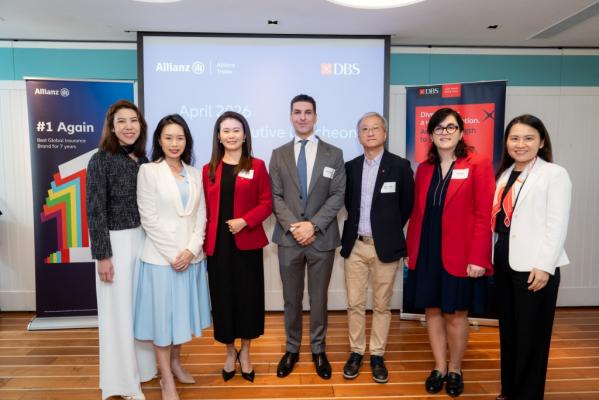
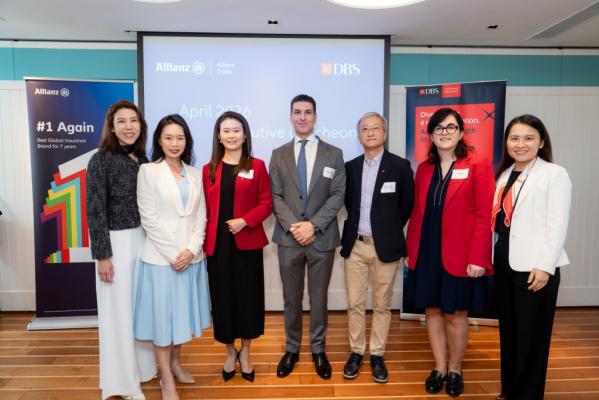
Management teams of Allianz Trade and DBS Hong Kong pose for a picture.
HONG KONG SAR -
Media OutReach Newswire
- 23 April 2026 - One year after the US Liberation Day, tariffs
continue to disrupt global trade and supply chains while many economies
and corporates still struggle to find their footing. The broke out of
the Middle East conflict has compounded on the effect by driving lower
global GDP growth (+2.6% in 2026), higher global inflation (4.3% in
2026) and stronger fiscal pressure. Amid such highly uncertain times,
Allianz Trade in Hong Kong
partnered with DBS for an exclusive session where industry experts and
thought leaders dissected into today's shifting geopolitical landscape
and heightened credit risks, and offered their views on trade
opportunities in an increasingly fragmented world.
"The Middle East conflict has added a new layer of shocks to an
already fragile environment shaped by tariffs, weakening demand and
declining consumer confidence. The good news is that firms have taken
operational steps to adapt since the trade war began, with the most
common strategies including inventory building, market diversification,
sourcing from new suppliers and rerouting through third markets. Asia
Pacific has emerged as the clear structural beneficiary of supply chain
realignment. Hong Kong, as a major trading and financing hub in the
region, continues to play a pivotal role in facilitating trade and
investment flows. Together with DBS, we are here to offer our combined
intelligence and support to help companies achieve customer and market
diversification, better risk selection, and providing them with
confidence to trade and grow safely," states
Hassan Omaish, CEO for Hong Kong, South Korea and Taiwan at Allianz Trade.
Jolynn Wong, Managing Director and Head of Global Transaction Services, DBS Hong Kong, says,
"We are witnessing a lengthening of cash collection cycles across
sectors impacted by trade route and inventory disruptions, leading to a
growing proportion of receivables held at extended tenors. In this
climate of heightened volatility, the role of trade finance extends
beyond mere credit extension; it must now assure corporates of timely
critical cash flow realisation and enable strategic suppliers to
maintain production amidst disruptions. Leveraging DBS Hong Kong's
robust capital and liquidity, we provide clients with the necessary
extended tenors and contingent liquidity to navigate prolonged inventory
and shipping cycles, thereby fortifying their resilience. By
integrating guarantees, letters of credit, credit insurance, and
treasury hedging into a unified architecture through our digital
platforms, we empower clients to transform volatile receivables into
reliable cash flows and turn disruptions into investable growth
opportunities."
Notes to editors:
To gauge how global exporters fared through tariffs and the Middle East conflict, Allianz Trade recently published its flagship
Global Survey,
where 6,000 exporters across 13 countries were polled on their export
performances over the past year, as well as outlook and coping
strategies for the short- to medium-term. The Survey revealed that 75%
of exporters expect positive export growth in 2026, which was much more
optimistic than the 2025 tariff shock where expectations dropped by
-40pp.
Allianz Trade Head of Economic Research Ana Boata.
"For now, the impact of the Middle East conflict seems moderate, but
such level of optimism remains fragile and could quickly fade if the
conflict drags on. Allianz Trade's Global Survey revealed that
geopolitical and political risks are the leading threat globally for
corporates (65%), while supply-related issues, such as bankruptcy of
suppliers and shortage of inputs, came at second place (57%). The Middle
East conflict has also tightened trade finance conditions. Not only
payment cycles are lengthening, 43% of companies expect payment terms to
deteriorate further. Pharmaceuticals, construction and
computers/telecom are the most exposed sectors, while larger companies
face disproportionately longer payment cycles," says
Ana Boata, Head of Economic Research at Allianz Trade.



 https://www.allianz-trade.com/en_HK.html
 https://www.linkedin.com/company/allianz-trade-apac/







 Kamis, 23 April 2026 | 11:46
 Kamis, 23 April 2026 | 11:45
 Kamis, 23 April 2026 | 11:45
 Kamis, 23 April 2026 | 11:45
 Kamis, 23 April 2026 | 11:43
 Sabtu, 18 April 2026 | 09:48
 Sabtu, 18 April 2026 | 10:29
 Sabtu, 18 April 2026 | 10:26