Menu Website

- Home
- MediaOutReach
- Policy20 at Money20/20 Asia 2026: Asia's Leaders Call for Co-Creation as Finance Enters a New Era of Sovereign Intelligence

Policy20 at Money20/20 Asia 2026: Asia's Leaders Call for Co-Creation as Finance Enters a New Era of Sovereign Intelligence
Rabu, 22 April 2026 | 21:05
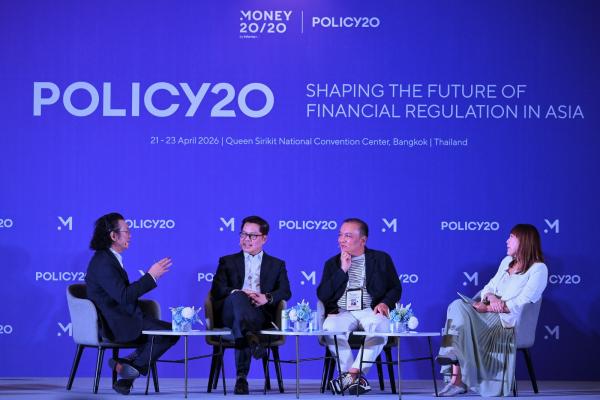
BANGKOK, THAILAND -
Media OutReach Newswire
- 22 April 2026 - Money20/20, the world's leading fintech show and the
place where money does business, is hosting Policy20 as part of
Money20/20 Asia in Bangkok happening on April 21-23 at the Queen Sirikit
National Convention Center. Policy20 brings together over 80 leading
policymakers, regulators, and industry leaders from all across Asia. The
summit addresses the rapid convergence of technology, finance, and
regulation, and the urgent need for collaborative approaches to navigate
this evolving landscape.
A key highlight of the programme was a closed-door Governors' and Chairs' Strategic Roundtable on "Sovereign Intelligence," where senior policy leaders, financial regulators, and central bank governors convened under Chatham House Rule to address the challenge of maintaining national policy autonomy in an era of AI and digital finance.
The session reached consensus on three strategic pillars:
Ian Fong, VP of Content - Asia, Money20/20, said: "Today's consensus signals that the region's policy and regulatory leaders are moving from observation to production-grade governance. They are not just managing technology; they are defining the blueprint for how sovereign intelligence will safeguard the future of global finance."
The Shift to Co-Creation & Trust
A dominant theme emerging from Policy20: the future of financial systems in Asia will be built not just on innovation, but on trust, collaboration, and intelligent infrastructure.
One of the most striking insights was the industry-wide shift from traditional regulatory models toward co-creation. Regulators are increasingly positioning themselves as enablers rather than enforcers, working alongside the private sector to design frameworks that evolve in real time with technological advancements. This marks a fundamental move away from static, compliance-led approaches toward dynamic, partnership-driven regulation.
At the same time, trust has become the cornerstone of financial innovation. As digital ecosystems expand, trust is derived from transparent systems, strong governance, and regulatory alignment, particularly as AI and digital assets continue to outpace traditional regulatory cycles.
Infrastructure with Purpose
The discussions also highlighted that innovation without usability is problematic. Discussion points centered on the idea that true financial inclusion in Asia depends on intelligent infrastructure, systems that are not just accessible, but intuitive and affordable enough to remove friction for underserved populations at scale.
A Multi-Rail Future
Looking ahead, Policy20 experts outlined a multi-rail financial ecosystem where tokenised deposits, stablecoins, and traditional banking coexist. The takeaway was clear: the future is not about one dominant model, but achieving seamless interoperability, through shared cross-border standards and frameworks.
Scale vs. Safety
Ultimately, the discussions underscored a regional commitment to balancing speed with safety. While innovation is accelerating, regulators and industry players alike emphasised that growth must not come at the expense of consumer protection, financial stability, or accountability. There was a strong agreement that meaningful adoption, not just access, has become the ultimate measure of success, with a focus on whether financial innovation is genuinely improving lives.
As Policy20 continues, one message is clear: Asia is no longer just adapting to the digital age; it is defining the global blueprint for responsible regulation.
A key highlight of the programme was a closed-door Governors' and Chairs' Strategic Roundtable on "Sovereign Intelligence," where senior policy leaders, financial regulators, and central bank governors convened under Chatham House Rule to address the challenge of maintaining national policy autonomy in an era of AI and digital finance.
The session reached consensus on three strategic pillars:
- Sovereignty via Strategic Standards: National policy autonomy is best protected through proactive participation in global standards, ensuring our regional values are embedded in the code of the next financial system.
- Harmonised Resilience: The future of cross-border financial rails must be built on shared governance protocols that also respect national priorities.
- Proactive Oversight: There is a sense of commitment to moving to "Intelligence-Led Governance," leveraging the same AI and real-time data tools we oversee to safeguard our national financial health.
Ian Fong, VP of Content - Asia, Money20/20, said: "Today's consensus signals that the region's policy and regulatory leaders are moving from observation to production-grade governance. They are not just managing technology; they are defining the blueprint for how sovereign intelligence will safeguard the future of global finance."
The Shift to Co-Creation & Trust
A dominant theme emerging from Policy20: the future of financial systems in Asia will be built not just on innovation, but on trust, collaboration, and intelligent infrastructure.
One of the most striking insights was the industry-wide shift from traditional regulatory models toward co-creation. Regulators are increasingly positioning themselves as enablers rather than enforcers, working alongside the private sector to design frameworks that evolve in real time with technological advancements. This marks a fundamental move away from static, compliance-led approaches toward dynamic, partnership-driven regulation.
At the same time, trust has become the cornerstone of financial innovation. As digital ecosystems expand, trust is derived from transparent systems, strong governance, and regulatory alignment, particularly as AI and digital assets continue to outpace traditional regulatory cycles.
Infrastructure with Purpose
The discussions also highlighted that innovation without usability is problematic. Discussion points centered on the idea that true financial inclusion in Asia depends on intelligent infrastructure, systems that are not just accessible, but intuitive and affordable enough to remove friction for underserved populations at scale.
A Multi-Rail Future
Looking ahead, Policy20 experts outlined a multi-rail financial ecosystem where tokenised deposits, stablecoins, and traditional banking coexist. The takeaway was clear: the future is not about one dominant model, but achieving seamless interoperability, through shared cross-border standards and frameworks.
Scale vs. Safety
Ultimately, the discussions underscored a regional commitment to balancing speed with safety. While innovation is accelerating, regulators and industry players alike emphasised that growth must not come at the expense of consumer protection, financial stability, or accountability. There was a strong agreement that meaningful adoption, not just access, has become the ultimate measure of success, with a focus on whether financial innovation is genuinely improving lives.
As Policy20 continues, one message is clear: Asia is no longer just adapting to the digital age; it is defining the global blueprint for responsible regulation.
BERITA LAINNYA
Rabu, 22 April 2026 | 22:39

Rabu, 22 April 2026 | 21:08

Rabu, 22 April 2026 | 21:08

Rabu, 22 April 2026 | 21:07

Rabu, 22 April 2026 | 21:06
Rabu, 22 April 2026 | 21:06
Rabu, 22 April 2026 | 21:05

Rabu, 22 April 2026 | 21:04

Rabu, 22 April 2026 | 21:03



Rabu, 22 April 2026 | 08:46

BERIKAN KOMENTAR


-
 Rabu, 22 April 2026 | 22:42
Indonesia Dorong Pembiayaan Inovatif untuk Taman Nasional, Perkuat Kemitraan Strategis dengan Pemerintah Inggris
-
-
Rabu, 22 April 2026 | 21:08
From Coal Mining to Agriculture: An Ecological Initiative at a Chinese Coal Mine
-
-
Rabu, 22 April 2026 | 21:07
Dell Technologies Highlights AI PCs and Workstations as the Next Phase of Enterprise AI in Asia Pacific
-
Rabu, 22 April 2026 | 21:06
Students take climate action into their own hands at NLCS (Singapore)'s Earth Week

-
Sabtu, 18 April 2026 | 09:48
SERES' Clifford Kang Highlights AI-Enabled Smart Mobility at the 2026 World Internet Conference Asia-Pacific Summit
-
 Sabtu, 18 April 2026 | 09:48
4,680 young Chinese volunteers called "Little Deer" ready for Asian Beach Games
-
 Sabtu, 18 April 2026 | 10:29
ShopeeFood Day Kembali Hadir pada 18 April dengan Diskon Hingga 99%, Gratis Ongkir, dan Hadiah Eksklusif
-
 Sabtu, 18 April 2026 | 10:26
TrendAI™ Bermitra dengan Anthropic untuk Memperluas Kepemimpinan dalam Keamanan Informasi Berbasis AI
-
Sabtu, 18 April 2026 | 10:28
Clifford Kang dari SERES Soroti Mobilitas Cerdas Berbasis AI di World Internet Conference Asia-Pacific Summit 2026
-
 Sabtu, 18 April 2026 | 10:28
4.680 Relawan Muda Tiongkok 'Little Deer' Siap Sambut Asian Beach Games ke-6 di Sanya