Menu Website

- Home
- MediaOutReach
- Vietnam Is Shining, and Can Gio Is the Hidden Jewel Awaiting Its Moment

Vietnam Is Shining, and Can Gio Is the Hidden Jewel Awaiting Its Moment
Jumat, 26 Desember 2025 | 10:42
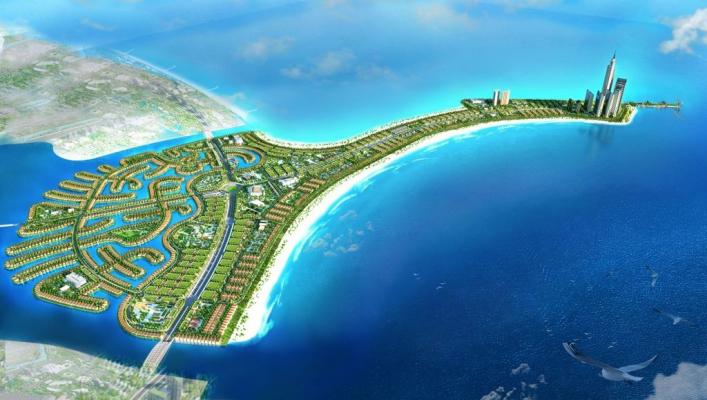
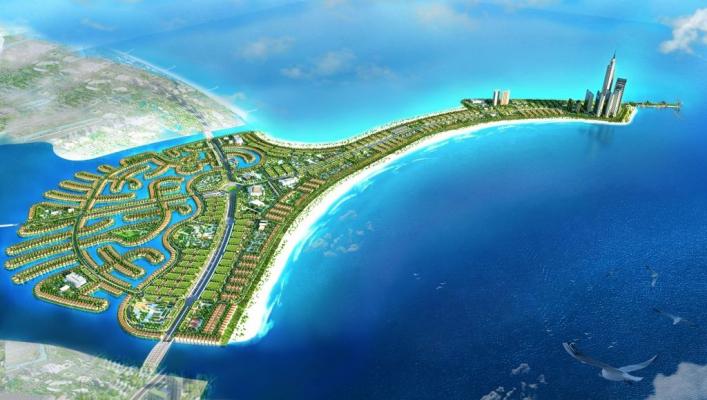
Vinhomes Green Paradise: A Hidden Gem Poised to Shine in Vietnam’s Real Estate Market.
CAN GIO, VIETNAM -
Media OutReach Newswire
- 25 December 2025 - In 2024, when Hines released its seminal report
Why Asia Now, the message was simple yet profound: The world's most
compelling growth story was shifting eastward. At that time, global
markets were turbulent but still predictable.
A year later, the landscape has morphed into something far more complex, rippling with tariff shocks, persistent inflation, rising bond yields, and growth downgrades across traditional economic powerhouses. The world feels as if it is moving through a narrow channel, buffeted by waves from every direction. And yet, amid all the noise, Asia has not only held its ground but stepped forward with a clarity and confidence that few regions can match.
Why Asia Now: A New Era of Resilience, Growth, and Opportunity
The forces shaping Asia's rise have been gathering momentum for decades. What we are witnessing now is their convergence. Asia is not simply adapting to global volatility, it is redefining the foundations of resilience and growth. Its economies are becoming wealthier, stronger, and more self-reliant, and its real estate markets are revealing layers of opportunity that long-term investors have waited years to see.
The near-term picture, though challenged, underscores this resilience. Tariffs have uneven effects, and countries with strong domestic engines such as Australia are absorbing shocks with surprising ease.
But it is the longer horizon that illuminates Asia's true arc. The region's working-age population and middle class have expanded at a breathtaking pace, setting the stage for decades of consumption-led dynamism. Education levels are rising, service sectors are flourishing, and manufacturing capabilities are climbing the value chain.
Meanwhile, intra-Asia trade has quietly become the backbone of global commerce, with Asia-to-Asia routes now forming the largest share of world trade. As the region turns inward, not in isolation, but in self-reinforcing collaboration, Asia ex-China is projected to contribute more to global growth than the United States and Europe combined.
Real estate, often seen as a mirror for economic sentiment, is telling a similar story. Transaction volumes across Asia have been less volatile than those in Western markets, and pricing has remained more stable, offering a predictable return profile. Supply constraints, elevated construction costs, and a decade-low pricing position relative to long-term trends are creating what can only be described as an extraordinary entry window.
Why Capital is Flowing into Vietnam
If Asia's trajectory could be captured in a single idea, it would be the beginning of a Value Uprising, a structural rise in long-term asset worth, powered by demographics, policy, and economic integration, rather than speculation.
From this continental narrative emerges Vietnam, a nation whose ascent is increasingly impossible to ignore. Over the past decade, Vietnam has transformed from a rising star into a gravitational force for global investors. Supply chain diversification has accelerated its role as a manufacturing and logistics nexus. Even with global tariffs shifting, Vietnam's logistics sector continues to expand in sophistication, efficiency, and international relevance. Its demographic profile, marked by a median age years younger than China, offers a demographic dividend that many Asian economies have already spent. And as Southeast Asia's digital backbone grows, Vietnam is stepping into the spotlight as one of the region's next major data-center markets, a signifier of future industrial depth.
Ho Chi Minh City, in particular, has entered a new chapter. Its standing among Asia-Pacific cities for investment and development has climbed steadily, reflecting not only macroeconomic resilience but the confidence of global capital. It has become a symbolic frontier, an emerging metropolis where the contours of modern Asia are being redrawn.
At the heart of Vietnam's momentum lies another extraordinary phenomenon: The consistent and rising flow of remittances. Vietnam ranks among the world's top recipients, and Ho Chi Minh City alone welcomed over USD 9.46 billion in 2023, USD 9.6 billion in 2024, and more than USD 5.3 billion in the second quarter of 2025.
A remarkable portion of these funds, around one-fifth, finds its way into real estate. But this is not passive investment. It is a gesture of return, of building a future homeland, of preparing for business, family, and retirement. It is long-term capital with long-term intent.
Vinhomes Green Paradise: A Hidden Gem Poised to Shine in Vietnam's Real Estate Market
Regulatory reform is reinforcing this trust. The revised Land Law and Real Estate Business Law offer stronger protections and broader rights for Vietnamese citizens, including those living abroad. In a period where global currencies fluctuate and deposit rates decline, investors are increasingly confronting a hard truth: Holding cash is, in many cases, a slow erosion of value. As economist Can Van Luc notes, the VND has lost 3.4 percent of its value in two years, even as the USD depreciated. Real estate, therefore, is not merely an alternative, it has become one of the few asset classes capable of preserving and multiplying value in real terms.
Against this backdrop, regions entering new cycles of infrastructure development are drawing accelerated capital inflows. And among them, one name rises above all others: Can Gio.
For decades, Can Gio stood quietly at the edge of Ho Chi Minh City, an ecological jewel, admired but distant. Today, it has become the most powerful symbol of Vietnam's coastal urban future. Massive infrastructure investment is reshaping its accessibility, and yet its real estate prices remain a fraction of central districts. Compared to Phu My Hung, Can Gio's price base is nearly half; compared to Districts 1 and 3, just one-fifth. The gap is not a discount, it is untapped potential waiting to be realized.
The emergence of Vinhomes Green Paradise has pushed this transformation into global consciousness. As the first official participant in the New7Wonders "7 Wonders of Future Cities" campaign, the project is channeling the same catalytic energy once witnessed in iconic developments. Internationally, such recognitions do not merely elevate prestige, they accelerate valuation cycles, attract global capital, and redefine a city's future skyline.
With its one-of-a-kind geographic formation and proximity to Can Gio's million-year-old biosphere reserve, Vinhomes Green Paradise stands as a once-in-a-century asset. It embodies scarcity in its purest form, an asset class that cannot be replicated, reshaped, or reborn elsewhere.
And that is where the narrative converges. Asia's rise, Vietnam's momentum, Ho Chi Minh City's evolution, and Can Gio's emergence are not isolated stories. Together, they form a new investment epoch characterized by structural uplift, demographic acceleration, and a rapidly expanding middle class. It is the era of the Value Uprising, a phase in which the forces of economics, policy, population, and global capital align to propel real estate into a new price horizon.
Sources:
https://www.hines.com/asia-real-estate-opportunity-in-the-midst-of-uncertainty
 https://vinhomes.vn/en
A year later, the landscape has morphed into something far more complex, rippling with tariff shocks, persistent inflation, rising bond yields, and growth downgrades across traditional economic powerhouses. The world feels as if it is moving through a narrow channel, buffeted by waves from every direction. And yet, amid all the noise, Asia has not only held its ground but stepped forward with a clarity and confidence that few regions can match.
Why Asia Now: A New Era of Resilience, Growth, and Opportunity
The forces shaping Asia's rise have been gathering momentum for decades. What we are witnessing now is their convergence. Asia is not simply adapting to global volatility, it is redefining the foundations of resilience and growth. Its economies are becoming wealthier, stronger, and more self-reliant, and its real estate markets are revealing layers of opportunity that long-term investors have waited years to see.
The near-term picture, though challenged, underscores this resilience. Tariffs have uneven effects, and countries with strong domestic engines such as Australia are absorbing shocks with surprising ease.
But it is the longer horizon that illuminates Asia's true arc. The region's working-age population and middle class have expanded at a breathtaking pace, setting the stage for decades of consumption-led dynamism. Education levels are rising, service sectors are flourishing, and manufacturing capabilities are climbing the value chain.
Meanwhile, intra-Asia trade has quietly become the backbone of global commerce, with Asia-to-Asia routes now forming the largest share of world trade. As the region turns inward, not in isolation, but in self-reinforcing collaboration, Asia ex-China is projected to contribute more to global growth than the United States and Europe combined.
Real estate, often seen as a mirror for economic sentiment, is telling a similar story. Transaction volumes across Asia have been less volatile than those in Western markets, and pricing has remained more stable, offering a predictable return profile. Supply constraints, elevated construction costs, and a decade-low pricing position relative to long-term trends are creating what can only be described as an extraordinary entry window.
Why Capital is Flowing into Vietnam
If Asia's trajectory could be captured in a single idea, it would be the beginning of a Value Uprising, a structural rise in long-term asset worth, powered by demographics, policy, and economic integration, rather than speculation.
From this continental narrative emerges Vietnam, a nation whose ascent is increasingly impossible to ignore. Over the past decade, Vietnam has transformed from a rising star into a gravitational force for global investors. Supply chain diversification has accelerated its role as a manufacturing and logistics nexus. Even with global tariffs shifting, Vietnam's logistics sector continues to expand in sophistication, efficiency, and international relevance. Its demographic profile, marked by a median age years younger than China, offers a demographic dividend that many Asian economies have already spent. And as Southeast Asia's digital backbone grows, Vietnam is stepping into the spotlight as one of the region's next major data-center markets, a signifier of future industrial depth.
Ho Chi Minh City, in particular, has entered a new chapter. Its standing among Asia-Pacific cities for investment and development has climbed steadily, reflecting not only macroeconomic resilience but the confidence of global capital. It has become a symbolic frontier, an emerging metropolis where the contours of modern Asia are being redrawn.
At the heart of Vietnam's momentum lies another extraordinary phenomenon: The consistent and rising flow of remittances. Vietnam ranks among the world's top recipients, and Ho Chi Minh City alone welcomed over USD 9.46 billion in 2023, USD 9.6 billion in 2024, and more than USD 5.3 billion in the second quarter of 2025.
A remarkable portion of these funds, around one-fifth, finds its way into real estate. But this is not passive investment. It is a gesture of return, of building a future homeland, of preparing for business, family, and retirement. It is long-term capital with long-term intent.
Vinhomes Green Paradise: A Hidden Gem Poised to Shine in Vietnam's Real Estate Market
Regulatory reform is reinforcing this trust. The revised Land Law and Real Estate Business Law offer stronger protections and broader rights for Vietnamese citizens, including those living abroad. In a period where global currencies fluctuate and deposit rates decline, investors are increasingly confronting a hard truth: Holding cash is, in many cases, a slow erosion of value. As economist Can Van Luc notes, the VND has lost 3.4 percent of its value in two years, even as the USD depreciated. Real estate, therefore, is not merely an alternative, it has become one of the few asset classes capable of preserving and multiplying value in real terms.
Against this backdrop, regions entering new cycles of infrastructure development are drawing accelerated capital inflows. And among them, one name rises above all others: Can Gio.
For decades, Can Gio stood quietly at the edge of Ho Chi Minh City, an ecological jewel, admired but distant. Today, it has become the most powerful symbol of Vietnam's coastal urban future. Massive infrastructure investment is reshaping its accessibility, and yet its real estate prices remain a fraction of central districts. Compared to Phu My Hung, Can Gio's price base is nearly half; compared to Districts 1 and 3, just one-fifth. The gap is not a discount, it is untapped potential waiting to be realized.
The emergence of Vinhomes Green Paradise has pushed this transformation into global consciousness. As the first official participant in the New7Wonders "7 Wonders of Future Cities" campaign, the project is channeling the same catalytic energy once witnessed in iconic developments. Internationally, such recognitions do not merely elevate prestige, they accelerate valuation cycles, attract global capital, and redefine a city's future skyline.
With its one-of-a-kind geographic formation and proximity to Can Gio's million-year-old biosphere reserve, Vinhomes Green Paradise stands as a once-in-a-century asset. It embodies scarcity in its purest form, an asset class that cannot be replicated, reshaped, or reborn elsewhere.
And that is where the narrative converges. Asia's rise, Vietnam's momentum, Ho Chi Minh City's evolution, and Can Gio's emergence are not isolated stories. Together, they form a new investment epoch characterized by structural uplift, demographic acceleration, and a rapidly expanding middle class. It is the era of the Value Uprising, a phase in which the forces of economics, policy, population, and global capital align to propel real estate into a new price horizon.
In moments like this, markets rarely wait. History shows that investors
who move early define the benchmark for everyone who follows. The
question is no longer whether Asia will rise, or whether Vietnam will
lead, or whether Can Gio will transform. The question, now, is whether
investors will seize a moment that may not return for another
generation.
PhotoCaption: Vinhomes Green Paradise: A Hidden Gem Poised to Shine in Vietnam's Real Estate Market.
Sources:
https://www.hines.com/asia-real-estate-opportunity-in-the-midst-of-uncertainty
https://vinhomes.vn/en BERITA LAINNYA

Jumat, 26 Desember 2025 | 10:44
Jumat, 26 Desember 2025 | 10:44
Jumat, 26 Desember 2025 | 10:42

Kamis, 25 Desember 2025 | 10:04

Rabu, 24 Desember 2025 | 10:10

Rabu, 24 Desember 2025 | 10:08

Rabu, 24 Desember 2025 | 10:06


Rabu, 24 Desember 2025 | 10:04

BERIKAN KOMENTAR


-
 Jumat, 26 Desember 2025 | 11:10
Whoosh Tembus 24 Ribu Penumpang, Volume Whoosh di Libur Natal Masih Tinggi
-
 Jumat, 26 Desember 2025 | 11:10
Apical Perkuat Komitmen Cegah Stunting dengan Prioritaskan Kesehatan Wanita di Cilincing, Jakarta Utara
-
 Jumat, 26 Desember 2025 | 11:09
Vingroup Teken Nota Kesepahaman dengan Uzbekistan, Buka Peluang Investasi Multisektor di Asia Tengah
-
 Jumat, 26 Desember 2025 | 11:08
Vietnam Sedang Bersinar, dan Can Gio adalah Permata Tersembunyi yang Menantikan Momennya
-
 Jumat, 26 Desember 2025 | 11:08
SCG Perkuat Strategi Regional, Jadikan Vietnam Pusat Produksi dan Ekspor Global Berkelanjutan
-
Jumat, 26 Desember 2025 | 10:44
Apical Strengthens Women's Health to Support Stunting Prevention in Cilincing, North Jakarta

-
 Sabtu, 20 Desember 2025 | 19:40
Kejari Dumai Agendakan Pemanggilan Hanif Faddini, Saksi Kunci Proyek Pengadaan MOT RSUD
-
 Sabtu, 20 Desember 2025 | 11:27
Vingroup Secara Bersamaan Meluncurkan dan Meresmikan 11 Proyek Strategis di Vietnam
-
 Rabu, 24 Desember 2025 | 11:40
CloudMile and Cradle Announce Inaugural AI Master Class Participants, Fueling Malaysia's Startup Innovation
-
 Rabu, 24 Desember 2025 | 11:46
Peringati Hari Ibu 2025, KAI Bagikan 1.000 Tanaman kepada Pengguna LRT Jabodebek
-
 Sabtu, 20 Desember 2025 | 11:28
SIM Luncurkan CareerSense, Aplikasi Bimbingan Karir Berbasis AI untuk Mahasiswa
-
Sabtu, 20 Desember 2025 | 11:27
Laporan Data Klaim Tahunan 2025: Menutup Kesenjangan Informasi melalui Keterbukaan Penuh