Menu Website

- Home
- MediaOutReach
- Thailand's 'trust capital' a potential strategic advantage amid global realignment: NUS Business School Dean

Thailand's 'trust capital' a potential strategic advantage amid global realignment: NUS Business School Dean
Jumat, 19 Juni 2026 | 11:27
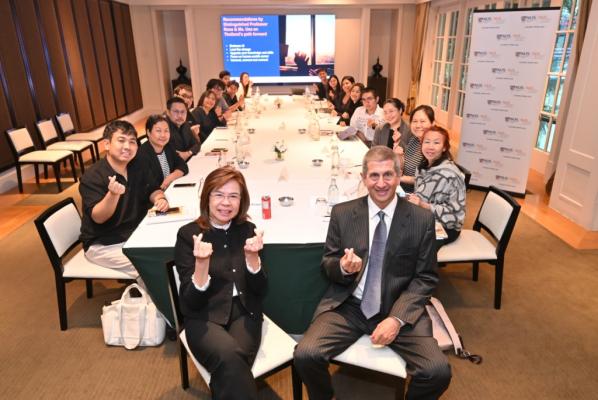
NUS Business School Senior Lecturer Ms Usa Skulkerewatana (foreground, first from left) and Distinguished Professor Andrew K. Rose, Dean of NUS Business School with Thai media representatives.
BANGKOK, THAILAND -
Media OutReach Newswire
- 19 June 2026 - As geopolitical tensions reshape global trade, supply
chains and investment flows, Thailand's long-standing reputation as a
trusted and neutral regional partner could become one of its strongest
competitive advantages, according to Distinguished Professor Andrew K.
Rose, Dean of NUS Business School.
Speaking to the media during a visit to Bangkok, Professor Rose said economies with deep international trust and stable regional relationships are increasingly well positioned as businesses rethink where they invest, manufacture and expand.
"In a world where global alignments are shifting and supply chains are being redrawn, trust becomes a strategic asset," said Professor Rose. "Thailand has spent decades building strong relationships across Asia and beyond. That foundation becomes more valuable in periods of uncertainty."
A pivotal moment for Thailand
Thailand's current environment is demanding, and the International Monetary Fund's World Economic Outlook (April 2026) projects growth of 1.5 per cent in 2026.
Professor Rose noted that rising energy costs, softer long-haul tourism demand and rapid AI adoption are creating near-term pressure across key sectors of the Thai economy. However, he said periods of disruption often create the conditions for long-term competitive repositioning.
"The economies that emerge stronger are usually the ones that adapt earliest," as Professor Rose. "Leadership capability, agility and the ability to navigate change will determine who captures the next decade of growth."
The comments come as businesses across Southeast Asia accelerate investment in AI, digital transformation and workforce reskilling amid growing global economic fragmentation.
A 2026 Milieu Insight study of 3,000 workers across six Southeast Asian markets including Thailand found that 53 per cent ranked over-dependence on AI as their top concern, ahead of privacy risks and job displacement. This suggests that organisations in Thailand and across the region must do more to guide, not just deploy, new technology.
Building regional leadership capability
Addressing these challenges requires more than a policy response alone. Professor Rose emphasised that both multinationals and SMEs must build their adaptation strategies around talent and leadership development to power Thailand's growth engine.
Ms Usa Skulkerewathana, Senior Lecturer at NUS Business School, said Thai organisations should consider focusing on strengthening talent development and practical AI readiness rather than treating technology as a standalone solution.
"This is not a wait-and-see moment," said Ms Skulkerewathana. "Thai businesses that invest early in leadership, digital capability and workforce resilience will be better positioned to compete regionally and internationally."
Singapore's role as Asia's financial and educational hub offers Thai professionals and organisations a natural gateway to build regional leadership capability. Thai professionals and executives have, for decades, benefitted from NUS Business School's MBA, MSc and executive education programmes, including the Stanford–NUS Executive Programme and other senior leadership initiatives developed with global academic and industry partners. Thai enrolment has remained steady over the past five years as professionals seek regional exposure and globally benchmarked leadership training.
Thailand's "trust capital" is intact, and its position within a reorganising ASEAN is reinforced by the changes underway. The Thai institutions and business leaders that treat "trust capital" as a competitive asset, and build the leadership depth to deploy it, will define the country's next chapter of growth.
 https://bschool.nus.edu.sg/
 https://www.linkedin.com/school/nus-business-school/
 https://x.com/NUSBizSchool
 https://www.facebook.com/NUSBusinessSchool/
 https://www.instagram.com/nusbizschool/'hl=en
Speaking to the media during a visit to Bangkok, Professor Rose said economies with deep international trust and stable regional relationships are increasingly well positioned as businesses rethink where they invest, manufacture and expand.
"In a world where global alignments are shifting and supply chains are being redrawn, trust becomes a strategic asset," said Professor Rose. "Thailand has spent decades building strong relationships across Asia and beyond. That foundation becomes more valuable in periods of uncertainty."
A pivotal moment for Thailand
Thailand's current environment is demanding, and the International Monetary Fund's World Economic Outlook (April 2026) projects growth of 1.5 per cent in 2026.
Professor Rose noted that rising energy costs, softer long-haul tourism demand and rapid AI adoption are creating near-term pressure across key sectors of the Thai economy. However, he said periods of disruption often create the conditions for long-term competitive repositioning.
"The economies that emerge stronger are usually the ones that adapt earliest," as Professor Rose. "Leadership capability, agility and the ability to navigate change will determine who captures the next decade of growth."
The comments come as businesses across Southeast Asia accelerate investment in AI, digital transformation and workforce reskilling amid growing global economic fragmentation.
A 2026 Milieu Insight study of 3,000 workers across six Southeast Asian markets including Thailand found that 53 per cent ranked over-dependence on AI as their top concern, ahead of privacy risks and job displacement. This suggests that organisations in Thailand and across the region must do more to guide, not just deploy, new technology.
Building regional leadership capability
Addressing these challenges requires more than a policy response alone. Professor Rose emphasised that both multinationals and SMEs must build their adaptation strategies around talent and leadership development to power Thailand's growth engine.
Ms Usa Skulkerewathana, Senior Lecturer at NUS Business School, said Thai organisations should consider focusing on strengthening talent development and practical AI readiness rather than treating technology as a standalone solution.
"This is not a wait-and-see moment," said Ms Skulkerewathana. "Thai businesses that invest early in leadership, digital capability and workforce resilience will be better positioned to compete regionally and internationally."
Singapore's role as Asia's financial and educational hub offers Thai professionals and organisations a natural gateway to build regional leadership capability. Thai professionals and executives have, for decades, benefitted from NUS Business School's MBA, MSc and executive education programmes, including the Stanford–NUS Executive Programme and other senior leadership initiatives developed with global academic and industry partners. Thai enrolment has remained steady over the past five years as professionals seek regional exposure and globally benchmarked leadership training.
Thailand's "trust capital" is intact, and its position within a reorganising ASEAN is reinforced by the changes underway. The Thai institutions and business leaders that treat "trust capital" as a competitive asset, and build the leadership depth to deploy it, will define the country's next chapter of growth.
https://bschool.nus.edu.sg/https://www.linkedin.com/school/nus-business-school/https://x.com/NUSBizSchoolhttps://www.facebook.com/NUSBusinessSchool/https://www.instagram.com/nusbizschool/'hl=enBERITA LAINNYA

Jumat, 19 Juni 2026 | 11:31
Jumat, 19 Juni 2026 | 11:31


Jumat, 19 Juni 2026 | 11:28

Jumat, 19 Juni 2026 | 11:28
Jumat, 19 Juni 2026 | 11:27

Jumat, 19 Juni 2026 | 11:27
Jumat, 19 Juni 2026 | 11:26

Kamis, 18 Juni 2026 | 20:35

Kamis, 18 Juni 2026 | 20:33


BERIKAN KOMENTAR


-
 Jumat, 19 Juni 2026 | 12:53
AgResults Berikan Rp 23 Miliar kepada Pemenang Kompetisi Akuakultur Berbasis Teknologi Budi Daya Inovatif dan
-
 Jumat, 19 Juni 2026 | 12:50
Eco Echo Trail Run 2026 - Kolaborasi Apik Gandeng Pelari Selamatkan Benteng Terakhir Gajah Sumatra
-

-
-
 Jumat, 19 Juni 2026 | 12:48
VinFast Melanjutkan Kesuksesan EV Sambil Melihat Masa Depan di Luar Elektrifikasi
-


-
 Sabtu, 13 Juni 2026 | 18:08
Shopee Hyper Brand Day: Nikmati Diskon Hingga 70% untuk Penawaran TTRacing dan PRISM+ di Musim Piala Dunia Ini
-
 Sabtu, 13 Juni 2026 | 18:10
Anggota 1win VIP Community Ilia Topuria Siap Tampil di Laga Utama Bersejarah UFC Freedom 250
-
 Sabtu, 13 Juni 2026 | 18:07
TVBS Terapkan Penerjemahan Berbasis AI untuk Pidato Utama NVIDIA GTC Taipei
-
 Sabtu, 13 Juni 2026 | 18:06
Kualitas Baru, Masa Depan Bersama – Beijing CBD Mengundang Dunia untuk Menjalin Kerja Sama
-
Sabtu, 13 Juni 2026 | 18:09
Forum Keuangan Lintas Selat ke-7 di Xiamen Dorong Integrasi Keuangan Fujian–Taiwan
-
 Sabtu, 13 Juni 2026 | 18:07
Verdant Rock Raih Peringkat Kekuatan Keuangan Jangka Panjang BBB+ dengan Outlook Stabil dari Fitch Ratings