TVBS deploys AI translation for NVIDIA GTC Taipei keynote
TVBS deploys AI translation for NVIDIA GTC Taipei keynote
Sabtu, 13 Juni 2026 | 17:55
TAIPEI, TAIWAN -
Media OutReach Newswire
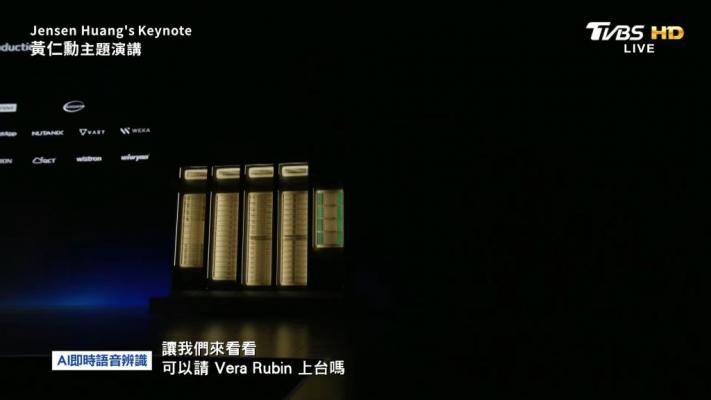
- 12 June 2026 - TVBS deployed its self-developed real-time AI
translation system during NVIDIA CEO Jensen Huang's keynote at GTC
Taipei 2026 on June 1. The system delivered near-simultaneous Chinese
subtitles that viewers initially mistook for official NVIDIA
translations. The in-house technology marked a rare instance of a news
organization independently developing live translation for a large-scale
broadcast.
Online viewers praised the translation quality, with comments including
"The quality of this real-time translation is amazing," "The translation
is incredibly fast," and "The live speech recognition quality is
surprisingly good." Some viewers assumed the subtitles came from
NVIDIA's official translation team.
The achievement demonstrates how Taiwan's media industry is adapting to
AI-driven transformation. TVBS is positioning itself as a leader in
integrating proprietary AI development with real-world broadcast
applications. The company completed optimization and deployment of the
system in just nine days — a process that traditionally requires months
of dedicated training, according to Andy Yang, manager of TVBS AI Future
Technology Department.
Yang explained that the biggest challenge in real-time translation lies
in balancing "content accuracy" with "reading fluency" under extremely
tight time constraints. Huang's speaking style is highly improvisational
and frequently switches between English, Mandarin and Taiwanese, while
audience applause and cheering often occur simultaneously.
Applying standard off-the-shelf translation software in such an
environment would likely result in sentence segmentation errors and
unclear semantic interpretation, Yang said. Rather than pursuing
"zero-latency" translation at all costs, TVBS designed a subtitle
presentation mechanism specifically tailored to the keynote format.
Prior to the event, the TVBS team conducted extensive cross-platform
testing on multiple AI translation models, evaluating latency and error
rates. By introducing a carefully calibrated broadcast delay, the system
gained additional time to process semantic meaning and contextual
alignment. This approach enabled smoother subtitles matching natural
Chinese reading habits, Yang said.
The team also built a dedicated knowledge base for NVIDIA GTC Taipei,
compiling AI industry terminology, product names and technical keywords
in advance. This significantly improved translation quality and the
accuracy of professional content delivery. TVBS's real-time translation
system can be customized based on different broadcasting scenarios, Yang
noted.
Yang emphasized that the key to the rapid nine-day deployment was
cross-department collaboration. Engineering teams handled hardware
tuning and signal integration, while internal technical and content
teams managed ongoing model training and refinement. TVBS established a
collaborative workflow integrating both technology and editorial
expertise.
Through continuous iteration and adjustment, the team incorporated
Taiwanese linguistic nuances and natural Chinese phrasing into the
system. This enhanced fluency and readability beyond what generic AI
models alone could achieve, ultimately shaping what Yang called a
distinct "TVBS AI style." The approach reflects the company's "3T"
philosophy — Truth, Trust and Technology.
In his keynote at the Taipei Music Center, Huang focused on AI
infrastructure, next-generation computing platforms and NVIDIA's latest
technological roadmap. GTC Taipei 2026 attracted significant
international attention as AI continues to reshape global industries.
Through its own transformation journey, TVBS hopes to help lead Taiwan's
media industry into a new era shaped by AI.
Photo Caption: TVBS deployed its self-developed real-time AI translation
system during NVIDIA CEO Jensen Huang's keynote at GTC Taipei 2026 on
June 1.








 Rabu, 17 Juni 2026 | 12:20


 Rabu, 10 Juni 2026 | 21:10
 Sabtu, 13 Juni 2026 | 18:08
 Sabtu, 13 Juni 2026 | 18:10