Menu Website

- Home
- MediaOutReach
- Striding AI Announces Plans to Develop Next-Generation Robotic Foundation Systems for Physical AI Deployment

Striding AI Announces Plans to Develop Next-Generation Robotic Foundation Systems for Physical AI Deployment
Kamis, 25 Juni 2026 | 09:45
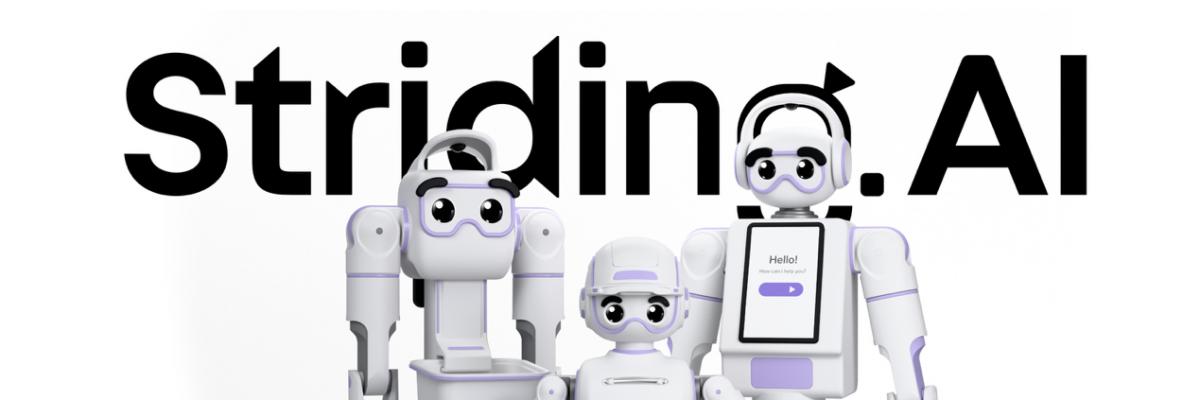
Striding AI Announces Plans to Develop Next-Generation Robotic Foundation Systems for Physical AI Deployment
BEIJING, CHINA -
Media OutReach Newswire
- 25 June 2026 - Striding AI today announced that it is developing a
new generation of robotic foundation systems designed to accelerate the
deployment of Physical AI in real-world environments.
The company's approach focuses on building the foundational technologies required for robots to perceive, reason, act, and continuously improve through interaction with the physical world. By integrating advanced foundation models with robotic perception, control systems, real-world action data, and deployment infrastructure, Striding AI aims to enable intelligent machines to perform useful tasks across commercial, industrial, and everyday settings.
"We believe that breakthroughs in Physical AI emerge from the continuous co-evolution of data, models, and infrastructure." said Song Yao, founder and CEO of Striding AI.
The company takes a systems-first approach to physical AI, integrating foundation models, robot hardware and software, data infrastructure, control systems, and deployment engineering for building scalable service. The company's leadership team includes founders and executives with backgrounds in AI chips, autonomous driving, robotics research, and industrial technology, combining deep technical expertise with experience bringing complex technologies into production environments.
Striding AI plans to begin with practical deployment scenarios in structured environments such as retail, where robots can support tasks including shelf restocking, inventory counting, product organization, and checkout assistance. These environments provide frequent human interaction, repeatable workflows, and rich operational data, making them a strong starting point for developing scalable Physical AI systems.
Over time, Striding AI expects its robotic foundation systems to support broader applications across sectors including retail, food, agriculture, logistics, healthcare, and telecommunications. The capabilities developed in real-world environments, from handling diverse objects and understanding retail shelves to planning and executing complex tasks, are part of an integrated system designed for broader robotic applications.
In early internal testing, Striding AI's human-in-the-loop RL method improved task success rates by up to 3x. To scale this flywheel, Striding AI is building infrastructure for robot pretraining, distributed reinforcement learning, and edge-to-cloud orchestration, creating a platform designed to improve as more robots operate in real-world environments.
The company's approach focuses on building the foundational technologies required for robots to perceive, reason, act, and continuously improve through interaction with the physical world. By integrating advanced foundation models with robotic perception, control systems, real-world action data, and deployment infrastructure, Striding AI aims to enable intelligent machines to perform useful tasks across commercial, industrial, and everyday settings.
"We believe that breakthroughs in Physical AI emerge from the continuous co-evolution of data, models, and infrastructure." said Song Yao, founder and CEO of Striding AI.
The company takes a systems-first approach to physical AI, integrating foundation models, robot hardware and software, data infrastructure, control systems, and deployment engineering for building scalable service. The company's leadership team includes founders and executives with backgrounds in AI chips, autonomous driving, robotics research, and industrial technology, combining deep technical expertise with experience bringing complex technologies into production environments.
Striding AI plans to begin with practical deployment scenarios in structured environments such as retail, where robots can support tasks including shelf restocking, inventory counting, product organization, and checkout assistance. These environments provide frequent human interaction, repeatable workflows, and rich operational data, making them a strong starting point for developing scalable Physical AI systems.
Over time, Striding AI expects its robotic foundation systems to support broader applications across sectors including retail, food, agriculture, logistics, healthcare, and telecommunications. The capabilities developed in real-world environments, from handling diverse objects and understanding retail shelves to planning and executing complex tasks, are part of an integrated system designed for broader robotic applications.
In early internal testing, Striding AI's human-in-the-loop RL method improved task success rates by up to 3x. To scale this flywheel, Striding AI is building infrastructure for robot pretraining, distributed reinforcement learning, and edge-to-cloud orchestration, creating a platform designed to improve as more robots operate in real-world environments.
BERITA LAINNYA

Kamis, 25 Juni 2026 | 10:37
Kamis, 25 Juni 2026 | 09:46
Kamis, 25 Juni 2026 | 09:45

Kamis, 25 Juni 2026 | 09:45

Kamis, 25 Juni 2026 | 09:44

Kamis, 25 Juni 2026 | 09:43

Kamis, 25 Juni 2026 | 09:42
Kamis, 25 Juni 2026 | 09:41

Kamis, 25 Juni 2026 | 09:40

Rabu, 24 Juni 2026 | 21:07

Rabu, 24 Juni 2026 | 21:05

Rabu, 24 Juni 2026 | 21:05

BERIKAN KOMENTAR


-
 Kamis, 25 Juni 2026 | 10:45
GOKO Pamerkan M6, Mesin Pemotong Rumput Robotik untuk Lereng, Medan Sulit, dan Lahan Luas di spoga+gafa 2026
-
 Kamis, 25 Juni 2026 | 10:44
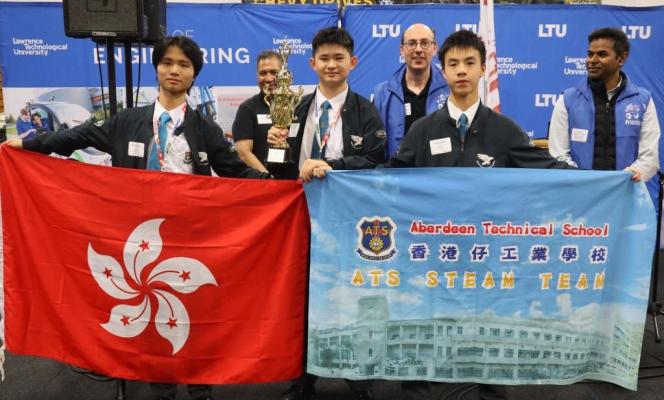
Tim Robotik Aberdeen Technical School Raih Runner-Up Dunia di Robofest 2026 dan Harumkan Nama Hong Kong
-
 Kamis, 25 Juni 2026 | 10:44
Striding AI Umumkan Rencana Pengembangan Sistem Fondasi Robotik Generasi Baru untuk Penerapan Physical AI
-

-
 Kamis, 25 Juni 2026 | 10:42
Impossible Marketing Luncurkan Solusi AI SEO ImpossiblePlus™ untuk Bisnis di Singapura
-


-

-
 Jumat, 19 Juni 2026 | 12:53
AgResults Berikan Rp 23 Miliar kepada Pemenang Kompetisi Akuakultur Berbasis Teknologi Budi Daya Inovatif dan
-
 Jumat, 19 Juni 2026 | 12:50
Eco Echo Trail Run 2026 - Kolaborasi Apik Gandeng Pelari Selamatkan Benteng Terakhir Gajah Sumatra
-

-
 Sabtu, 20 Juni 2026 | 14:37
Successful debut of International Symposium on Emergency Response and Aeromedical Services in Hong Kong
-
 Jumat, 19 Juni 2026 | 20:35
ZEEKR Tembus 800.000 Pengiriman Global, Perkenalkan Strategi Ekspansi Global untuk Dua Flagship Seri 9