Menu Website

- Home
- MediaOutReach
- Nervotec Launches NervoScan MCP, Giving AI Assistants a Real-World Health Signal From a 10-Second Face Scan

Nervotec Launches NervoScan MCP, Giving AI Assistants a Real-World Health Signal From a 10-Second Face Scan
Selasa, 23 Juni 2026 | 18:49
SINGAPORE -
Media OutReach Newswire - 23 June 2026 -
Nervotec, a
Singapore-based health AI company, today announced the launch of
NervoScan MCP, a contactless biosensing tool that lets MCP-compatible AI
assistants read a person's everyday vital signs from a 10-second face
scan using any laptop, phone, or webcam camera.
AI assistants are quickly gaining the ability to act in the real world. The Model Context Protocol (MCP) has become a common standard for connecting them to outside tools and data: documents, calendars, databases, and software. What they have not been able to do is sense the physical state of the person in front of them. NervoScan MCP adds that missing layer. Every health tool in the MCP ecosystem so far has been a passive reader of data a device already captured. NervoScan MCP is an active sensor that takes a fresh reading on demand.
The timing reflects two trends converging. Millions of people now track their health through wearables and apps, while a fast-growing group of power users are wiring agentic AI assistants into their daily tools and routines. NervoScan MCP sits where those meet, giving a personal AI assistant a direct, on-demand read of the user's physiology, the one input it has never had.
How it works
With NervoScan MCP, an assistant calls a single tool, scan_vitals, and the user looks at a camera for about 10 seconds. The assistant receives estimates of six everyday vital signs: heart rate, heart rate variability, blood oxygen, respiratory rate, blood pressure, and a stress score. The reading runs on remote photoplethysmography (rPPG), which detects minute colour changes in facial video from a standard camera, with no wearable and no extra hardware. NervoScan MCP is model-agnostic, working with Claude, ChatGPT, Gemini, Cursor, and any MCP-enabled client, and it never carries the assistant's language-model cost. Users connect once through the standard MCP authorization flow, and new users start with 20 free scans.
"NervoScan MCP allows AI to go beyond its ability to reason. Now it can sense," said Jonathan Lau, Founder and CEO of Nervotec. "For the first time, an AI assistant can access a real-world physiological signal through a simple camera interaction, giving it a layer of context beyond text, documents, and software tools."
NervoScan MCP is built for users of agentic AI: the people running assistants like Claude, ChatGPT, hermes agent, biohackers, and self-trackers who want their AI to factor in how their body is actually doing. Connect it once, and a 10-second face scan hands the assistant real-time vital signs to reason over, on a camera the user already owns.
"We're building the world's first health-sensing layer for AI," said Lau. "Assistants can already read your emails, book flights, and plan your day. Now they can sense how you're actually doing, and that makes them more useful almost everywhere, from health and training to the everyday decisions people make."
Built on research
NervoScan's technology was developed through research conducted with Singapore General Hospital, with peer-reviewed results published in JMIR Formative Research (2025).
"Putting our work through peer review mattered to us," said Lau. "It means the method was examined by independent experts, not simply asserted by the company that built it. That foundation is what we're building on as we bring health sensing to AI."
Private by design
As AI systems gain access to more personal information, privacy and data governance are central to how NervoScan is designed.
"NervoScan does not store scan results. The scan happens, you see it. When you leave, it's gone," said Lau.
NervoScan is built as a biosensing system, not an identification system: its purpose is to extract physiological signals from facial video, not to identify a person from their face. Every scan requires the user's consent, and NervoScan retains only a timestamp of when a scan took place, never the readings themselves. As Lau puts it: "We don't sell your data, because there is nothing to sell."
 https://nervotec.com
 https://www.linkedin.com/company/nervotec/
 https://www.instagram.com/nervotec/
AI assistants are quickly gaining the ability to act in the real world. The Model Context Protocol (MCP) has become a common standard for connecting them to outside tools and data: documents, calendars, databases, and software. What they have not been able to do is sense the physical state of the person in front of them. NervoScan MCP adds that missing layer. Every health tool in the MCP ecosystem so far has been a passive reader of data a device already captured. NervoScan MCP is an active sensor that takes a fresh reading on demand.
The timing reflects two trends converging. Millions of people now track their health through wearables and apps, while a fast-growing group of power users are wiring agentic AI assistants into their daily tools and routines. NervoScan MCP sits where those meet, giving a personal AI assistant a direct, on-demand read of the user's physiology, the one input it has never had.
How it works
With NervoScan MCP, an assistant calls a single tool, scan_vitals, and the user looks at a camera for about 10 seconds. The assistant receives estimates of six everyday vital signs: heart rate, heart rate variability, blood oxygen, respiratory rate, blood pressure, and a stress score. The reading runs on remote photoplethysmography (rPPG), which detects minute colour changes in facial video from a standard camera, with no wearable and no extra hardware. NervoScan MCP is model-agnostic, working with Claude, ChatGPT, Gemini, Cursor, and any MCP-enabled client, and it never carries the assistant's language-model cost. Users connect once through the standard MCP authorization flow, and new users start with 20 free scans.
"NervoScan MCP allows AI to go beyond its ability to reason. Now it can sense," said Jonathan Lau, Founder and CEO of Nervotec. "For the first time, an AI assistant can access a real-world physiological signal through a simple camera interaction, giving it a layer of context beyond text, documents, and software tools."
NervoScan MCP is built for users of agentic AI: the people running assistants like Claude, ChatGPT, hermes agent, biohackers, and self-trackers who want their AI to factor in how their body is actually doing. Connect it once, and a 10-second face scan hands the assistant real-time vital signs to reason over, on a camera the user already owns.
"We're building the world's first health-sensing layer for AI," said Lau. "Assistants can already read your emails, book flights, and plan your day. Now they can sense how you're actually doing, and that makes them more useful almost everywhere, from health and training to the everyday decisions people make."
Built on research
NervoScan's technology was developed through research conducted with Singapore General Hospital, with peer-reviewed results published in JMIR Formative Research (2025).
"Putting our work through peer review mattered to us," said Lau. "It means the method was examined by independent experts, not simply asserted by the company that built it. That foundation is what we're building on as we bring health sensing to AI."
Private by design
As AI systems gain access to more personal information, privacy and data governance are central to how NervoScan is designed.
"NervoScan does not store scan results. The scan happens, you see it. When you leave, it's gone," said Lau.
NervoScan is built as a biosensing system, not an identification system: its purpose is to extract physiological signals from facial video, not to identify a person from their face. Every scan requires the user's consent, and NervoScan retains only a timestamp of when a scan took place, never the readings themselves. As Lau puts it: "We don't sell your data, because there is nothing to sell."
https://nervotec.comhttps://www.linkedin.com/company/nervotec/https://www.instagram.com/nervotec/BERITA LAINNYA

Selasa, 23 Juni 2026 | 18:53

Selasa, 23 Juni 2026 | 18:51

Selasa, 23 Juni 2026 | 18:50
Selasa, 23 Juni 2026 | 18:49

Selasa, 23 Juni 2026 | 18:48

Selasa, 23 Juni 2026 | 18:48
Selasa, 23 Juni 2026 | 18:47


Selasa, 23 Juni 2026 | 18:45

Selasa, 23 Juni 2026 | 18:44

Selasa, 23 Juni 2026 | 18:42

Selasa, 23 Juni 2026 | 18:41

BERIKAN KOMENTAR


-
Selasa, 23 Juni 2026 | 18:53
Green SM officially launches all-electric ride-hailing service in Kazakhstan
-
Selasa, 23 Juni 2026 | 18:51
Russian pole vaulter Polina Knoroz tops 2026 season list with 4.91m personal best
-
Selasa, 23 Juni 2026 | 18:50
Thailand Launches FastPass Program, Unlocking USD 21 billion in Strategic High-Tech Investment
-
Selasa, 23 Juni 2026 | 18:49
Nervotec Launches NervoScan MCP, Giving AI Assistants a Real-World Health Signal From a 10-Second Face Scan
-
-
Selasa, 23 Juni 2026 | 18:48
TrendAI™ Named Trusted Partner in the OpenAI Daybreak Cyber Partner Program

-

-
 Jumat, 19 Juni 2026 | 12:53
AgResults Berikan Rp 23 Miliar kepada Pemenang Kompetisi Akuakultur Berbasis Teknologi Budi Daya Inovatif dan
-
 Jumat, 19 Juni 2026 | 12:50
Eco Echo Trail Run 2026 - Kolaborasi Apik Gandeng Pelari Selamatkan Benteng Terakhir Gajah Sumatra
-

-
 Sabtu, 20 Juni 2026 | 14:37
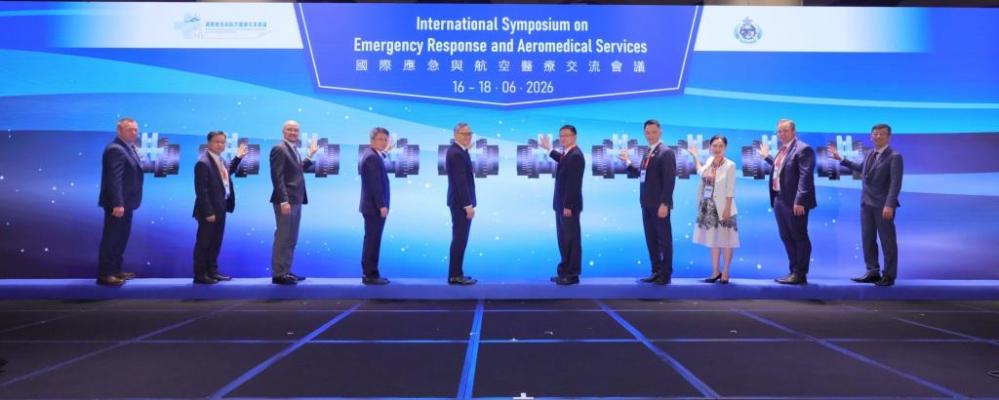
Successful debut of International Symposium on Emergency Response and Aeromedical Services in Hong Kong
-
 Jumat, 19 Juni 2026 | 20:35
ZEEKR Tembus 800.000 Pengiriman Global, Perkenalkan Strategi Ekspansi Global untuk Dua Flagship Seri 9