Menu Website

- Home
- MediaOutReach
- Philanthropy Deployed as Risk Capital Holds Potential to Scale Early-Stage Innovations in Asia, New Report Finds

Philanthropy Deployed as Risk Capital Holds Potential to Scale Early-Stage Innovations in Asia, New Report Finds
Senin, 18 Mei 2026 | 22:12
- - Asia's development challenges are outpacing conventional funding models, with early-stage, high-risk innovations chronically underfunded
- - Philanthropy Asia Alliance and Centre for Asian Philanthropy and Society's new research explores how Asian funders are bridging this gap, and the lessons to scale impact across the region
SINGAPORE - Media OutReach Newswire - 18 May 2026 - A new report released today at the sixth Philanthropy Asia Summit highlights what becomes possible when philanthropy in Asia is deployed as risk capital: funding that absorbs the risks of unproven solutions that governments are unable or unwilling to back, markets cannot yet price, and social innovators cannot bear alone. It also sets out what it will take to scale this approach and accelerate impact across the region.
The report spotlights 10 cases spanning climate, health, housing, water, waste, and digital inclusion where philanthropic risk capital underwrote the earliest and riskiest stages of social innovation. These range from sustainable housing and carbon removal technologies to public health interventions, with early backing helping solutions attract follow-on funding and achieve adoption within public systems. Collectively, these efforts have reached more than 210 million people across 13 Asian economies, a scale that demonstrates the model's potential, even as these cases represent only a small fraction of the region's needs.
"Philanthropy as Risk Capital in Asia: Bridging Innovation to Impact" was researched and written by the Centre for Asian Philanthropy and Society (CAPS) and commissioned by the Philanthropy Asia Alliance (PAA). Drawing on 10 case studies and 37 in-depth interviews with philanthropists, fund managers, social enterprise founders and programme leads across 13 markets, the report explores how and when Asian philanthropy functions as risk capital, and its potential to address development challenges in Asia at scale. It also examines what drives funders to take these risks, how capital is deployed across different instruments and stages of innovation, and the strategies used to manage risk while maximising impact.
Key findings
- - Philanthropy as risk capital in Asia is often patient and conviction-driven; funders are prepared to commit long-term capital to enable solutions to scale. The largest and longest commitments came from individual philanthropists and families driven by personal conviction and direct experience of the challenges they seek to address. For example, The Tahija Foundation in Indonesia provided more than US$17 million over ten years to test a novel approach to dengue control using Wolbachia bacteria. A randomised controlled trial demonstrated a 77% reduction in dengue transmission, and the method has since been adopted into Indonesia's national health plan, with an estimated 14 million people now protected. Institutional funders complement this with more targeted, milestone-linked discipline and deep trust in founders.
- - Funders are experimenting beyond traditional grants to explore a range of instruments across different growth stages. From concessional debt to equity, funders are exploring instruments across the spectrum, with some sequencing different forms of capital as trust and results develop over time. However, knowledge gaps and regulatory constraints in some markets continue to limit broader adoption.
- - Funders are leveraging relationships, community trust and government access to manage risk and extend reach. They bring networks, credibility, and access to government stakeholders alongside capital, reducing implementation risk and laying the groundwork for long-term partnerships. The funder's proximity to the communities they serve, and alignment with domestic policy priorities, can prove as consequential as the funding itself.
- - Funders are supporting alignment with public sector priorities from the outset, as early integration with public systems matters when government adoption is the pathway to scale. The projects that achieved the greatest reach did so through early engagement with government, with funders helping to align solutions with national or local priorities from the outset. For example, the Vanke Foundation made community waste management a thematic priority in support of China's zero-waste city ambitions, and backed INSPRO, a social enterprise using insect-based bioconversion to recycle organic waste. Beyond funding, the foundation facilitated access to district government stakeholders, enabling INSPRO to establish operations in Yantian and scale its technology for agricultural use. Similarly, Tata Trusts aligned its digital initiatives with the Government of India's Digital India programme, providing early-stage funding and ecosystem support to Haqdarshak, a platform improving access to government welfare schemes.
"For these Asian philanthropists deploying capital to support early-stage innovation, we observe how trust in the capabilities of the people behind the ideas is critical to managing these risks," says Dr. Ruth Shapiro, Co-Founder and CEO of CAPS. "And we see the importance of aligning with government as key to legitimacy and scale. The same strategies to manage risk are being leveraged to maximise impact for the community."
"The report highlights what makes early philanthropic capital unique," said Shaun Seow, CEO of PAA. "Taking an early position absorbs the risk of an untested solution and builds the evidence and regulatory confidence that later investment requires. PAA's role is to help connect funders across the region so those early commitments compound rather than sit in isolation."
Research methodology
The findings are based on a region-wide scan of social enterprises, programmes, and initiatives centred on novel or unproven solutions. Ten cases were selected through a targeted assessment identifying high-potential pathways for philanthropic risk capital across climate, health, and inclusive development. The research was conducted between October 2025 and January 2026, through 37 in-depth interviews and a review of academic and non-academic literature.
The cases examined include Agros, BillionBricks, Equatic, Haqdarshak, Inspro, Seven Clean Seas, Urban Spring, Wadhwani AI, Wateroam, and the World Mosquito Programme in Yogyakarta.
Download the full report: https://p-aa.org/PhilanthropyAsRiskCapitalReport (Live on 18 May)
BERITA LAINNYA

Senin, 18 Mei 2026 | 22:26
Senin, 18 Mei 2026 | 22:24

Senin, 18 Mei 2026 | 22:22

Senin, 18 Mei 2026 | 22:21
Senin, 18 Mei 2026 | 22:20

Senin, 18 Mei 2026 | 22:19

Senin, 18 Mei 2026 | 22:18

Senin, 18 Mei 2026 | 22:17

Senin, 18 Mei 2026 | 22:15
Senin, 18 Mei 2026 | 22:12
Senin, 18 Mei 2026 | 22:10
Senin, 18 Mei 2026 | 22:09

BERIKAN KOMENTAR


-
-
-
-
-
Senin, 18 Mei 2026 | 22:20
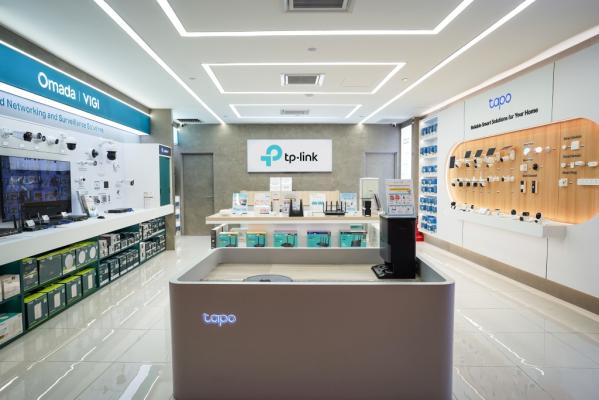
TP-LINK Powers The Future of Connected Living with Its First Flagship Store In Malaysia
-
Senin, 18 Mei 2026 | 22:19
Doremi3babies Helps Hong Kong Parents Choose the Right Caraz Playmat Size Amid Limited Living Space

-
Jumat, 15 Mei 2026 | 11:46
Pendirian Perusahaan di Hong Kong Meningkat 40,5% pada 2025, Mengungguli Pesaing Regional
-
 Kamis, 14 Mei 2026 | 12:22
Kenanga Futures Luncurkan Kampanye Perdana 2026 'Shining in Global Futures' untuk Generasi Baru Investor
-
 Jumat, 15 Mei 2026 | 11:48
Nikmati Penawaran Istimewa dengan Diskon Hingga 99% dalam rangka ShopeeFood Day Bulan Mei Ini
-
 Selasa, 12 Mei 2026 | 10:41
SIM Academy Tawarkan Program Pengembangan Profesional Fleksibel untuk Pekerja Dewasa di Singapura
-

-