Menu Website

- Home
- MediaOutReach
- XTransfer Export PMI: Emerging Markets Drive Growth, High-End Upgrading Opportunities Stand Out

XTransfer Export PMI: Emerging Markets Drive Growth, High-End Upgrading Opportunities Stand Out
Senin, 20 April 2026 | 18:57
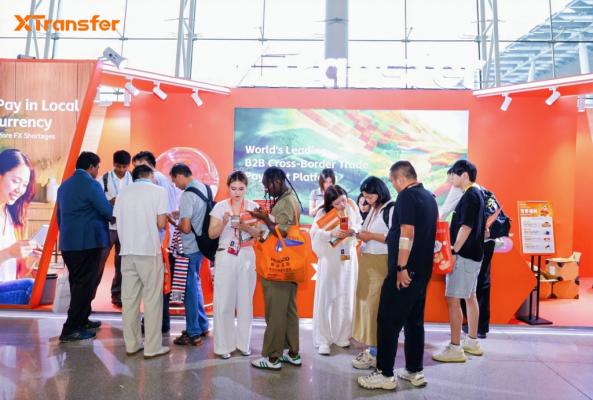
XTransfer at the 139th Canton Fair
GUANGZHOU, CHINA -
Media OutReach Newswire - 20 April 2026 -
XTransfer, the World's Leading B2B Cross-Border Trade Payment Platform, released its latest figures at the 139th China Import and Export Fair (Canton Fair).
In the first quarter of this year, emerging markets across Asia,
Africa, and Latin America accounted for 73% of XTransfer's inbound
cross-border payment collections, with 45% increase year-on-year. Collections
from Africa, Latin America, and Southeast Asia increased 115%, 97%, and
18% year-on-year, respectively, highlighting growing demand among
exporters for secure and efficient cross-border collection channels.
According to statistics from the China General Administration of Customs, emerging markets in Asia, Africa, and Latin America have become a key driver of export growth. However, underdeveloped local financial infrastructure, incomplete cross-border payment systems, and shortages of foreign exchange mean buyers often struggle to access U.S. dollars. As a result, exporters in these markets frequently face low settlement efficiency, slow cash recovery, and risks such as account freezes.
To address these collection challenges, XTransfer has developed a comprehensive set of cross-border collection solutions. In 2025, payment collections from emerging markets in Asia, Africa, and Latin America rose 106% year-on-year. By region, collections increased 273% in Africa, 82% in Southeast Asia, and 94% in Latin America.
Over the same period, customs statistics show that in 2025, China's total goods exports to Asia, Africa, and Latin America increased 14.6% year-on-year, with exports to Africa, Southeast Asia, and Latin America up 26.6%, 14%, and 8%, respectively. XTransfer's significantly faster growth in collections compared with export growth suggests exporters are accelerating the shift from informal channels to secure, compliant collection methods, and that market recognition of high-quality cross-border payment services continues to rise.
Bill Deng, Founder and CEO of XTransfer, said emerging markets offer long-term opportunities for Chinese exporters, but many are held back by the "last mile" of collections. He added that XTransfer is committed to helping SMEs collect funds safely and quickly through secure, compliant, and efficient cross-border financial services comparable to those used by multinational companies.
Release of XTransfer PMI
At the Canton Fair, XTransfer partnered with the Yicai Research Institute to publish the "China Small and Medium Enterprises (B2B) Merchandise Export Purchasing Manager Index" (XTransfer Export PMI), offering operational guidance and decision-making reference for small and micro export-oriented businesses.
This edition draws on a sample survey of XTransfer's 800,000 SME users, selecting over 3,000 companies nationwide. It covers the full export process across export orders, pricing, procurement, logistics, staffing, and cash flow. The report shows that the March 2026 XTransfer PMI was 51.56%, indicating export conditions for SMEs are generally improving. Despite a complex external environment, SMEs have remained resilient and steadily strengthened their pricing power in international markets. Meanwhile, demand structures in emerging markets are reshaping, with export focus shifting toward intermediate goods and higher value-added products.
Resilience Amid Geopolitical Disruptions
Customs data show that in the first quarter, China's goods exports reached RMB 6.85 trillion, up 11.9% year-on-year, marking a strong start to the year and benefiting SMEs. The XTransfer PMI also shows expansion in the export order index (53.85) and the export price index (56.15). While seasonal factors like the Spring Festival affected the short term, the underlying "volume and price rising together" trend suggests SMEs are accelerating their shift from "low-price internal competition," strengthening pricing power through technology upgrades and improved quality.
Geopolitical disruptions have also extended delivery times, pushing the logistics time PMI down to 37.50. In contrast, the sales collection (receivables) index rose to 68.59, showing a pattern of "goods moving slower, money returning faster". This suggests overseas buyers remain strongly tied to China's high-quality supply chain and are willing to raise prepayment ratios or shorten payment terms to secure capacity. One exhibitor, Mr Wang, said, "A Southeast Asian customer increased its deposit from 30% to 70% to lock in production, worried our capacity would be booked by others."
Emerging Markets Demand Trends Toward "High-End" Upgrading
The report highlights a shift toward higher-end demand in emerging markets. Africa's export orders index (57.55) points to rising infrastructure-related demand; Latin America's export orders index (56.47) and price index (57.81) signal opportunities in electromechanical and optical medical equipment; and Southeast Asia is absorbing components and semi-finished goods, calling for SMEs to move from finished-goods suppliers to supply-chain partners.
As industrialisation accelerates in emerging markets, demand for high-quality intermediate goods, complete electromechanical equipment, and technical services is rising. SMEs are moving from "low-end capacity exports" to "exports of technology and supply chain support".
The composite PMI for the "New Three" (new energy vehicles, photovoltaics, and lithium batteries) was 54.59. The "New Three" sectors continue to hold growth potential, and enterprises need to enhance profit margins by delivering differentiated value.
According to statistics from the China General Administration of Customs, emerging markets in Asia, Africa, and Latin America have become a key driver of export growth. However, underdeveloped local financial infrastructure, incomplete cross-border payment systems, and shortages of foreign exchange mean buyers often struggle to access U.S. dollars. As a result, exporters in these markets frequently face low settlement efficiency, slow cash recovery, and risks such as account freezes.
To address these collection challenges, XTransfer has developed a comprehensive set of cross-border collection solutions. In 2025, payment collections from emerging markets in Asia, Africa, and Latin America rose 106% year-on-year. By region, collections increased 273% in Africa, 82% in Southeast Asia, and 94% in Latin America.
Over the same period, customs statistics show that in 2025, China's total goods exports to Asia, Africa, and Latin America increased 14.6% year-on-year, with exports to Africa, Southeast Asia, and Latin America up 26.6%, 14%, and 8%, respectively. XTransfer's significantly faster growth in collections compared with export growth suggests exporters are accelerating the shift from informal channels to secure, compliant collection methods, and that market recognition of high-quality cross-border payment services continues to rise.
Bill Deng, Founder and CEO of XTransfer, said emerging markets offer long-term opportunities for Chinese exporters, but many are held back by the "last mile" of collections. He added that XTransfer is committed to helping SMEs collect funds safely and quickly through secure, compliant, and efficient cross-border financial services comparable to those used by multinational companies.
Release of XTransfer PMI
At the Canton Fair, XTransfer partnered with the Yicai Research Institute to publish the "China Small and Medium Enterprises (B2B) Merchandise Export Purchasing Manager Index" (XTransfer Export PMI), offering operational guidance and decision-making reference for small and micro export-oriented businesses.
This edition draws on a sample survey of XTransfer's 800,000 SME users, selecting over 3,000 companies nationwide. It covers the full export process across export orders, pricing, procurement, logistics, staffing, and cash flow. The report shows that the March 2026 XTransfer PMI was 51.56%, indicating export conditions for SMEs are generally improving. Despite a complex external environment, SMEs have remained resilient and steadily strengthened their pricing power in international markets. Meanwhile, demand structures in emerging markets are reshaping, with export focus shifting toward intermediate goods and higher value-added products.
Resilience Amid Geopolitical Disruptions
Customs data show that in the first quarter, China's goods exports reached RMB 6.85 trillion, up 11.9% year-on-year, marking a strong start to the year and benefiting SMEs. The XTransfer PMI also shows expansion in the export order index (53.85) and the export price index (56.15). While seasonal factors like the Spring Festival affected the short term, the underlying "volume and price rising together" trend suggests SMEs are accelerating their shift from "low-price internal competition," strengthening pricing power through technology upgrades and improved quality.
Geopolitical disruptions have also extended delivery times, pushing the logistics time PMI down to 37.50. In contrast, the sales collection (receivables) index rose to 68.59, showing a pattern of "goods moving slower, money returning faster". This suggests overseas buyers remain strongly tied to China's high-quality supply chain and are willing to raise prepayment ratios or shorten payment terms to secure capacity. One exhibitor, Mr Wang, said, "A Southeast Asian customer increased its deposit from 30% to 70% to lock in production, worried our capacity would be booked by others."
Emerging Markets Demand Trends Toward "High-End" Upgrading
The report highlights a shift toward higher-end demand in emerging markets. Africa's export orders index (57.55) points to rising infrastructure-related demand; Latin America's export orders index (56.47) and price index (57.81) signal opportunities in electromechanical and optical medical equipment; and Southeast Asia is absorbing components and semi-finished goods, calling for SMEs to move from finished-goods suppliers to supply-chain partners.
As industrialisation accelerates in emerging markets, demand for high-quality intermediate goods, complete electromechanical equipment, and technical services is rising. SMEs are moving from "low-end capacity exports" to "exports of technology and supply chain support".
The composite PMI for the "New Three" (new energy vehicles, photovoltaics, and lithium batteries) was 54.59. The "New Three" sectors continue to hold growth potential, and enterprises need to enhance profit margins by delivering differentiated value.
BERITA LAINNYA

Senin, 20 April 2026 | 19:07
Senin, 20 April 2026 | 19:05
Senin, 20 April 2026 | 19:03

Senin, 20 April 2026 | 19:03
Senin, 20 April 2026 | 19:02

Senin, 20 April 2026 | 19:01

Senin, 20 April 2026 | 19:00

Senin, 20 April 2026 | 18:59

Senin, 20 April 2026 | 18:59
Senin, 20 April 2026 | 18:58
Senin, 20 April 2026 | 18:57

Senin, 20 April 2026 | 18:56

BERIKAN KOMENTAR


-
Senin, 20 April 2026 | 19:07
China Unicom and Huawei Elevate Beijing E-Town Race-Day Experiences with 5G-A GigaUplink
-
-
Senin, 20 April 2026 | 19:03
HKU Launches School of Governance and Policy, Sets Stage for Global Dialogue on Pressing Challenges
-
-
Senin, 20 April 2026 | 19:02
JustMarkets Announces Comprehensive Technology Ecosystem Upgrade for Gold Trading in 2026
-
Senin, 20 April 2026 | 19:01
Rhenus Logistics Strengthens Asia–Latam Trade with Record Growth in 2025

-
Sabtu, 18 April 2026 | 09:48
SERES' Clifford Kang Highlights AI-Enabled Smart Mobility at the 2026 World Internet Conference Asia-Pacific Summit
-
 Sabtu, 18 April 2026 | 09:48
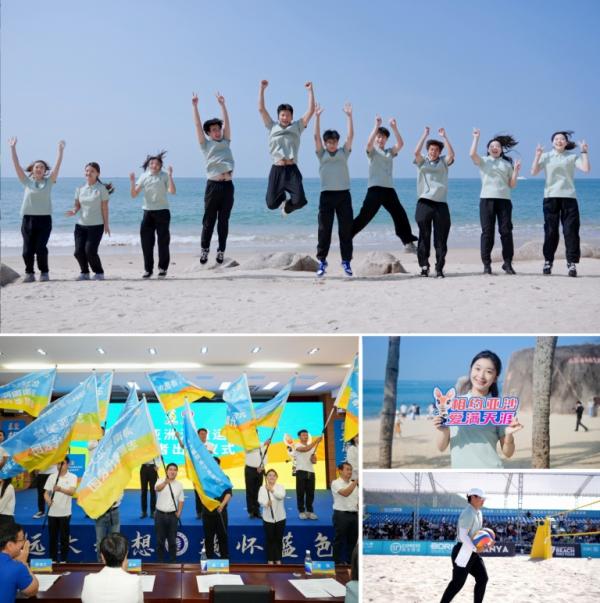
4,680 young Chinese volunteers called "Little Deer" ready for Asian Beach Games
-
 Sabtu, 18 April 2026 | 10:29
ShopeeFood Day Kembali Hadir pada 18 April dengan Diskon Hingga 99%, Gratis Ongkir, dan Hadiah Eksklusif
-
 Sabtu, 18 April 2026 | 10:26
TrendAI™ Bermitra dengan Anthropic untuk Memperluas Kepemimpinan dalam Keamanan Informasi Berbasis AI
-
Sabtu, 18 April 2026 | 10:28
Clifford Kang dari SERES Soroti Mobilitas Cerdas Berbasis AI di World Internet Conference Asia-Pacific Summit 2026
-
 Sabtu, 18 April 2026 | 10:28
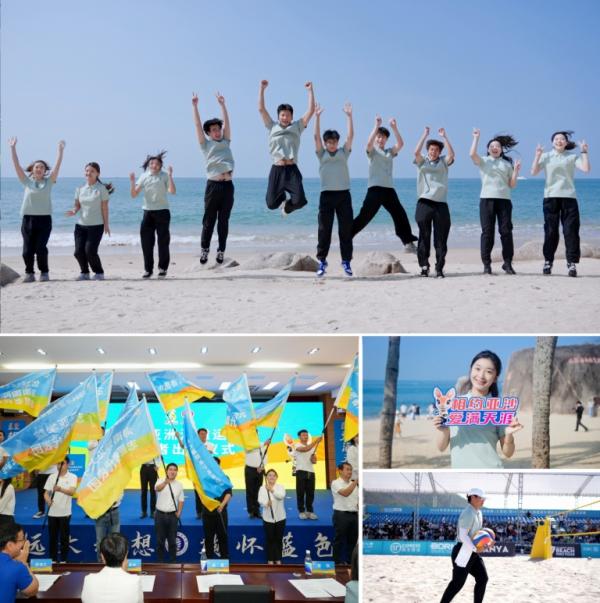
4.680 Relawan Muda Tiongkok 'Little Deer' Siap Sambut Asian Beach Games ke-6 di Sanya